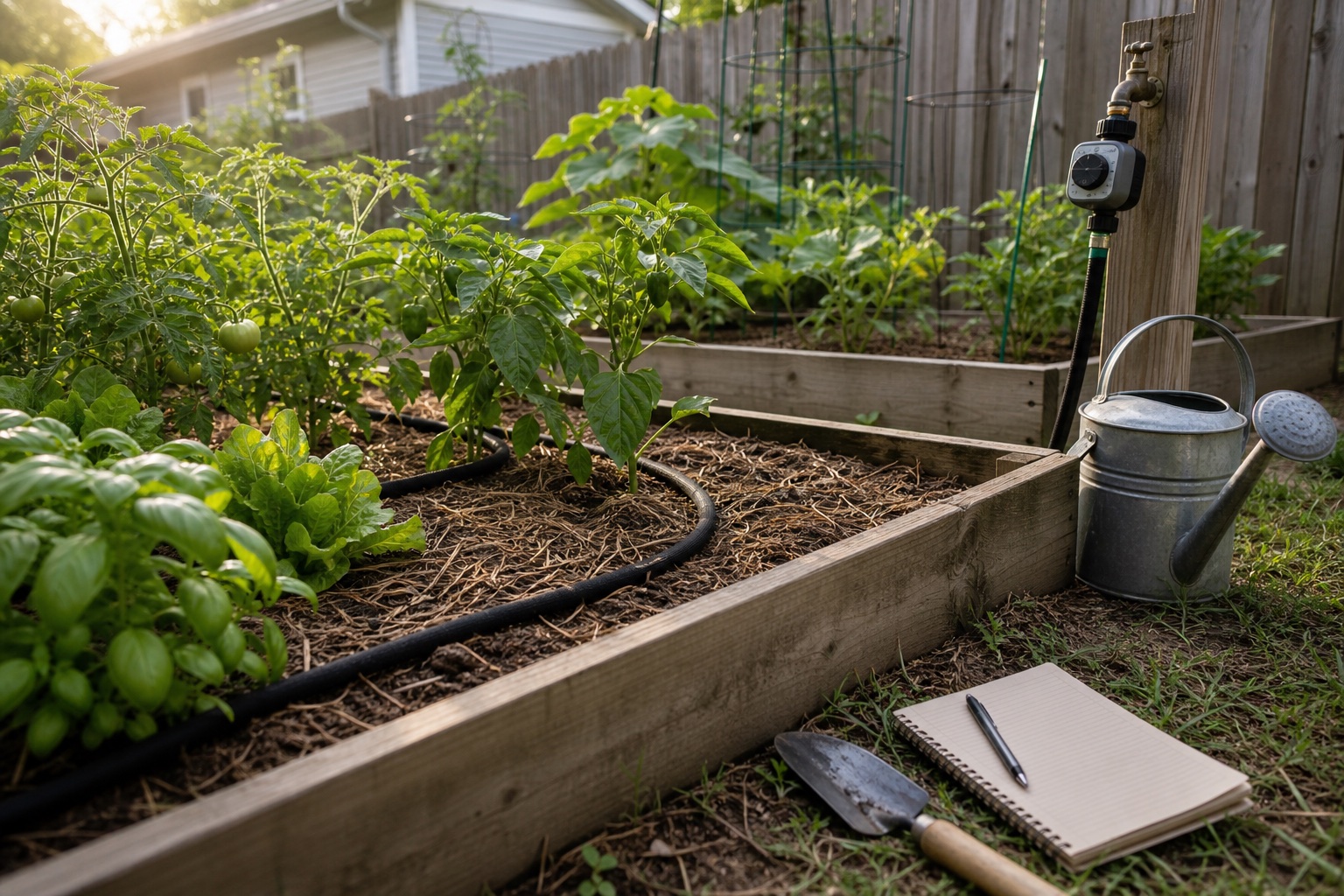
Leaving a beginner vegetable garden for a weekend should not feel like abandoning a newborn project. But the first time you look at the weather, look at the tomatoes, and realize you will not be standing there with the hose tomorrow morning, it can feel surprisingly personal.
The goal is not to build a commercial irrigation system for a two-night trip. The goal is to leave the garden with enough moisture, enough protection, and enough backup that one normal weekend away does not undo weeks of steady work.
The weekend that made the garden feel less like a project
There is a funny shift that happens when a garden starts becoming part of real life. At first, it feels like a project you check because you are excited. Then a busy week hits, or a family plan comes up, or you need to be away for a couple days, and suddenly the garden has to survive without being the center of the household.
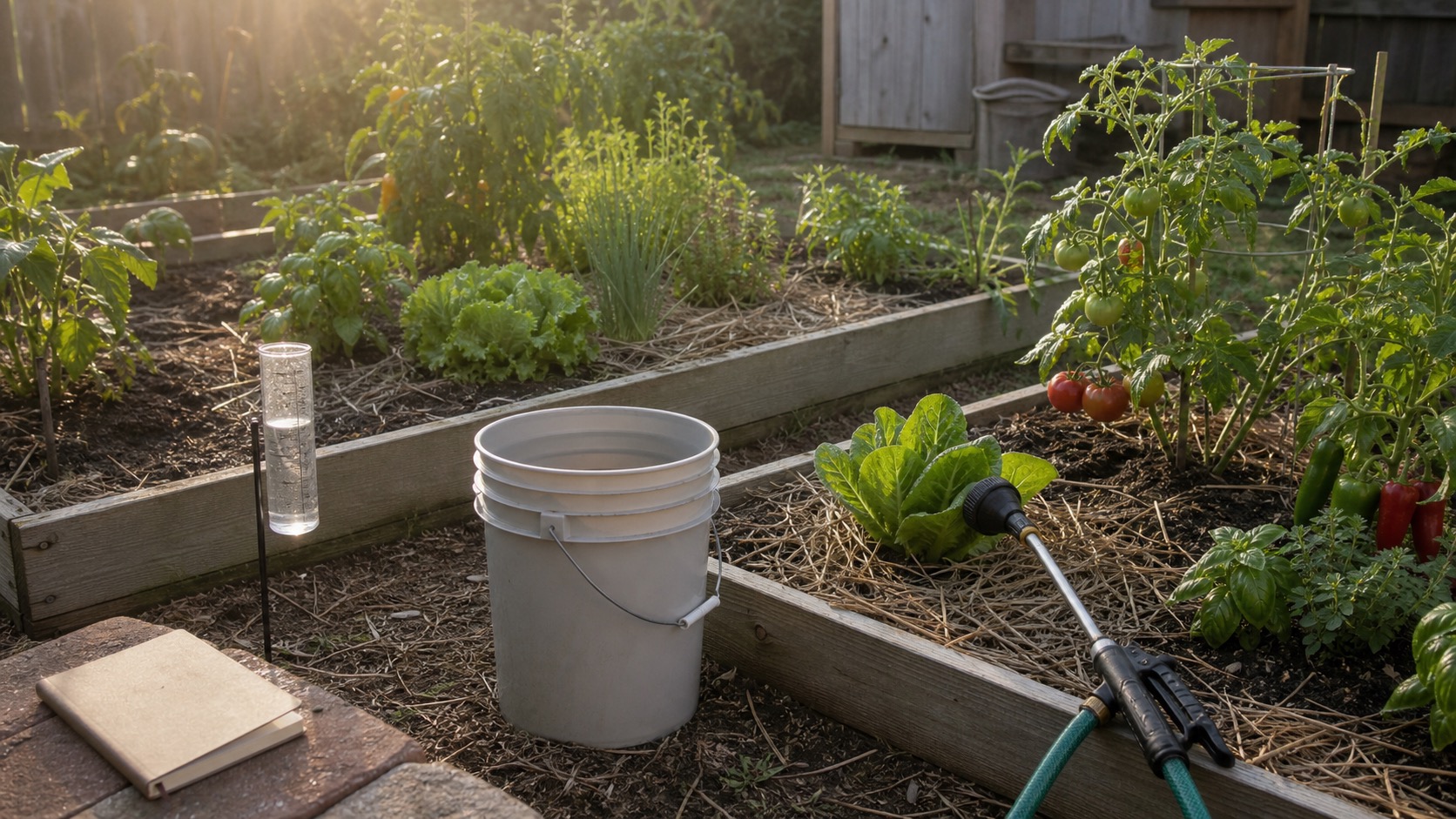
That was the lesson for me. The useful garden was not the one that only worked when I could hover over it every morning. The useful garden was the one with mulch, a reachable hose, a simple plan, and enough margin that leaving for a short weekend did not turn into drama.
That realization changed how I think about garden systems. A watering setup is not just about plants. It is about whether the garden can fit inside a family life that still has errands, work, kid plans, rest, and the occasional short trip.
Start with the risk, not the gadget
The biggest mistake is shopping before sorting the garden by risk. Some parts of the garden may be fine with one deep watering before you leave. Other parts may need a timer, a helper, shade, or a different location for the weekend.
Established mulched beds are usually less fragile than small containers. New transplants are more fragile than rooted plants. A tomato in a raised bed may handle the weekend better than a basil plant in a black pot on hot pavement. The plan gets easier once you stop treating every plant as equally vulnerable.
What to do the day before you leave
The day before you leave is for reducing stress, not starting new experiments. Walk the garden in the morning or evening, check the soil a couple inches down, and water deeply where the root zone is dry. If the soil is already damp below the surface, do not water just because you are nervous.
Pull young weeds that are directly competing with vegetables, but do not turn the whole bed upside down. Add mulch to bare soil if you have it. Harvest anything that is already ready, especially zucchini, cucumbers, beans, herbs, and tomatoes that will be overripe by the time you get back.
When a hose timer makes sense
A hose timer can be a good short-trip tool when the rest of the system is simple. One spigot, one timer, one soaker hose or drip line, and one small growing area is manageable. Three beds, two hoses, a splitter, a leaky fitting, and a timer you have never watched run is not a calmer plan.
If you use a timer, test it before you leave. Turn it on. Watch the full watering cycle if you can. Look for leaks, dry corners, puddles, runoff, and spots where the hose has shifted away from the root zone. A timer should repeat a routine you already understand, not become a mystery machine while you are gone.
Soaker hose or sprinkler?
For a vegetable garden, I would usually choose soil-level watering first. A soaker hose or simple drip line puts water near the roots and keeps leaves drier. That matters because a weekend setup should be boring and targeted, not a wide spray that waters paths, leaves, fences, and weeds.
A sprinkler can still be useful in a pinch, especially for a larger simple area, but it is less precise. If you use one, run it long enough to wet the soil below the surface and place a rain gauge or straight-sided container nearby so you are not guessing.
Recommendations
Weekend watering tools worth considering
Test first
Simple hose timer
Worth considering after you know how long your bed needs to run and you have tested the timer before leaving.
Best for: Short trips with one simple garden zone
Check current priceGood first upgrade
Soaker hose for vegetable beds
A practical option for raised beds or straight rows where you want slow soil-level watering.
Best for: Mulched beds and simple layouts
Check current priceCheap clarity
Simple rain gauge
A low-cost way to know whether rain helped enough before or during the weekend.
Best for: Stopping the guesswork after scattered storms
Check current priceWhat to ask a helper to do
If the weekend is hot, the garden is young, or containers are involved, a human check is still the safest low-tech plan. But make the request simple. Do not hand someone a complicated garden philosophy and expect them to read every plant the way you would.
Tell them which plants matter most. Containers first. New transplants second. Main beds third. Show them where the hose is, how long a normal watering takes, and what dry soil feels like below the surface. Ask them to text before fertilizing, pruning, moving, spraying, or trying to fix something big.
What matters first
The first priority is moisture in the root zone before you leave. The second is mulch or surface protection so the water does not disappear faster than it needs to. The third is a tested plan for the highest-risk plants. The fourth is making the setup easy enough that someone else could understand it.
That order matters because a timer cannot compensate for bone-dry soil, and a helper cannot rescue a garden if every bed has a different hidden rule. A weekend plan should reduce decisions, not multiply them.
What can wait
Most upgrades can wait until you know the problem is repeated. You do not need a multi-zone irrigation system, smart controller, elaborate drip layout, fertilizer injector, or permanent plumbing just because you are leaving for two nights. Those tools may make sense later for a larger or more permanent garden, but they are too much for many first-season beds.
Use the simplest system that protects the garden without creating new failure points. For many beginners, that is deep watering, mulch, grouped containers, a tested soaker hose, and one person who knows where the hose lives.
The morning you get back
Do not judge the garden at the hottest part of the day if you return tired and the sun is already high. Check early if possible. Look at the soil, not just the leaves. Some plants wilt temporarily in heat and recover later. Others are truly dry and need slow watering.
Harvest what grew faster than expected, note what struggled, and write down what you would change before the next weekend away. That note is worth more than buying another gadget immediately. The goal is to make the second absence calmer than the first.
A beginner garden should teach consistency, but it should not trap your whole life beside the hose. The stronger setup is the one that lets the garden keep growing while the family still gets to live.
Build the Normal Watering Rhythm First
Make the weekend plan easier by watering without guessing.
Use the main beginner watering guide to understand soil checks, deep watering, mulch, and weekly water needs before you depend on a timer or helper.
Read the watering guideRecommended next reads
Keep going with summer garden care
These guides help connect weekend watering to heat prep, mulch, and a layout that is easier to maintain.
Gardening
What to Do Before a Hot Week Hits Your Beginner Garden
A calm beginner garden heat plan: what to water, shade, mulch, harvest, delay, and check before a hot week turns into garden panic.
Gardening
How to Mulch a Beginner Vegetable Garden Without Overthinking It
A practical beginner guide to mulching a first vegetable garden: what mulch to use, how deep to apply it, what to keep away from stems, and what can wait.
Gardening
Small Vegetable Garden Layout for Beginners
A practical small vegetable garden layout for beginners, including bed width, paths, sun, water, tall crops, crop zones, and what not to squeeze into the first season.
Frequently asked questions
Can a vegetable garden survive a weekend without watering?
Many established in-ground or mulched raised-bed gardens can survive a normal weekend if they are watered deeply before you leave and the weather is not extreme. Containers, seedlings, new transplants, and heat-stressed plants need a stronger plan.
Should I use a hose timer while I am away?
A hose timer can help if you test it before the trip, use it with a simple soaker hose or drip line, and still have someone check the garden if the weather is severe. Do not install it the night before and leave without watching it run.
Is a sprinkler okay for watering while away?
A sprinkler is better than nothing, but soil-level watering is usually calmer for a vegetable garden. Soaker hoses or drip lines waste less water, wet fewer leaves, and are easier to aim at the root zone.
What should I ask a garden helper to check?
Ask them to check containers first, then new transplants, then the main beds. Give them one simple instruction: water deeply if the soil is dry a couple inches down, and call or text before making big changes.
Recommendations
Useful tools and resources for this decision
These are included only where they reduce repeated friction, clarify a next step, or help you avoid buying the wrong thing first.
Test before relying on it
Simple hose timer
A basic single-zone timer can cover a short weekend if the setup is tested before you leave and the garden layout is simple.
Best for: Small gardens with one reliable spigot and a known watering routine
Check current priceGood weekend setup
Soaker hose for vegetable beds
A soaker hose waters slowly at soil level and works well for straight rows or raised beds that already have a predictable layout.
Best for: Mulched beds where hand watering is hard to keep consistent
Check current priceLow-cost clarity
Simple rain gauge
A plain rain gauge helps you know whether a storm actually watered the garden or only made the sidewalk look wet.
Best for: Beginners who are trying to stop guessing after scattered summer rain
Check current priceRead first
Beginner garden watering guide
Use the main watering guide to understand soil checks, mulch, weekly water needs, and why shallow sprinkling creates false confidence.
Best for: Building the watering rhythm before you leave town
Read the guideRecommended next reads
Read next if it helps the decision
Move into the next guide only if it clarifies the next practical step.
Gardening
How to Water a Beginner Vegetable Garden Without Guessing
A practical beginner watering guide for small vegetable gardens: how much water plants need, how to check soil moisture, when to water, and what to stop doing.
Gardening
What to Do Before a Hot Week Hits Your Beginner Garden
A calm beginner garden heat plan: what to water, shade, mulch, harvest, delay, and check before a hot week turns into garden panic.
Gardening
How to Mulch a Beginner Vegetable Garden Without Overthinking It
A practical beginner guide to mulching a first vegetable garden: what mulch to use, how deep to apply it, what to keep away from stems, and what can wait.
Garden gear support
Get the buy-first guide before the first garden collects too much gear.
Use the guide to decide which early garden purchases earn money now, which ones can be borrowed, and which ones can wait until the routine proves itself.
Best for: Beginners who keep seeing useful things online and need a disciplined way to decide what actually earns a place.
- A buy now, borrow, wait, or skip framework
- Starter category shortlists
- A three-question purchase test
Garden planning notes, restrained gear decisions, and the guide first.
After signup, the download will unlock right here so you can save or print it.
About the author
William Mock
Founder, writer, and beginner homesteader
William writes from the beginner side of rebuilding after a layoff: homestead plans, family systems, budgets, tools, and the decisions that make a home feel less fragile.
Read why this site existsRelated Guides
Keep building context
Gardening
How to Water a Beginner Vegetable Garden Without Guessing
A practical beginner watering guide for small vegetable gardens: how much water plants need, how to check soil moisture, when to water, and what to stop doing.
Gardening
What to Do Before a Hot Week Hits Your Beginner Garden
A calm beginner garden heat plan: what to water, shade, mulch, harvest, delay, and check before a hot week turns into garden panic.
Gardening
How to Mulch a Beginner Vegetable Garden Without Overthinking It
A practical beginner guide to mulching a first vegetable garden: what mulch to use, how deep to apply it, what to keep away from stems, and what can wait.