A beginner homestead maintenance schedule should start with the systems you already depend on, not a giant month-by-month list copied from somebody else's property. Make one inspection route, walk it monthly, schedule weather-dependent work by season, put manufacturer or professional service on the correct annual interval, and move every finding into one of three decisions: act now, schedule it, or watch it.
Homestead systems
Build routines that make the work easier to repeat
The systems hub keeps maintenance, weekly rhythms, family planning, backup layers, and practical resets connected.
Explore homestead systemsThe list that was never really one list
I have had plans living in a notebook on the table, a note on my phone, a receipt in a pocket, and a half-remembered Sunday conversation at the same time. The maintenance list was hiding inside all of them. A loose piece of hardware went into the phone. A filter size stayed on an old receipt. Something I wanted to inspect again became a sentence I was certain I would remember.
After the layoff, that kind of scattered remembering felt different. We were already asking how to make home and family life less fragile. I could see that buying another tool or starting another project would not fix the quiet problem: ordinary systems were depending on one person noticing, remembering, and finding the right note at the right time.
The useful change was not a perfect maintenance calendar. It was giving observation its own small job. Walk the same route. Notice what changed. Put the finding in one place. Decide whether it is urgent, scheduled, or simply worth watching. That is less impressive than a wall of color-coded tasks, but it is the version I trust during a real week.
Separate chores, maintenance, projects, and emergencies
A maintenance schedule gets overwhelming when every kind of work lands on the same list. Feeding chickens is not the same kind of task as replacing a worn gate hinge. Building a new run is not maintenance on the current one. A leaking fuel line or unsafe electrical condition is not a task to save for the next monthly walk.
If recurring chores are the real source of overload, start with a weekly chore rhythm for families instead of adding them to this schedule. Maintenance works better when it is not competing with every job that happens each day.
Keep recurring work separate
Build the weekly chore rhythm first
Move feed, water, garden checks, cleanup, meals, and ordinary resets into a repeatable week so the maintenance list stays focused on protecting systems over time.
Build a weekly chore rhythmBuild the schedule from active systems
A copied homestead checklist may include a tractor, barn, pasture, well, septic system, orchard, greenhouse, chimney, livestock trailer, and irrigation pump. That list is useless if your current setup is a house, six hens, four beds, a shed, and a short fence. It creates work for an imaginary property while making the real property harder to see.
Penn State Extension's farmland assessment guidance treats access, infrastructure, water, fencing, power, records, routine maintenance, and major repairs as related but distinct decisions. That is a useful way to think even on a small backyard homestead. The property is not one big task. It is a group of systems with different risks and owners.
Use four maintenance cadences
Two official examples show why cadence matters. The U.S. Fire Administration says to test smoke alarms monthly and follow the alarm guidance for batteries and replacement. ENERGY STAR advises homeowners to inspect, clean, or change central heating and cooling filters monthly while using pre-season professional checkups and the equipment's needs for the larger service. Those jobs share a month on the calendar, but they do not share the same method or skill boundary.
Walk one monthly route
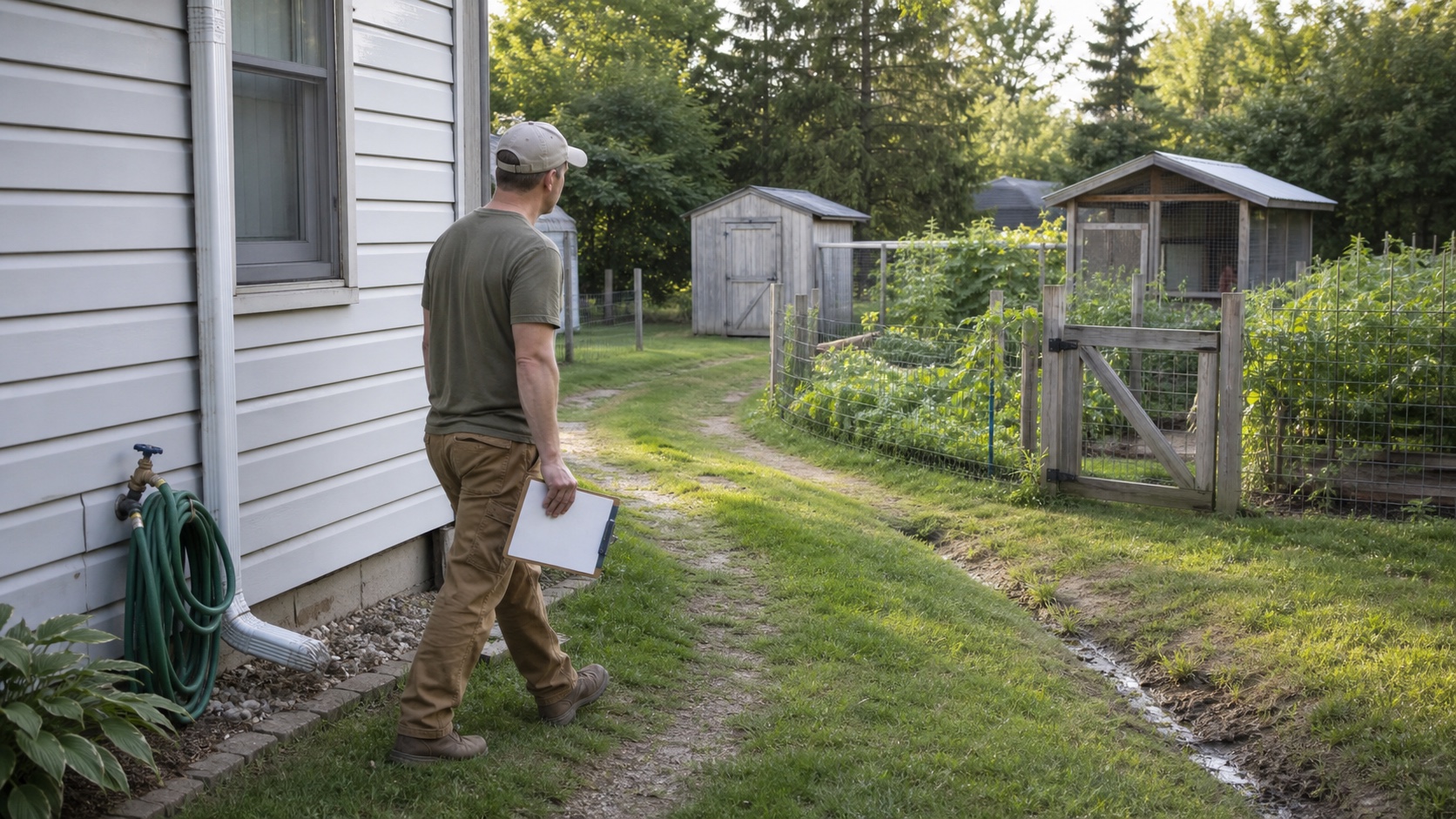
Organize the inspection by location so you do not walk the property five times. Start inside with household safety and water. Move outside along the house. Follow drainage and access toward the garden, animal area, storage, and back to the door. Use the same direction each month. Repetition makes small changes easier to recognize.
Triage every finding with three decisions
The watch category matters because not every imperfect board, stain, sound, or patch of worn ground needs a Saturday project. Monitoring is a real decision when you document the baseline and know what change would matter. Ignoring is different: it has no return date and no trigger.
Let weather, manuals, and real systems set the larger schedule
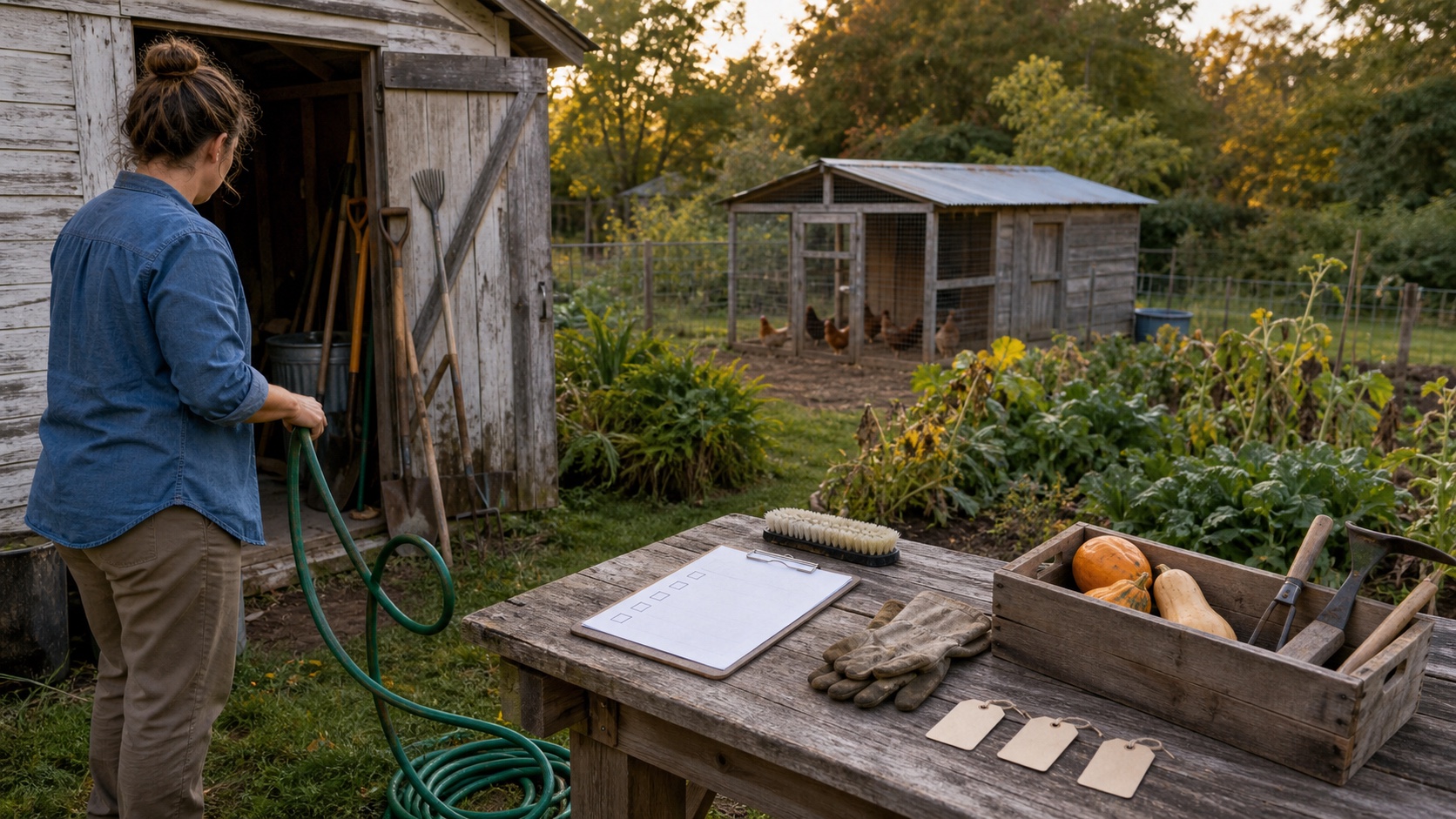
Seasonal maintenance should happen before the condition it is meant to protect against. In a freezing climate, that may mean draining and storing hoses, preparing animal water, checking heating systems, protecting access, and moving weather-sensitive supplies before the first hard freeze. In hot weather, shade, ventilation, water reliability, irrigation, and equipment cooling may move forward. Use the local forecast, Extension guidance, and your actual setup rather than a generic date.
Annual does not mean casual. EPA currently recommends that private-well owners test annually for total coliform bacteria, nitrates, total dissolved solids, and pH, use certified laboratories, and test after certain changes or water-quality concerns. That cannot be replaced by looking at clear water during a property walk. Likewise, septic, chimney, HVAC, electrical, structural, and equipment work should follow the correct professional, manufacturer, code, permit, and local-health guidance for the system.
If cold weather is the next pressure point, use the fall homestead checklist to turn the seasonal portion into a focused reset. For an exterior water connection, follow the setup-specific guide to winterizing an outdoor faucet before a freeze. If a failure would interrupt water, animal care, heat, food storage, or access, connect the finding to the homestead backup plan before the system goes down.
Plan for the failure boundary
Give critical systems a backup before they fail
Name the failure, the first safe response, the backup method, the person who can help, and the supplies already on hand before a maintenance concern becomes an emergency.
Build a homestead backup planRecord only what changes a decision
A maintenance record needs less detail than most people think. Save the asset or location, what changed, the date, one photo when useful, the next action, who owns it, cost, and the next due date or trigger. That is enough to compare wear, remember a part number, hand off a task, and see what the property is costing over time.
Those records can live in a beginner homestead binder, a shared note, or a spreadsheet. The format matters less than whether another responsible person can find the current answer. Do not build a database for a property you have not walked yet.
What can wait
You do not need maintenance software, QR codes on every tool, a complete replacement-cost forecast, a schedule for future livestock, or a twelve-month calendar filled in before the first walk. You also do not need to replace every worn-looking item. Start with the current systems, immediate safety boundaries, one monthly route, the next seasonal transition, and the annual tasks already documented by a manufacturer, agency, contractor, or local authority.
Your useful next step
Today, write the six active-system headings on one page and walk the shortest honest route through them. Do not repair everything. Circle only the finding that needs action first, schedule the next seasonal task, and choose one item to watch until next month. Then put the next walk on the calendar.
A good maintenance schedule does not prove that you can predict every failure. It makes the systems your family already depends on easier to see, easier to hand off, and less likely to survive only because one tired person remembered at the last minute.
Keep the next decision small
Decide whether the fix needs money now
Use the free buy-first guide to separate repair, replacement, professional help, and purchases that can stay on the wait list.
Open the free buying guideFrequently asked questions
What maintenance should I do every month on a homestead?
Once a month, walk the active systems you actually own and look for changes: leaks, loose hardware, water damage, blocked drainage, worn fencing, pest evidence, unsafe storage, damaged tools, low supplies, and anything that no longer works as intended. Test smoke alarms monthly according to U.S. Fire Administration guidance, check HVAC filters according to the equipment guidance, and move any urgent safety, water, animal-care, or structural concern out of the routine list for prompt attention.
How long should a monthly homestead maintenance check take?
A small beginner setup can often be inspected in one focused route, but there is no useful universal time limit. Start with 30 to 60 minutes, cover only active systems, and stop to create a separate repair task rather than trying to complete every project during the walk. The inspection should remain careful enough to notice change.
What is the difference between homestead chores and maintenance?
Chores keep today's system operating: feeding, watering, harvesting, cleaning, and closing gates. Maintenance protects the system over time: inspecting wear, servicing equipment, correcting drainage, repairing hardware, and replacing parts before failure. Projects create or expand a system. Emergencies require immediate action. Keeping those four lists separate makes the week easier to plan.
Do I need an app for a homestead maintenance schedule?
No. A one-page asset list, a recurring calendar reminder, and a small watchlist are enough to start. Use an app only if it helps the household find service dates, manuals, costs, and next actions faster. The system should not require more maintenance than the property.
What homestead maintenance should be left to a professional?
Use qualified help for work outside your training, tools, permits, or safe access. Electrical faults, fuel-burning equipment, chimney concerns, structural damage, roofs, pressurized systems, wells, septic systems, large trees, and heavy equipment can require licensed or experienced professionals. Observe from a safe location, document what changed, follow manufacturer instructions and local requirements, and do not turn an inspection checklist into permission to attempt hazardous work.
Recommendations
Useful tools and resources for this decision
These are included only where they reduce repeated friction, clarify a next step, or help you avoid buying the wrong thing first.
Fire-safety source
U.S. Fire Administration smoke alarm guidance
Current federal guidance for smoke alarm placement, monthly testing, battery care, and replacement timing.
Best for: Keeping the household safety portion of a monthly check tied to authoritative guidance
View resourceHome-system source
ENERGY STAR HVAC maintenance checklist
Homeowner and contractor guidance for filters, pre-season service, controls, drainage, airflow, and other heating and cooling maintenance.
Best for: Building equipment-specific HVAC reminders instead of guessing at a universal schedule
View resourceWater-safety source
EPA private well water guidance
Current EPA guidance on annual private-well testing, certified laboratories, changed conditions, and signs that call for additional testing.
Best for: Households responsible for a private drinking-water well
View resourceProperty-systems source
Penn State Extension farmland assessment checklist
A practical Extension reference for examining access, infrastructure, water, fencing, power, records, and maintenance responsibilities.
Best for: Thinking through the full property as connected systems rather than a loose repair list
View resourceFree decision guide
What to Buy First guide
A free worksheet for deciding whether a maintenance finding needs a purchase now, a repair, a professional quote, or a place on the wait list.
Best for: Keeping a maintenance walk from turning into an automatic shopping trip
Read the guideRecommended next reads
Read next if it helps the decision
Move into the next guide only if it clarifies the next practical step.

Systems
A Weekly Chore Rhythm for Families Starting Homestead Life
A practical weekly task rhythm for beginners who want household work, animals, meals, and projects to fit real family life.
Systems
Fall Homestead Checklist for Beginners: What to Finish Before Cold Weather
A practical fall homestead checklist for sorting safety, animals, garden harvests, water, tools, food storage, and unfinished projects before cold weather arrives.

Systems
How to Build a Homestead Backup Plan Before You Need It
A practical one-page homestead backup plan for sick days, travel delays, power or water problems, and any day the usual caretaker cannot carry the routine.
Weekly rhythm support
Get the weekly reset planner that keeps the week from scattering.
A print-friendly weekly planner for resets, anchor tasks, and the few routines that make the house feel steadier.
Best for: Readers who need a calmer household rhythm before they need more projects.
- A weekly anchor planner
- A reset checklist
- A what-to-drop, delay, or delegate review
Low-noise notes on routines, resets, and steadier household systems.
After signup, the download will unlock right here so you can save or print it.
About the author
William Mock
Founder, writer, and beginner homesteader
William writes from the beginner side of rebuilding after a layoff: homestead plans, family systems, budgets, tools, and the decisions that make a home feel less fragile.
Read why this site existsRelated Guides
Keep building context
Systems
A Weekly Chore Rhythm for Families Starting Homestead Life
A practical weekly task rhythm for beginners who want household work, animals, meals, and projects to fit real family life.
Systems
Fall Homestead Checklist for Beginners: What to Finish Before Cold Weather
A practical fall homestead checklist for sorting safety, animals, garden harvests, water, tools, food storage, and unfinished projects before cold weather arrives.
Systems
How to Build a Homestead Backup Plan Before You Need It
A practical one-page homestead backup plan for sick days, travel delays, power or water problems, and any day the usual caretaker cannot carry the routine.