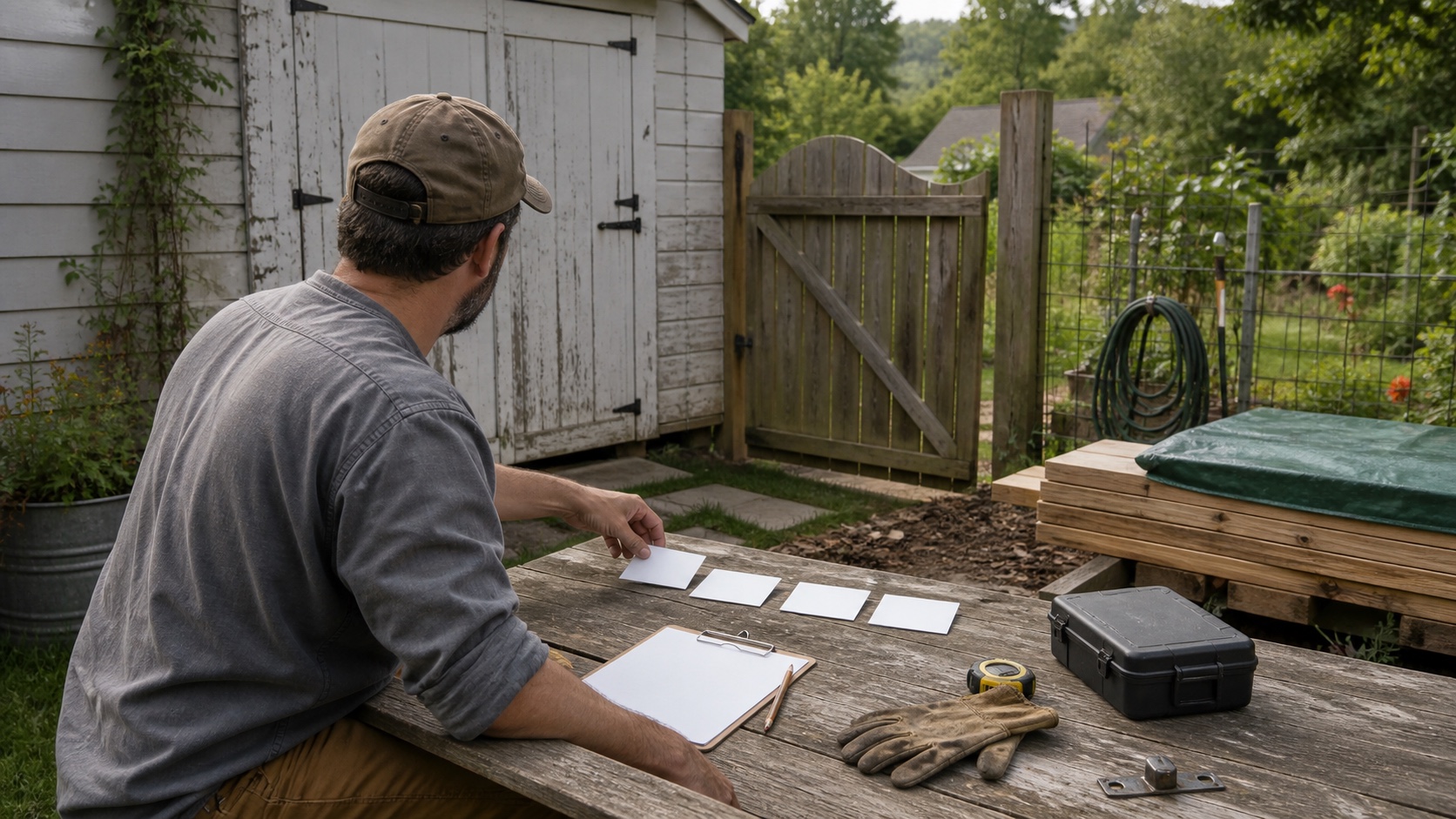
Prioritize homestead projects by consequence, not excitement. Handle immediate safety and animal-welfare problems first. Next comes work that prevents damage or protects an essential system, followed by real seasonal deadlines and repeated daily friction. Optional expansion, convenience, and appearance belong later. Then start only the highest project that is actually ready: clear scope, owner, budget, materials, work window, dependencies, cleanup, and a written definition of done.
The Saturday List That Had Already Spent Sunday
After the layoff, practical plans had a way of feeling safer than uncertainty. I could open a notebook and give every worry a project: build a better pantry, learn the garden, prepare for chickens, organize tools, price land, fix the weekly routine. None of those ideas was foolish. That was the problem. Every one of them could make a reasonable case for being next.
One list could quietly spend the same Saturday four times. The garden assumed the morning. A storage project assumed the same money. Research assumed a clear head that evening. Family life was expected to fit around all of it, and Sunday had already become the place where unfinished work would land. The page looked organized, but it was lying about capacity.
The useful change was not a better planner. It was giving the list an order and allowing most of it to wait. A project did not move forward because it was meaningful or because I had thought about it all week. It moved when the consequence of waiting was clear, the household could carry it, and the smallest usable finish line fit the actual season. Crossing projects off the active list felt less ambitious. It was also the first version I trusted.
Build the Weekly Base
Give projects a rhythm before they claim the calendar.
The calmer weekly homestead rhythm separates daily care, weekly maintenance, project work, and family margin so the priority list has somewhere honest to live.
Build a calmer weekly rhythmUse Five Levels Instead of One Giant List
A flat list makes a loose latch, a leaking roof, a better feed shelf, a future orchard, and a prettier shed compete as if they carry the same consequence. They do not. Give each project one primary level before comparing cost or enthusiasm. If a project seems to fit every level, name the specific failure you are trying to prevent. Vague importance should not outrank a visible consequence.
Level one is not permission to label every inconvenience an emergency. A concern should be identified and assessed honestly. If you suspect unsafe electrical work, structural movement, a hazardous tree, fuel or gas trouble, contaminated water, failing septic, or another specialized risk, keep people away from the hazard and use the properly qualified local professional. A priority worksheet cannot diagnose technical conditions.
Capture Everything, Then Shrink Each Project
Write every loose project in one place so the household does not have to remember it. Then rewrite each item as an observable result. 'Fix the shed' is too wide. 'Keep rain out of the west wall and protect the stored hand tools' identifies a failure and a finish. 'Improve the chicken area' is vague. 'Replace the damaged lower hardware-cloth attachment after confirming the repair method' gives the work an edge.
That last line matters. A backlog is not a promise that every idea will happen. Some entries should disappear when the real benefit is small, the maintenance is larger than expected, or the family no longer wants the result. Deleting an outdated project is not lost progress. It returns capacity to work that still matters.
Rank Consequence Before Cost and Effort
It is tempting to start with the cheapest or fastest item because finishing something feels good. Quick wins have a place, but only after higher-consequence work has been made safe and scheduled. Painting a shelf should not push an active leak off the calendar. On the other hand, a five-minute gate adjustment that stops a daily struggle may deserve attention before a large optional build because it returns time every morning.
A High-Priority Project Can Still Be Unready
Priority answers what deserves attention. Readiness answers what can responsibly begin. Confusing those two creates expensive starts. A drainage concern may rank high and still need observation after rain, utility-location information, or professional evaluation before soil is moved. A coop repair may matter before cold weather and still need dimensions and an appropriate material plan before a store run.
Keep One Active Improvement Project
Routine care continues: animals still need water, meals still happen, and the garden may still need harvest. The one-project limit applies to discretionary improvement work that consumes setup, materials, decisions, and cleanup. One active improvement gives the household a better chance of reaching a usable finish before the next pile begins.
You can prepare the next project without activating it. Confirm a measurement, gather a quote, or watch for the correct weather window, but keep its materials stored and its budget unspent. If the active job is waiting on a professional or delivery, choose a small maintenance task with a complete finish line instead of opening another major build.
A September Project Triage Example
Imagine a beginner household enters September with five ideas: a gate latch has started missing its catch, one downspout leaves water near the foundation, a fall garden bed could be expanded, the shed needs organizing, and a decorative sign would make the entrance feel finished. The list is not ranked by price or by which supplies are easiest to buy. It is ranked by what failure exists now.
First, keep animals or children away from an insecure gate and correct the containment problem using an appropriate repair. Next, inspect the water issue and get qualified help if the cause or remedy is outside your skill. The fall bed gets a real planting deadline and a smaller scope; if the window or weekly watering capacity does not fit, expansion waits. Shed organization moves up only if blocked access or lost tools are interfering with necessary work. The sign stays parked.
Cold-Weather Filter
Separate true fall deadlines from seasonal pressure.
The fall homestead checklist helps you protect water, shelter, access, storage, garden closeout, and family capacity before optional cold-weather projects expand.
Use the fall checklistMake the Budget Part of Readiness
A project is not ready because the first material purchase fits this week's cash. Price the complete usable finish: materials, fasteners, delivery, disposal, replacement of damaged pieces, protective equipment, permits where required, rental or professional work, and the maintenance that begins afterward. Add a reasonable contingency for the specific job instead of pretending the sticker price is the whole project.
If the complete finish does not fit, the answer may be to stabilize the condition safely, reduce scope, save, gather quotes, or wait. Do not scatter money across four half-funded improvements. One finished basic repair generally serves the household better than several exciting starts with no protected path to completion.
Set the Money Boundary
Keep project spending inside the first-year plan.
The first-year homestead budget separates infrastructure, tools, animals, garden costs, learning, and reserves so the active project cannot quietly borrow from every category.
Build the first-year budgetWhat Can Wait Without Failing the Homestead
A strong project system is partly a waiting system. Optional structures, increased animal capacity, a larger garden, cosmetic work, matching storage, specialized equipment, and improvements for imagined future routines can remain visible without becoming active. Waiting preserves the chance to learn whether the current version even needs them.
Run a 15-Minute Weekly Review
Do not rebuild the priority system every morning. Give it a short weekly review. New evidence can change the order, especially a safety concern, animal-care failure, active damage, or narrowing weather window. Ordinary frustration should usually wait for the review instead of hijacking the active project in the middle of the week.
This is the part I keep coming back to: the goal is not a shorter list. Homestead work will keep producing ideas, repairs, seasons, and tradeoffs. The goal is a list that tells the truth about consequence and capacity. When one finished repair makes the property safer or one small change makes a daily route calmer, the system is working.
Choose the Next Project, Not the Whole Future
Take the project list that is currently occupying your head and give every item one level. Circle the highest ready project. Write its smallest usable finish, its money ceiling, its owner, its work window, and the cleanup required to close it. Then protect the rest of the weekend from becoming overflow.
The page may look less impressive after that pass. Let it. A grounded fresh start is not measured by how many projects can be named. It is built by making the next necessary thing safer, simpler, and finished without asking the family to live inside a permanent work zone.
Keep the Boundary
Finish the right project without giving it the whole house.
Once the priority is chosen, use the family-project guide to set the finish line, work window, cleanup block, budget ceiling, and household non-negotiables.
Set project boundariesRecommended next reads
Read the Next Guide That Supports This Decision
These guides connect the project order to family boundaries, routine maintenance, and the cold-weather work that has a real deadline.
Systems
How to Keep Homestead Projects from Taking Over Family Life
A practical guide to keeping homestead goals from swallowing evenings, weekends, and the people you are trying to build the life with.
Systems
A Beginner Homestead Maintenance Schedule That Won't Take Over Your Week
Build a realistic homestead maintenance schedule around the systems you actually own, one monthly inspection route, seasonal work, and clear repair priorities.
Systems
Fall Homestead Checklist for Beginners: What to Finish Before Cold Weather
A practical fall homestead checklist for sorting safety, animals, garden harvests, water, tools, food storage, and unfinished projects before cold weather arrives.
Frequently asked questions
How do you prioritize homestead projects?
Put immediate safety and animal welfare first, then work that prevents damage or protects an essential system. Next, consider real seasonal deadlines and repeated daily friction. Rank optional expansion and appearance work last. Before starting, confirm that the project is ready: the scope, owner, budget, materials, time window, dependencies, and definition of done should all be clear.
How many homestead projects should you work on at once?
Most beginner households are better served by one active improvement project at a time, apart from routine chores and a true urgent repair. A second project can be queued and prepared, but opening several work areas usually divides money, tools, attention, and cleanup capacity before any one improvement becomes usable.
What homestead projects should come first before winter?
Prioritize verified safety issues, animal shelter and water, active leaks, drainage or access problems that cold weather will worsen, essential heating or plumbing concerns, weatherproof storage, and other climate-specific failures with a real deadline. Use qualified professionals for structural, electrical, plumbing, well, septic, hazardous tree, or other specialized work. Decorative upgrades and optional expansion can usually wait.
Should the cheapest homestead project go first?
Not automatically. A cheap project can still consume the only dry weekend, create dependencies, or delay a small repair with serious consequences. Cost is one constraint, not the ranking. Compare the consequence of waiting, seasonal timing, readiness, household benefit, and what the project will displace.
What should I do with a homestead project that is not ready?
Move it out of the active column and write the next fact needed: a measurement, local rule, inspection, quote, material list, budget amount, weather window, or household decision. Research is a valid next action, but do not let an unready project occupy the work area or spend money as if construction has begun.
How often should I review my homestead project list?
A short weekly review is enough for most households, with a deeper review at seasonal transitions. Add new problems when they appear, but do not reorder the whole list every day. Change the active project only when new evidence raises a genuine safety, welfare, damage, or deadline concern.
Recommended next reads
Read next if it helps the decision
Move into the next guide only if it clarifies the next practical step.
Systems
How to Keep Homestead Projects from Taking Over Family Life
A practical guide to keeping homestead goals from swallowing evenings, weekends, and the people you are trying to build the life with.
Systems
A Beginner Homestead Maintenance Schedule That Won't Take Over Your Week
Build a realistic homestead maintenance schedule around the systems you actually own, one monthly inspection route, seasonal work, and clear repair priorities.
Systems
Fall Homestead Checklist for Beginners: What to Finish Before Cold Weather
A practical fall homestead checklist for sorting safety, animals, garden harvests, water, tools, food storage, and unfinished projects before cold weather arrives.
Weekly rhythm support
Get the weekly reset planner that keeps the week from scattering.
A print-friendly weekly planner for resets, anchor tasks, and the few routines that make the house feel steadier.
Best for: Readers who need a calmer household rhythm before they need more projects.
- A weekly anchor planner
- A reset checklist
- A what-to-drop, delay, or delegate review
Low-noise notes on routines, resets, and steadier household systems.
After signup, the download will unlock right here so you can save or print it.
About the author
William Mock
Founder, writer, and beginner homesteader
William writes from the beginner side of rebuilding after a layoff: homestead plans, family systems, budgets, tools, and the decisions that make a home feel less fragile.
Read why this site existsRelated Guides
Keep building context
Systems
How to Keep Homestead Projects from Taking Over Family Life
A practical guide to keeping homestead goals from swallowing evenings, weekends, and the people you are trying to build the life with.
Systems
A Beginner Homestead Maintenance Schedule That Won't Take Over Your Week
Build a realistic homestead maintenance schedule around the systems you actually own, one monthly inspection route, seasonal work, and clear repair priorities.
Systems
Fall Homestead Checklist for Beginners: What to Finish Before Cold Weather
A practical fall homestead checklist for sorting safety, animals, garden harvests, water, tools, food storage, and unfinished projects before cold weather arrives.