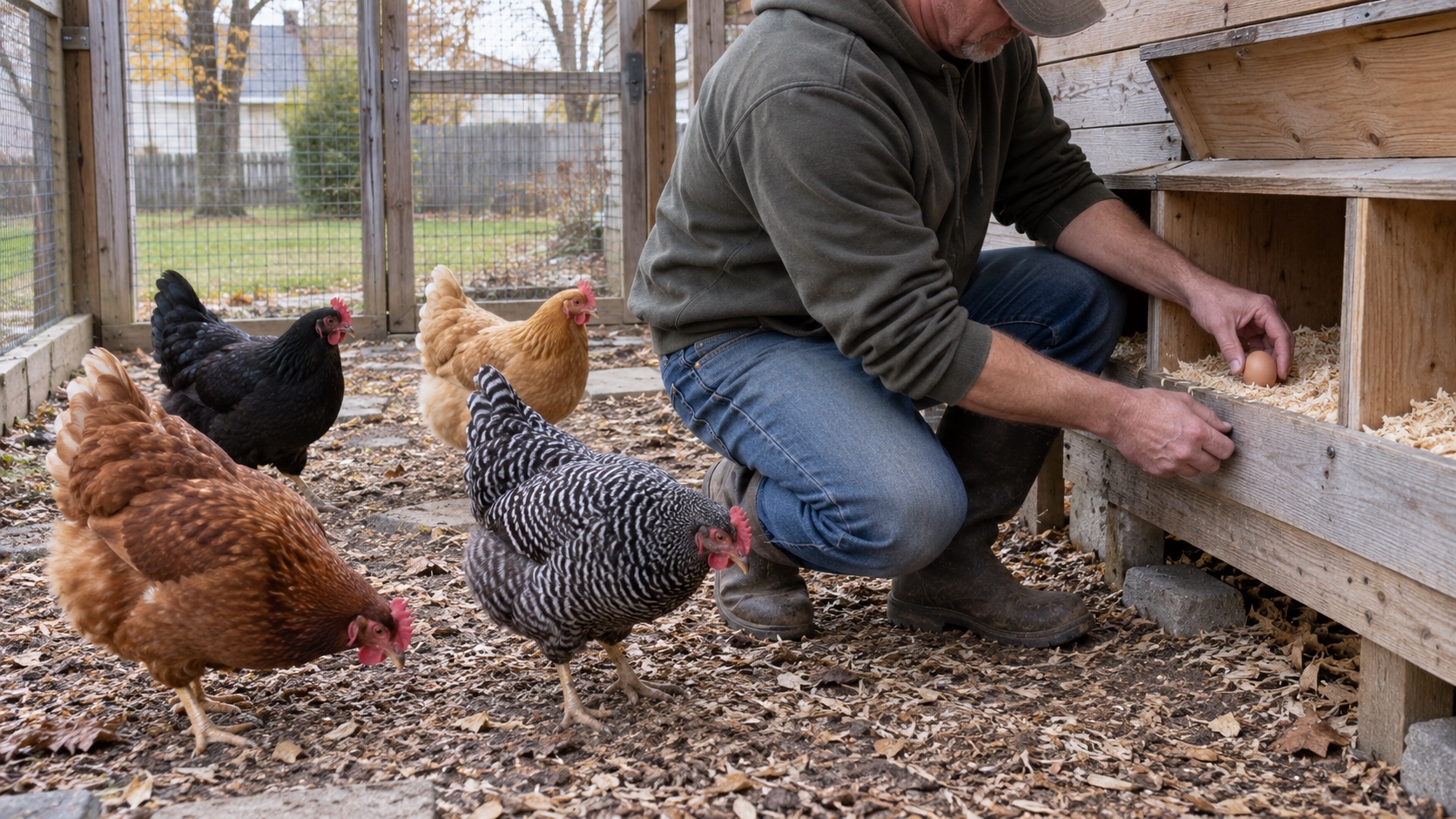
No, chickens do not need a rooster to lay eggs. A healthy mature hen can produce eggs in a hen-only flock. A rooster changes whether those eggs may be fertile and capable of becoming chicks; he does not switch egg production on, make ordinary table eggs healthier, or guarantee more eggs. For most beginners who want a few household eggs, a well-planned group of hens is the simpler starting flock.
Starting a laying flock
Know when your hens should begin laying.
Age, breed, comb color, nesting behavior, season, and setup readiness tell you far more than waiting for a rooster to change the calendar.
Read the first-egg guideThe first blue egg made the question clearer
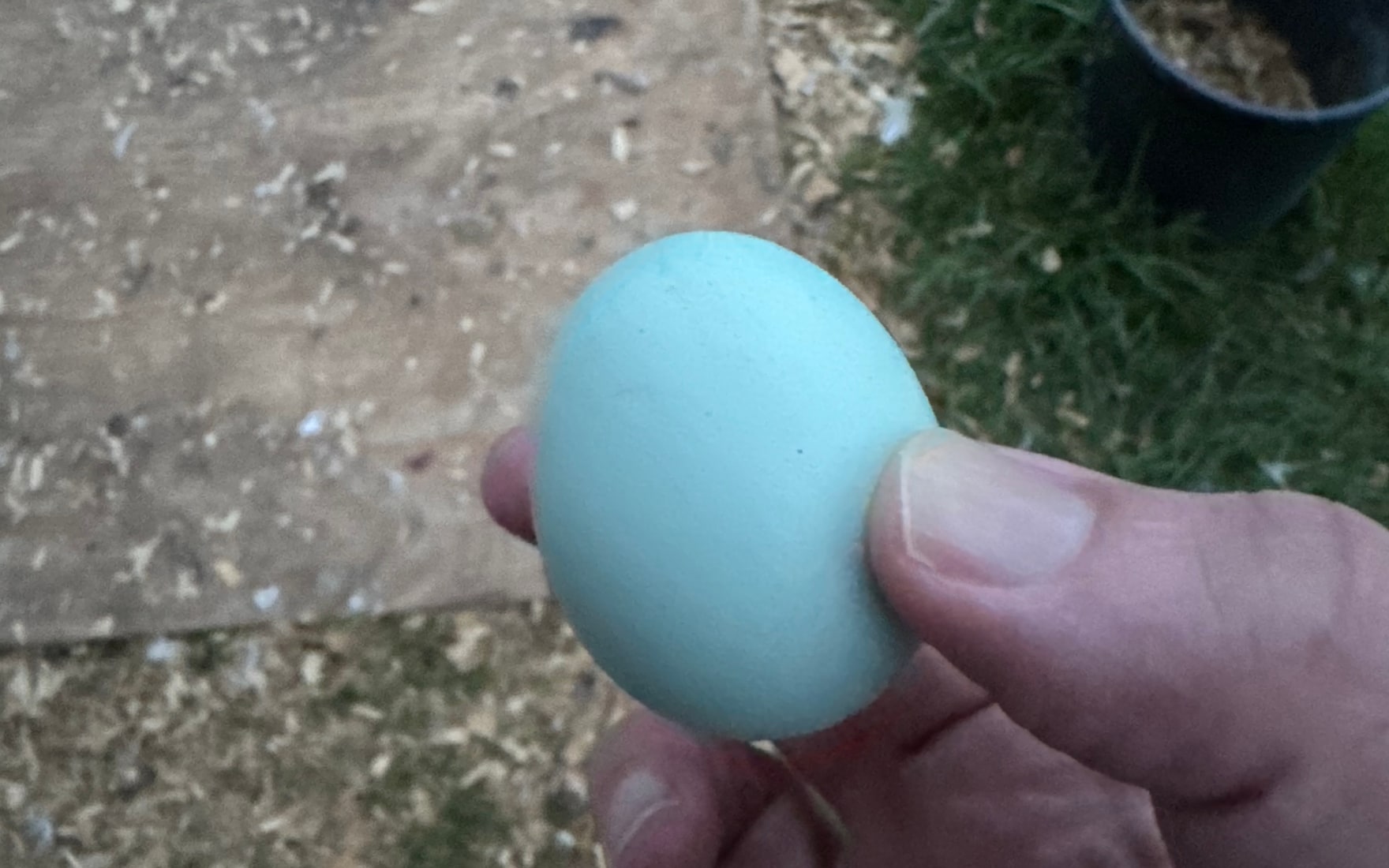
I still remember standing outside with the first blue egg from our flock in my hand. The worn concrete, a strip of grass, and the chicken yard behind it were all ordinary. The egg was not. It looked almost too blue to be real, and for a minute it made every unglamorous input - feed, water, bedding, latches, cleanup, and daily checks - feel visible.
That moment is also a good way to untangle the rooster question. The hen's body built and laid the egg. Fertilization is a separate event. Those two processes get folded together in beginner conversations, as if a rooster carries a tiny approval stamp and the nesting boxes remain closed until he reports for work. Biology is less theatrical and much more useful.
The blue shell made the result memorable, but it did not change the basic system. A rooster does not create the laying cycle, just as a blue shell does not make an egg more nutritious. The practical lesson is to decide what you want the flock to produce before adding another animal to it. If the answer is breakfast, hens already know the job.
What a rooster changes - and what he does not
Penn State Extension and Utah State University Extension both state that hens do not need roosters to lay eggs. Pullets begin laying as they reach reproductive maturity, with timing influenced by breed, age, nutrition, health, season, and day length. If a pullet has not started, adding a rooster does not correct an immature bird, short winter days, poor nutrition, illness, stress, or an unfinished nest setup.
If egg production is the problem you are trying to solve, use the first-egg guide for young birds and check breed, age, feed, water, health, molt, stress, and daylight for an established flock. A rooster belongs on a different decision tree.
An egg needs more than a rooster to become a chick
A rooster makes fertilization possible through mating. That does not mean every egg will be fertile, every fertile egg will develop, or every developing egg will hatch. Mississippi State Extension gives one rooster for about 10 to 12 hens as a general breeding guideline, but a real breeding plan still depends on breed, age, condition, behavior, timing, housing, and the fertility goal.
The broody-hen guide covers the decision after a hen begins sitting. Broodiness does not prove the eggs are fertile, and a broody hen is not a free incubator with feathers. She is the start of a management commitment that continues well after hatch day.
Fertile eggs are still table eggs when handled safely
The presence of a rooster does not make a freshly collected egg contain a visible chick. Development requires appropriate incubation conditions. The USDA shell egg guide says there is no nutritional difference between fertile and infertile eggs. For the household kitchen, the important work is regular collection, prompt refrigeration, clean nest management, separation of cracked or leaking eggs, handwashing, and proper cooking.
Do not leave eggs under a broody hen for an uncertain number of warm days and then move them casually into the breakfast carton. If hatching may have begun, or an egg is cracked, leaking, badly soiled, rotten-smelling, or otherwise questionable, do not use a glance at the yolk as a food-safety test. Follow current egg-handling guidance and discard unsafe eggs. The fresh-egg storage guide covers that system in detail.
When keeping a rooster can make sense
A rooster can have a legitimate place when the household intends to hatch chicks, maintain or improve a breed line, produce fertile hatching eggs, or keep a mixed flock because that animal fits the property and management plan. Cooperative Extension also notes that roosters may sound alarms and help gather hens when they perceive danger. That behavior can be useful, but it is not a fence, roof, latch, or guarantee.
Do not add a rooster merely because a seller says hens need protection. The predator-proof coop guide starts with hardware cloth, secure latches, covered exposure points, night confinement, and property-specific pressure. A bird may alert the flock, but asking him to replace the enclosure is unfair to every chicken involved.
Why a hen-only flock is usually simpler for beginners
A hen-only flock removes the fertility decision, most rooster-specific legal and noise concerns, mating wear, and the need to manage an adult male's individual behavior. It does not make chicken keeping automatic. Hens still need daily feed and water, safe space, dry housing, predator resistance, health observation, egg collection, cleaning, and backup care.
Are hens happier with a rooster? Watch the hens, not the slogan
Chickens are social animals, but social does not mean every group requires an adult male. A stable hen-only flock can forage, dust bathe, roost, communicate, and maintain its own pecking order. A well-matched rooster may participate in flock movement and alarm behavior. A poorly matched rooster can also create feather damage, avoidance, injury, tension, or extra pressure on too few hens.
Do not decide from a sentimental claim that every hen wants a protector or from the opposite claim that every rooster is trouble. Watch what the individual birds are doing. Healthy participation, normal feeding, intact backs and necks, ordinary movement, and access to rest and resources matter more than the label on the flock. If hens are persistently hiding, losing feathers, being injured, or getting driven from food and water, the setup needs intervention.
If you are still choosing flock size, use the beginner flock-size guide before shopping for birds. A four-hen laying flock and a breeding flock with an appropriate rooster-to-hen balance are not the same project wearing different feathers.
Use this six-question test before adding a rooster
What to do if one of your pullets turns out to be a rooster
Sexing mistakes happen, especially with straight-run chicks and breeds that mature slowly. Do not panic, dump the bird, or wait for conflict to make the decision. Confirm the bird's sex with an experienced poultry keeper, breeder, veterinarian, or Extension resource; check the law; observe behavior; and use secure separation if people or birds are at risk.
Five rooster myths beginners can leave behind
What to buy - and what not to buy - for a hen-only flock
You do not need an incubator, candler, breeding pen, rooster saddle, or chick equipment simply because hens are laying. A hen-only flock needs the same basics it needed before the first egg: appropriate housing, predator resistance, complete feed, clean water, nest space, bedding, sanitation supplies, and a dependable routine.
The only affiliate item included here is an optional wire egg basket already used elsewhere on the site. It solves a carrying problem when the egg count outgrows one hand. A bowl or basket you already own is equally capable of transporting breakfast, and buying a rooster would be a remarkably expensive way to justify a new basket.
Recommendations
One optional tool and the sources behind the decision
Optional egg-collection tool
Little Giant large wire egg basket
A simple open wire basket for carrying eggs when ordinary bowls, pockets, or two hands have stopped being convenient.
Best for: Small-flock keepers who collect enough eggs to need one washable carrying container
Skip this if a bowl or basket you already own handles the job. No special equipment is required because a flock is hen-only.
Check current priceRead the laying guide
Penn State Extension laying-hen guide
A direct explanation of why hens do not need roosters to begin laying, plus practical notes on production, broodiness, local rules, and egg handling.
Best for: Understanding the difference between table-egg production and fertile hatching eggs
View resourcePlan by flock purpose
Mississippi State Extension breed-selection guide
A purpose-first flock guide covering egg production, fertile eggs, breed traits, and a general breeding ratio of one rooster per 10 to 12 hens.
Best for: Deciding whether a rooster belongs in a planned breeding flock
View resourceCheck USDA egg guidance
USDA shell egg safety guide
Federal food-safety guidance covering refrigeration, cooking, shell color, fertile eggs, and safe handling from farm to table.
Best for: Handling table eggs safely whether or not a rooster lives with the flock
View resourceChoose the flock you need, not the farm symbol you recognize
A rooster is one of the clearest symbols of farm life, which can make him feel like part of the package. He is not. He is an animal with a specific biological role, daily needs, individual behavior, legal consequences, and a place only when the household can support all of those things.
If your goal is fresh eggs, start with hens that fit your climate, space, budget, and family routine. Learn their normal behavior. Build the habit of feed, water, security, observation, and collection. When the first egg arrives - blue, brown, white, green, tiny, or slightly ridiculous - it will count without a rooster standing nearby to take credit.
Choose your first flock
Compare beginner breeds by the traits that shape daily care.
Temperament, climate fit, mature size, production rhythm, and broodiness matter more than buying the bird that looks most like a farm calendar.
Compare beginner chicken breedsRecommended next reads
Continue planning the flock
These guides cover first eggs, broodiness, breed choice, and safe storage after the rooster question is settled.

Chickens
When Do Chickens Start Laying Eggs? First Egg Signs and What to Do Next
A practical beginner guide to when pullets usually start laying eggs, what signs to watch for, and how to handle the first eggs without overbuying gear.
Chickens
How to Tell If a Hen Is Broody and What to Do Next
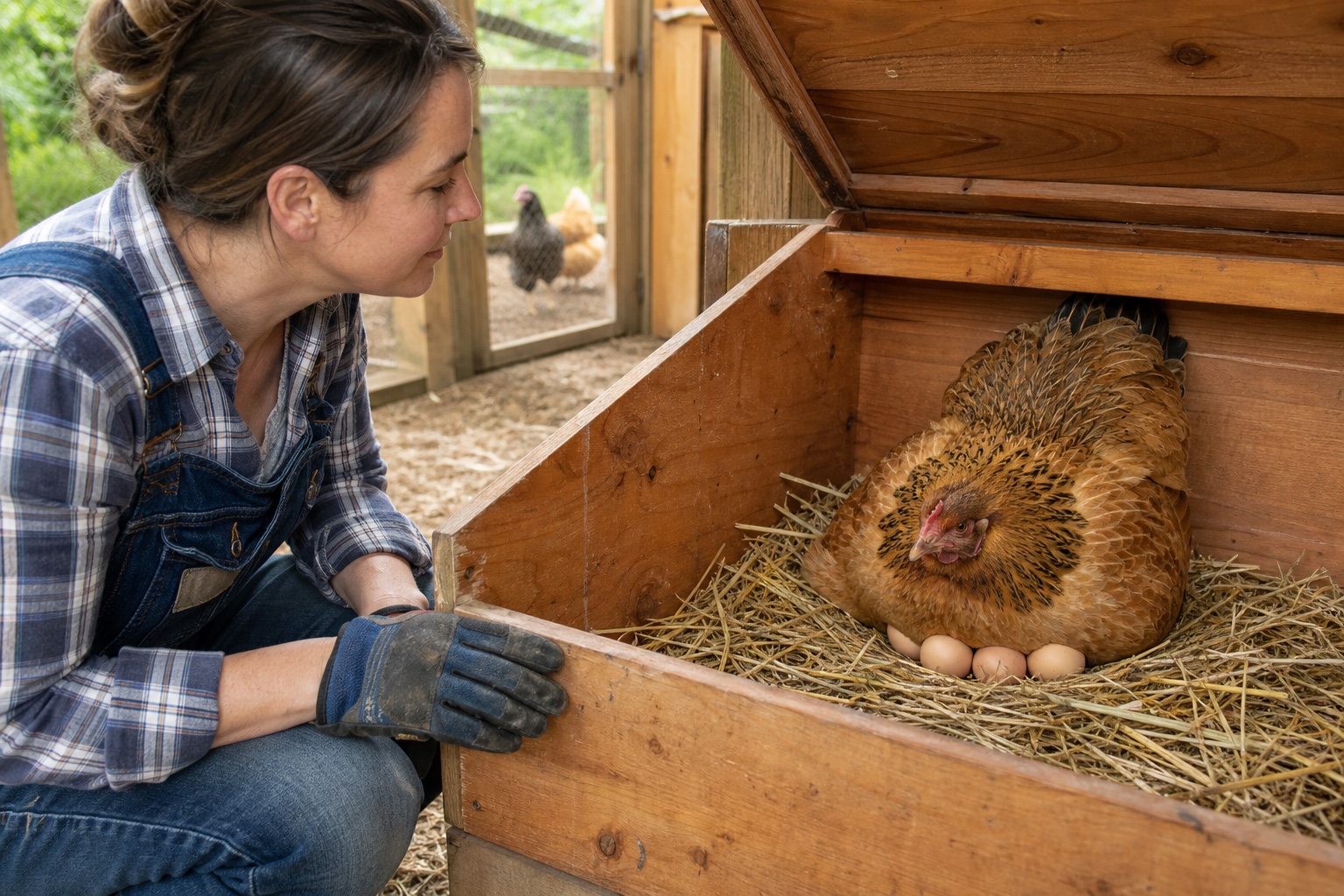
A broody hen stays committed to the nest after laying time, flattens over the clutch, and returns when removed. Confirm the pattern, rule out illness, then decide whether you are truly prepared to hatch chicks.
Chickens
Best Chicken Breeds for Beginners
A practical beginner guide to choosing chicken breeds by temperament, climate, egg goals, local rules, and daily care instead of chasing every egg color at once.
Keep it practical
Build the next useful part of your flock plan
Get practical beginner homesteading notes built around real decisions, reasonable budgets, and work a normal family can maintain.
Practical notes from the work in progress. Low-noise and easy to leave.
Frequently asked questions
Can hens lay eggs without a rooster?
Yes. A healthy, mature hen can lay eggs without a rooster. Her laying cycle is driven by her reproductive maturity, genetics, health, nutrition, and light exposure, not by mating. Without a rooster, the eggs are infertile and cannot develop into chicks.
Do you need a rooster for eggs to hatch?
You need fertile eggs for chicks, which normally means keeping a suitable rooster with hens or obtaining fertile hatching eggs from a responsible source. Fertility alone does not guarantee a hatch. The eggs also need correct collection, storage, incubation, turning, temperature, humidity, and a complete chick-care plan.
Can you eat eggs from hens that live with a rooster?
Yes. Properly collected, refrigerated, handled, and cooked fertile eggs can be eaten. USDA states that fertilized eggs offer no nutritional benefit over infertile eggs. Food safety depends on sound egg handling rather than the presence or absence of a rooster.
Will hens lay more eggs if a rooster is present?
No. A rooster does not make hens begin laying or reliably increase production. Breed, age, nutrition, clean water, health, molt, stress, and day length are the more relevant factors. If production changes after adding a rooster, investigate the whole flock and setup instead of crediting the rooster automatically.
How many hens should you have for one rooster?
Mississippi State Extension gives a general breeding guideline of one rooster for about 10 to 12 hens, but that is not a universal backyard rule. Breed size, individual behavior, space, fertility goals, feather wear, hen stress, and the ability to separate birds all matter. A small beginner flock may be too small to support a rooster responsibly.
Recommended next reads
Read next if it helps the decision
Move into the next guide only if it clarifies the next practical step.
Chickens
When Do Chickens Start Laying Eggs? First Egg Signs and What to Do Next
A practical beginner guide to when pullets usually start laying eggs, what signs to watch for, and how to handle the first eggs without overbuying gear.
Chickens
How to Tell If a Hen Is Broody and What to Do Next
A broody hen stays committed to the nest after laying time, flattens over the clutch, and returns when removed. Confirm the pattern, rule out illness, then decide whether you are truly prepared to hatch chicks.
Chickens
Best Chicken Breeds for Beginners
A practical beginner guide to choosing chicken breeds by temperament, climate, egg goals, local rules, and daily care instead of chasing every egg color at once.
Chicken setup support
Get the chicken setup checklist before you buy more flock gear.
Use the first-year checklist to price the flock honestly, cover the starter essentials, and delay the upgrades that can wait.
Best for: Readers trying to price a first flock honestly and avoid a scattered chicken setup.
- A pre-chick setup checklist
- A recurring-cost planning section
- A simple weekly flock-care rhythm
Chicken setup notes, beginner flock lessons, and the checklist first.
After signup, the download will unlock right here so you can save or print it.
About the author
William Mock
Founder, writer, and beginner homesteader
William writes from the beginner side of rebuilding after a layoff: homestead plans, family systems, budgets, tools, and the decisions that make a home feel less fragile.
Read why this site existsRelated Guides
Keep building context
Chickens
When Do Chickens Start Laying Eggs? First Egg Signs and What to Do Next
A practical beginner guide to when pullets usually start laying eggs, what signs to watch for, and how to handle the first eggs without overbuying gear.
Chickens
Chicken Egg Colors Explained: Blue, Brown, Green, and More
Why chickens lay blue, brown, green, cream, or white eggs, which breeds lay each color, what shade changes are normal, and when the shell deserves a closer look.
Chickens
How to Tell If a Hen Is Broody and What to Do Next
A broody hen stays committed to the nest after laying time, flattens over the clutch, and returns when removed. Confirm the pattern, rule out illness, then decide whether you are truly prepared to hatch chicks.