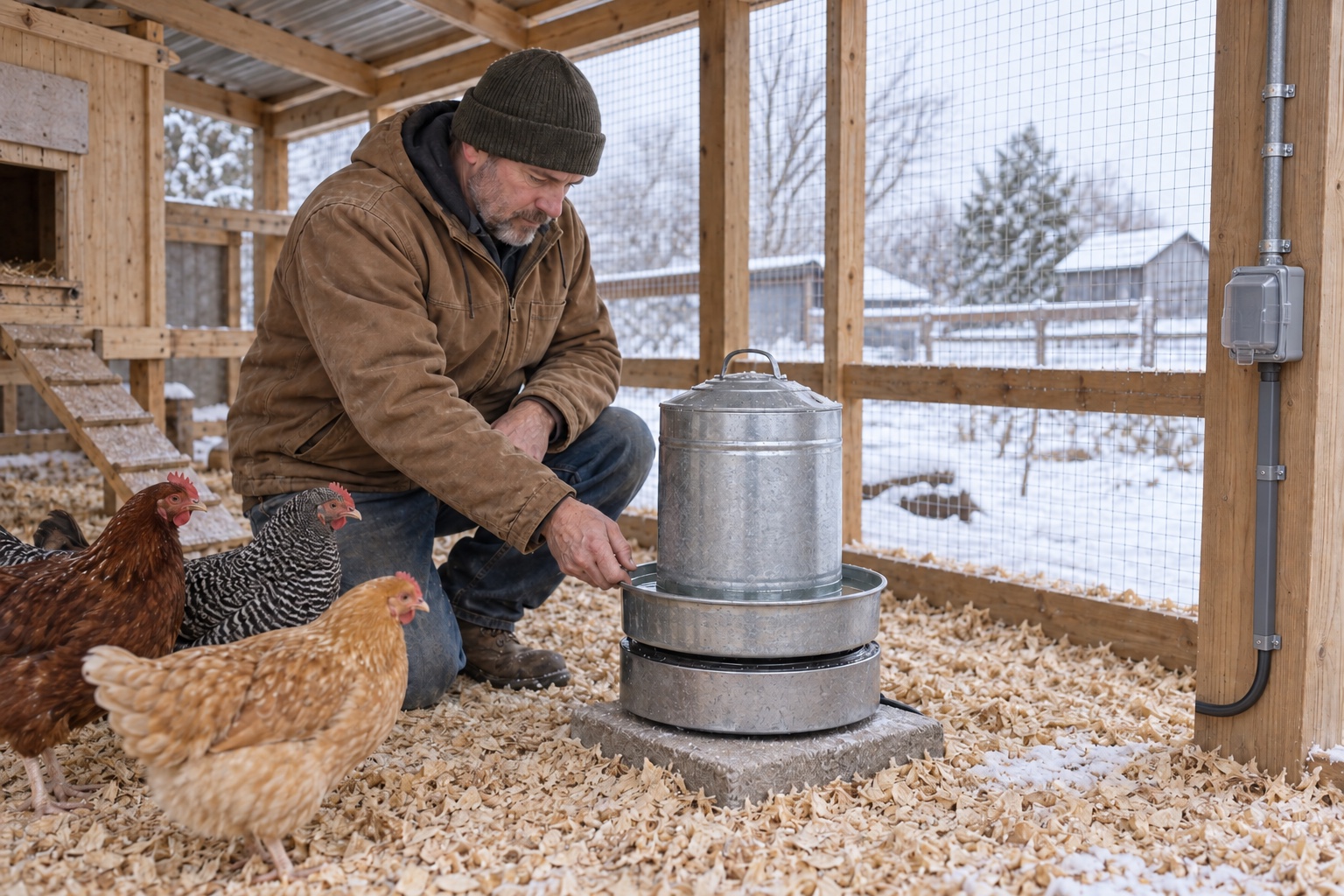
Choose a heated base if you already own the exact compatible metal poultry fount and have a properly installed, protected outlet. Choose an all-in-one heated chicken waterer if you need a complete matched system. If safe power is unavailable, use two flexible rubber bowls and swap them with fresh water on a schedule. All three approaches can work; the wrong choice is the one your coop, power, or daily routine cannot safely support.
The goal is not to buy the most winter equipment. It is to make sure every chicken can reach clean, liquid water on an ordinary freezing morning and during the first power failure. Start there, then compare products.
The winter problem I almost turned into a shopping list
After I was laid off, I had a season when making a list felt a lot like making progress. There was comfort in finding the right tool, comparing the features, and imagining the finished setup. It gave a clean edge to a life that did not feel very clean at the time.
Winter chicken water can pull me toward that same kind of thinking. Search for a few minutes and the answer appears to be a heated product with the right number on the label. Put it in the cart, cross off the problem, and move on. But a product does not answer who refills it before work, where the plug stays dry, what container actually fits, whether every hen can get to the tray, or what happens when the circuit trips overnight.
That is the lesson I keep carrying from our fresh start: equipment matters, but the ordinary routine around it matters more. I have not personally tested every waterer in this guide, and I am not going to pretend I have. The recommendations below come from manufacturer specifications, current instructions, and Extension guidance. The decision method comes from learning to ask what the family can maintain after the excitement of buying something wears off.
Prepare the whole flock
Use the complete first-freeze chicken checklist
Water comes first, but dry bedding, useful ventilation, roosts, feed, bird condition, and an outage plan belong in the same winter system.
Read the winter chicken guideCompare the three practical winter water options
University of New Hampshire Extension identifies both all-in-one heated water systems and base heaters as winter options. University of Maine Extension also describes the basic rubber-bowl method: turn over a flexible bowl, knock out the ice, refill it, and repeat at least morning and afternoon when power is not available. That humble system is not a failure. For a small flock near the house, it may be the clearest and safest choice.
Choose a heated base when the fount and power already fit
A heated base can be the economical electric choice because you keep using a familiar waterer. The catch is compatibility. The Farm Innovators HP-125 is designed for double-wall metal poultry founts. Its instructions do not approve setting an ordinary plastic waterer on top just because the diameter looks right.
The manufacturer lists the HP-125 at 125 watts, thermostatically controlled, and intended to help prevent freezing down to 10 degrees F. Those are manufacturer claims under the product's intended setup, not a promise that exposed water will remain open in every wind, location, or colder forecast. Read the current manual and check the water itself.
Choose an all-in-one heated waterer when starting from scratch
A complete heated fountain removes one source of uncertainty because the heater and reservoir were designed together. The Farm Innovators HPF-100 is a three-gallon, 100-watt, thermostatically controlled fountain with foldable legs and a design that can also hang. The manufacturer says it is intended to keep water from freezing down to 0 degrees F. Again, that is the manufacturer's stated performance, not permission to skip a cold-morning check.
The advantage is convenience, not magic. You still need to carry three gallons when full, turn the reservoir over to fill it from the bottom, keep the tray clean, prevent a dominant bird from blocking access, and have a plan for the day the power is out. Before buying, picture yourself doing the refill with gloves on. A product that is awkward empty becomes more awkward when it is full, cold, and slick.
Use rubber bowls when safe electricity is not available
No power at the coop does not automatically create an equipment emergency. Two low, flexible rubber bowls can provide a workable rotation. Carry out fresh water in the morning, bring the frozen bowl inside, and repeat later in the day. Flexible rubber tolerates ice removal better than a rigid plastic bowl that may crack when struck or flexed in the cold.
The weakness is labor. This plan fails if the late-day check is vague, the spare bowl disappears, or nobody knows who covers the chore when you are away. Add winter water to the daily chicken-care routine, name the person responsible, and keep the clean spare in one obvious place.
Make the decision with a six-part winter water check
Run the same decision through the actual budget. The guide to winter chicken costs separates a necessary water plan from optional cold-weather purchases and helps account for electricity, extra bedding, and repairs instead of looking only at the price on the box.
Set up the water station for dry bedding and visible checks
Place the waterer where you can see the tray and the ground around it. A stable paver may help keep a permitted setup level and above loose bedding, but do not improvise a platform that lets the unit tip. Keep it away from the roost so droppings do not fall into the water and far enough from walls or corners that lower-ranking hens are not trapped while drinking.
Watch for the dark ring that tells you water is leaking or being spilled. Remove wet litter immediately, correct the cause, and keep the connection dry. Winter humidity already challenges a coop. A water station that steadily wets bedding works against the ventilation and moisture control described in the broader winter chicken-care plan.
What matters first and what can wait
Product options and the sources behind this guide
The two products below are examples of the separate-base and all-in-one approaches. I have not represented them as personal long-term tests. Compare current manuals and your local conditions before purchasing. Affiliate links may earn Fresh Start Homestead a commission at no additional cost to you, but that does not change the order of the decision: safe power and a dependable routine come before the product.
Recommendations
Two product paths and three primary references
Check the heated base
Farm Innovators HP-125 poultry heated base
A 125-watt thermostatically controlled base designed for a compatible double-wall metal poultry fount.
Best for: Keepers who already own a compatible metal fount and have a sheltered location with properly installed grounded power
Confirm the current manual, exact fount compatibility, placement, and power requirements before buying. The manufacturer says not to use an extension cord with this model.
Check current priceCheck the complete fountain
Farm Innovators HPF-100 heated poultry fountain
A complete thermostatically controlled three-gallon poultry fountain with a 100-watt heater and adjustable foldable legs.
Best for: Keepers who need a complete matched waterer and heater rather than a base for an existing metal fount
The manufacturer says it is designed to keep water from freezing down to 0 degrees F. Treat that as a product claim, not a substitute for daily checks or a backup waterer.
Check current priceRead the Extension guide
University of New Hampshire Extension winter chicken guide
Practical guidance on unfrozen water, ventilation, wind protection, roosts, eggs, and winter electrical precautions.
Best for: Checking the water decision against the rest of a sound winter-care plan
View resourceReview winter watering
University of Maine Extension winter watering discussion
A practical discussion of bowl swaps, heated water systems, access to power, and electrical cord capacity.
Best for: Understanding the daily labor and electrical tradeoffs behind winter livestock water
View resourceRead the product manual
Farm Innovators HP-125 instructions
The manufacturer's instructions for container type, placement, grounding, cord routing, and operation of the heated base.
Best for: Verifying the exact operating requirements before using the HP-125
View resourceBuild the plan around your coldest ordinary morning
A heated base is not automatically more frugal, and an all-in-one waterer is not automatically more reliable. The right system fits the container, outlet, flock, cleaning sink, and people who will use it. It also has a second way to provide water when the first way stops working.
That is the kind of resilience I want on our homestead: not a shelf full of answers, but one clear routine that still works when the morning is cold and the week is crowded. Choose the least complicated option that you can operate safely, then practice the backup before the weather makes the decision for you.
Plan for the failure, too
Build a homestead backup plan before you need it
Use a simple worksheet to identify what can fail, what the fallback is, and who handles the next step when the normal system is unavailable.
Build the backup planKeep it practical
Plan the first season before buying more gear
Get the free First-Season Homestead Checklist for a practical sequence covering animals, food, tools, routines, budget, and projects that can wait.
Practical notes from the work in progress. Low-noise and easy to leave.
Recommended next reads
Finish the winter chicken plan
Prepare the whole coop, price the seasonal costs, and make a backup plan for the day equipment or power fails.
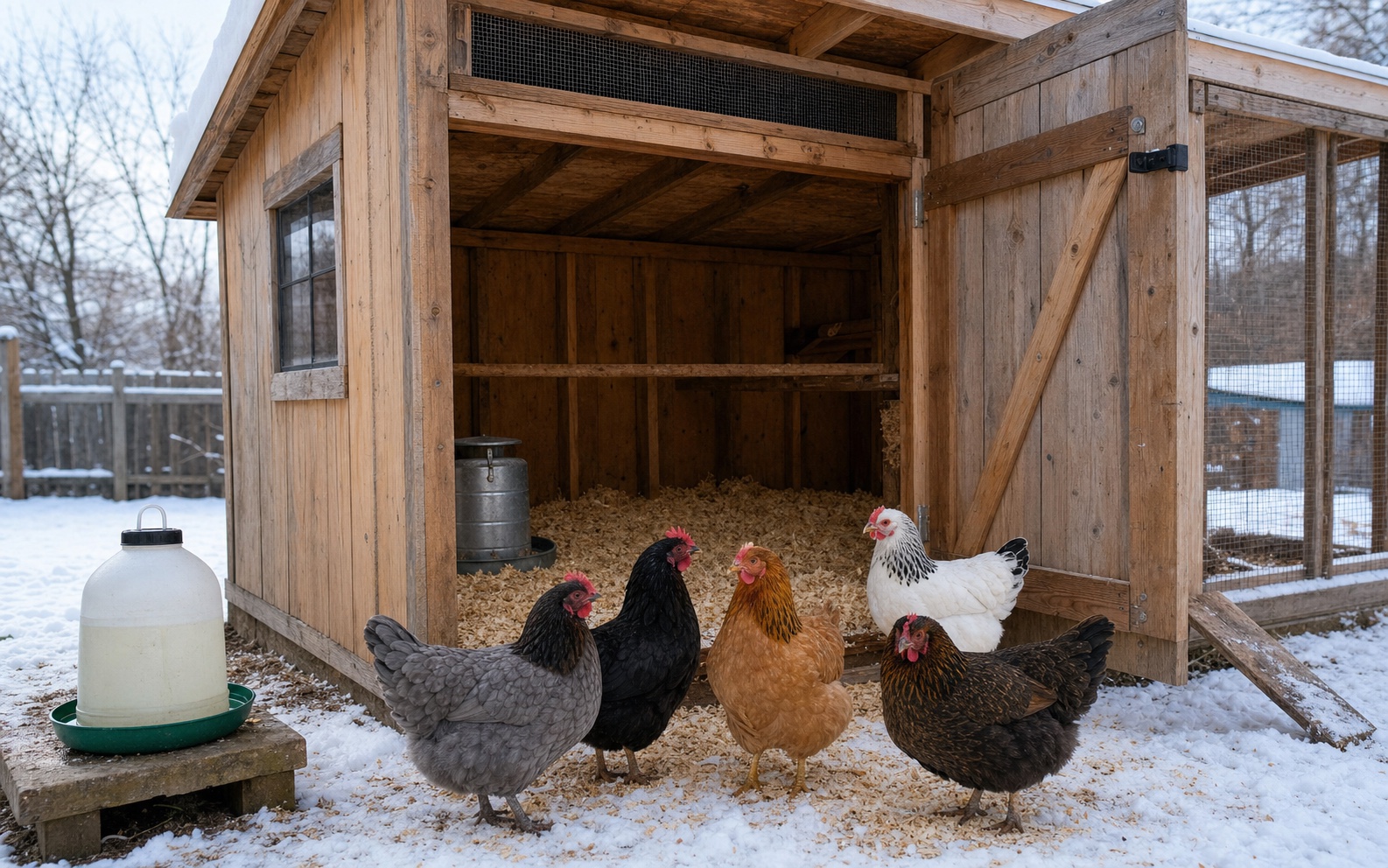
Chickens
Winter Chicken Care for Beginners: Prepare Before the First Freeze
A practical first-winter checklist for unfrozen water, dry bedding, useful ventilation, safe power, flock checks, feed, frostbite risk, and cold-weather routines.
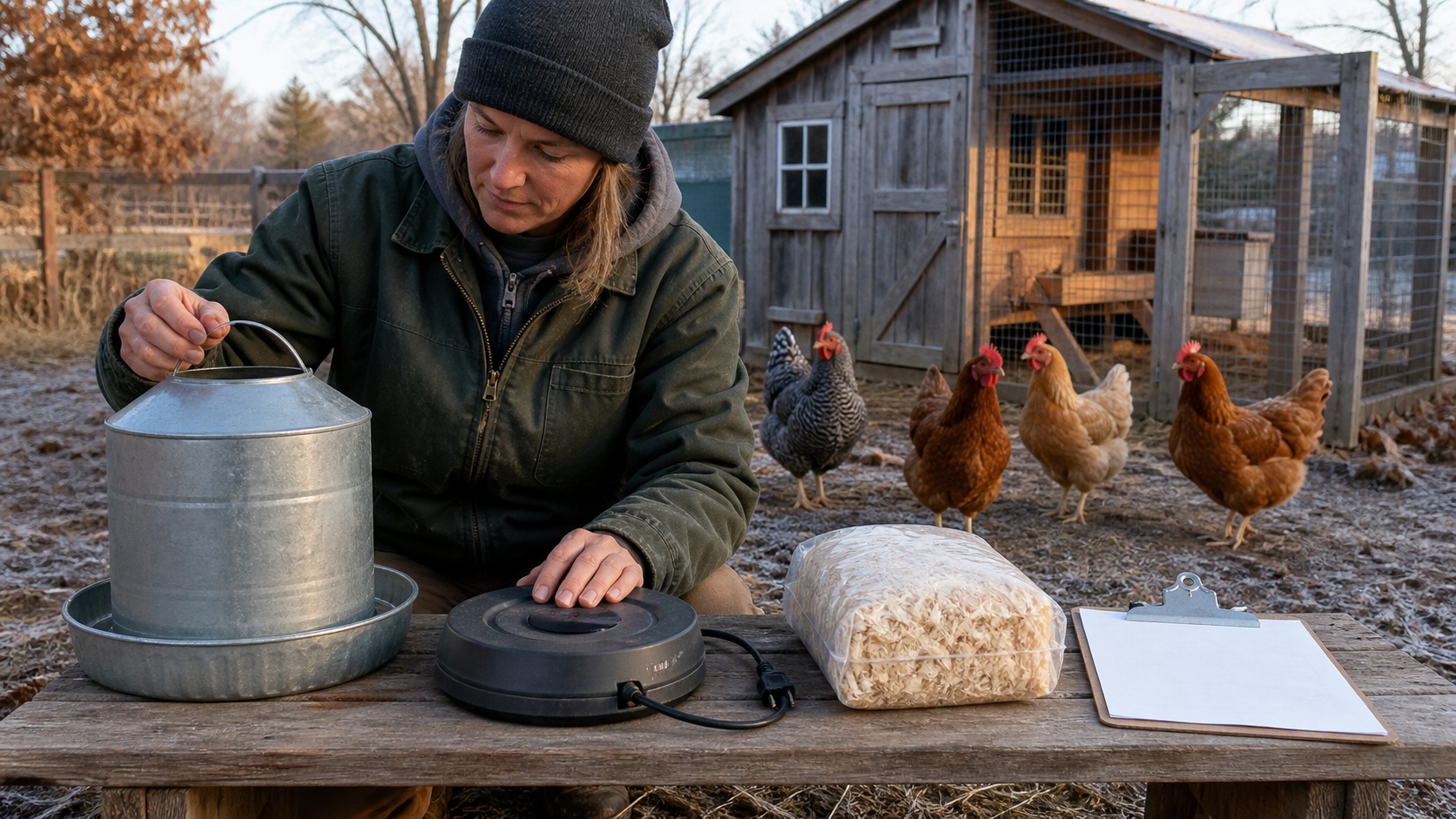
Budgeting
How Much Does It Cost to Keep Chickens in Winter?
A realistic winter chicken budget that separates normal flock costs from extra feed, bedding, unfrozen water, electricity, and cold-weather repairs.
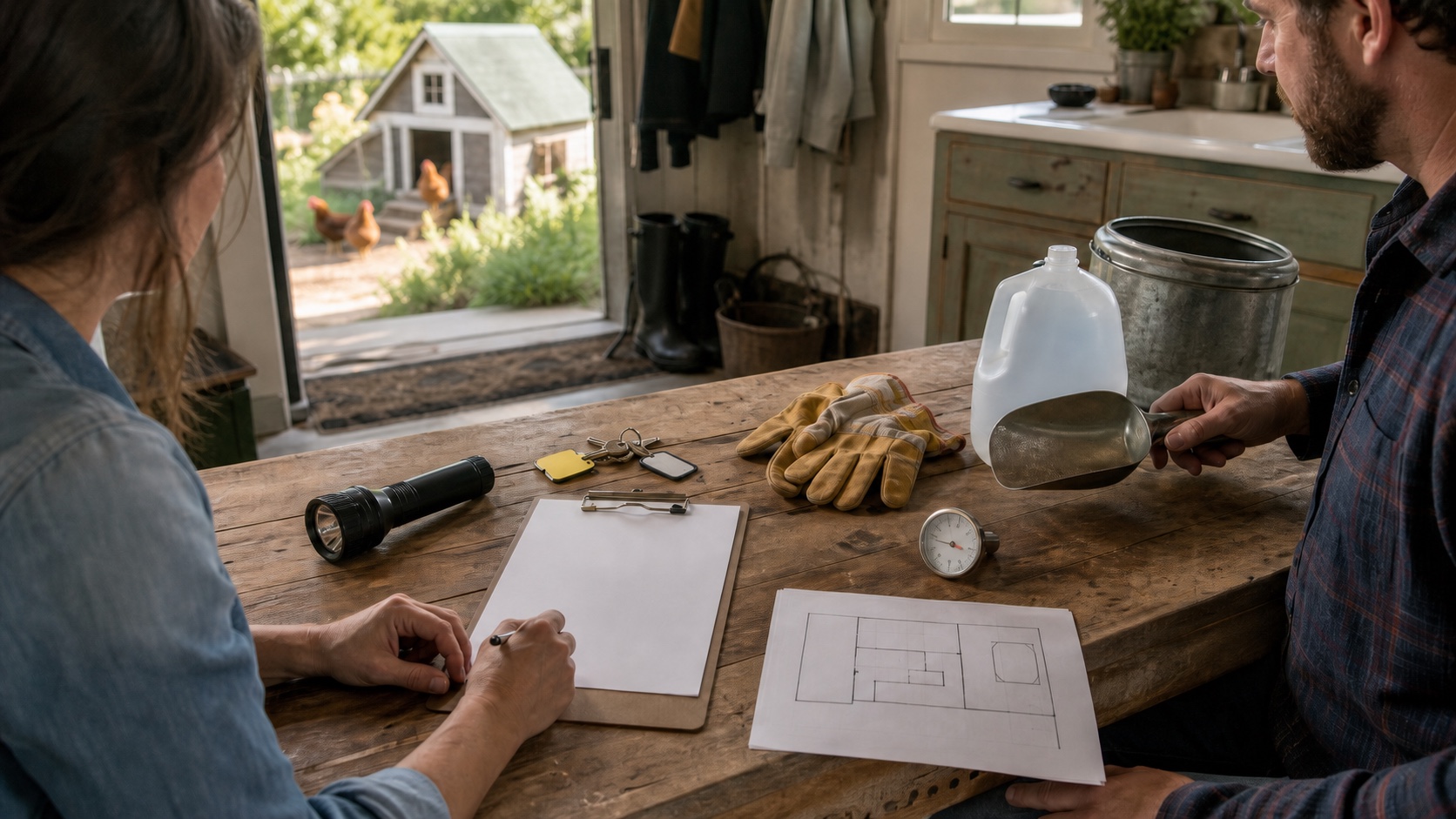
Systems
How to Build a Homestead Backup Plan Before You Need It
A practical one-page homestead backup plan for sick days, travel delays, power or water problems, and any day the usual caretaker cannot carry the routine.
Frequently asked questions
Do chickens need a heated waterer in winter?
Chickens need dependable access to clean, liquid water, but that does not mean every flock needs an electric waterer. In mild freezes or a coop without suitable power, two rubber bowls and a reliable morning-and-afternoon swap routine may be the better system. A heated base or all-in-one heated fountain becomes useful when freezes are frequent and the product can be installed exactly as directed with safe, protected power.
Is a heated chicken waterer better than a heated base?
Neither is universally better. A heated base usually makes sense when you already own the exact compatible metal fount. An all-in-one heated fountain makes more sense when you need both the reservoir and heater or want a single matched system. Compare compatibility, capacity, filling and cleaning, placement, manufacturer instructions, and your backup plan before comparing price.
Can I put a plastic chicken waterer on a heated base?
Only if the manufacturer explicitly approves that exact use. The Farm Innovators HP-125 instructions specify a double-wall metal fount, so a plastic waterer should not be placed on that base. Do not assume two poultry products are compatible because they fit together physically.
Can I use an extension cord with a heated chicken waterer?
Follow the instructions for the exact product. The Farm Innovators HP-125 manual says to plug the base directly into a properly grounded 120-volt outlet and not to use extension cords. If the coop does not have a suitable outlet, ask a licensed electrician about a permanent, protected installation rather than improvising around water, birds, and combustible bedding.
Where should a heated chicken waterer be placed?
Use the product only in a location allowed by its current instructions. In general, the setup should be stable, sheltered from precipitation, separated from roosts and heavy bedding, accessible to every bird, and arranged so spilled water cannot reach the electrical connection. Product instructions and a qualified electrician take priority over a general article.
How often should I check chicken water during freezing weather?
Check at least during the normal morning and late-day chore rounds, and add checks during severe cold, wind, outages, or equipment trouble. A thermostat, indicator light, or heated label does not prove the drinking tray is open and the water is clean. Look at the water and watch birds drink.
Recommendations
Useful tools and resources for this decision
These are included only where they reduce repeated friction, clarify a next step, or help you avoid buying the wrong thing first.
Check the heated base
Farm Innovators HP-125 poultry heated base
A 125-watt thermostatically controlled base designed for a compatible double-wall metal poultry fount.
Best for: Keepers who already own a compatible metal fount and have a sheltered location with properly installed grounded power
Confirm the current manual, exact fount compatibility, placement, and power requirements before buying. The manufacturer says not to use an extension cord with this model.
Check current priceCheck the complete fountain
Farm Innovators HPF-100 heated poultry fountain
A complete thermostatically controlled three-gallon poultry fountain with a 100-watt heater and adjustable foldable legs.
Best for: Keepers who need a complete matched waterer and heater rather than a base for an existing metal fount
The manufacturer says it is designed to keep water from freezing down to 0 degrees F. Treat that as a product claim, not a substitute for daily checks or a backup waterer.
Check current priceRead the Extension guide
University of New Hampshire Extension winter chicken guide
Practical guidance on unfrozen water, ventilation, wind protection, roosts, eggs, and winter electrical precautions.
Best for: Checking the water decision against the rest of a sound winter-care plan
View resourceReview winter watering
University of Maine Extension winter watering discussion
A practical discussion of bowl swaps, heated water systems, access to power, and electrical cord capacity.
Best for: Understanding the daily labor and electrical tradeoffs behind winter livestock water
View resourceRead the product manual
Farm Innovators HP-125 instructions
The manufacturer's instructions for container type, placement, grounding, cord routing, and operation of the heated base.
Best for: Verifying the exact operating requirements before using the HP-125
View resourceRecommended next reads
Read next if it helps the decision
Move into the next guide only if it clarifies the next practical step.
Chickens
Winter Chicken Care for Beginners: Prepare Before the First Freeze
A practical first-winter checklist for unfrozen water, dry bedding, useful ventilation, safe power, flock checks, feed, frostbite risk, and cold-weather routines.
Budgeting
How Much Does It Cost to Keep Chickens in Winter?
A realistic winter chicken budget that separates normal flock costs from extra feed, bedding, unfrozen water, electricity, and cold-weather repairs.
Systems
How to Build a Homestead Backup Plan Before You Need It
A practical one-page homestead backup plan for sick days, travel delays, power or water problems, and any day the usual caretaker cannot carry the routine.
Chicken setup support
Get the chicken setup checklist before you buy more flock gear.
Use the first-year checklist to price the flock honestly, cover the starter essentials, and delay the upgrades that can wait.
Best for: Readers trying to price a first flock honestly and avoid a scattered chicken setup.
- A pre-chick setup checklist
- A recurring-cost planning section
- A simple weekly flock-care rhythm
Chicken setup notes, beginner flock lessons, and the checklist first.
After signup, the download will unlock right here so you can save or print it.
About the author
William Mock
Founder, writer, and beginner homesteader
William writes from the beginner side of rebuilding after a layoff: homestead plans, family systems, budgets, tools, and the decisions that make a home feel less fragile.
Read why this site existsRelated Guides
Keep building context
Chickens
Winter Chicken Care for Beginners: Prepare Before the First Freeze
A practical first-winter checklist for unfrozen water, dry bedding, useful ventilation, safe power, flock checks, feed, frostbite risk, and cold-weather routines.
Budgeting
How Much Does It Cost to Keep Chickens in Winter?
A realistic winter chicken budget that separates normal flock costs from extra feed, bedding, unfrozen water, electricity, and cold-weather repairs.
Chickens
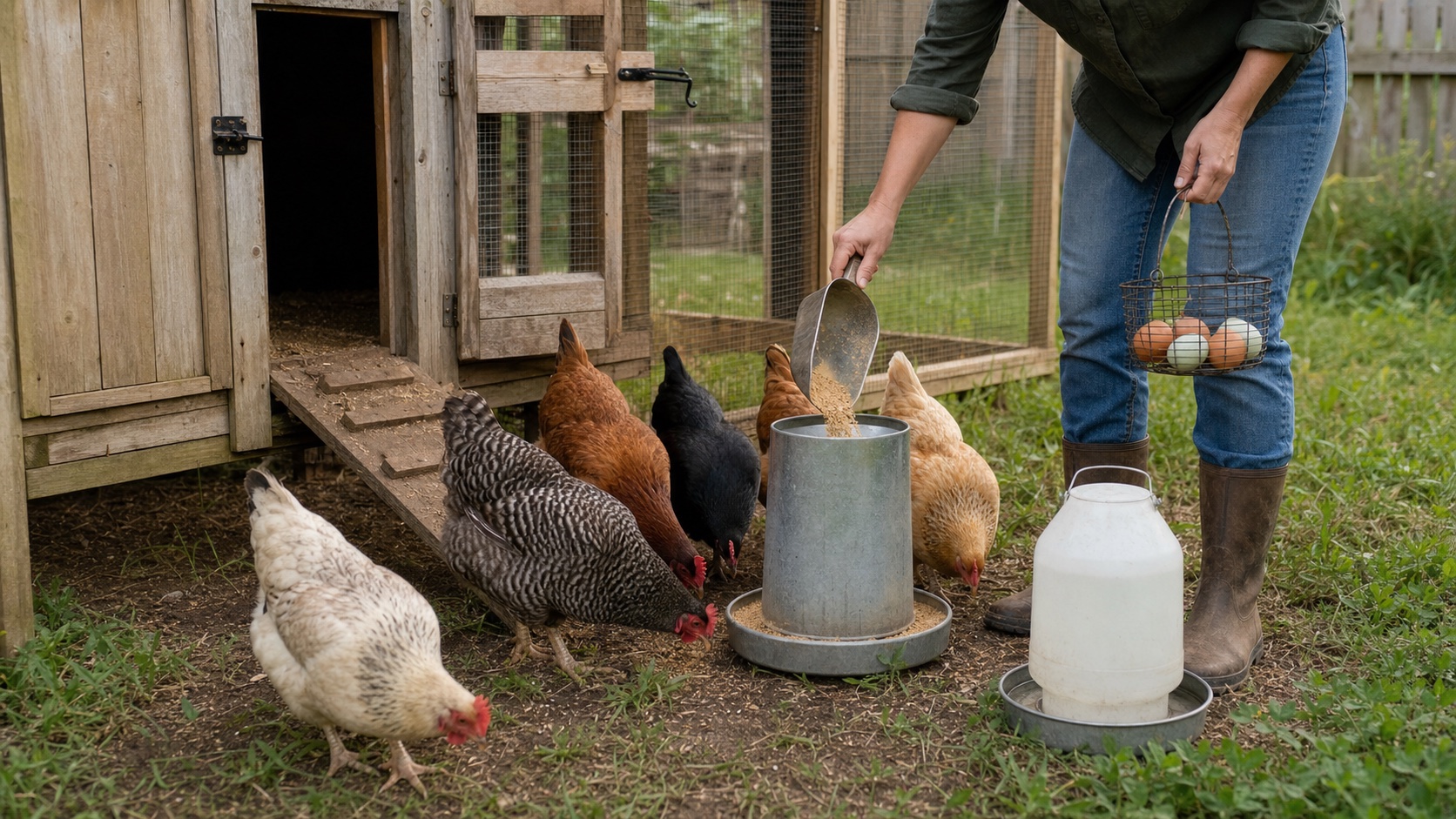
Daily Chicken Care Routine for Busy Families
A realistic morning and evening chicken-care routine built around fresh water, feed, eggs, observation, a secure coop, and the few checks busy families should not skip.