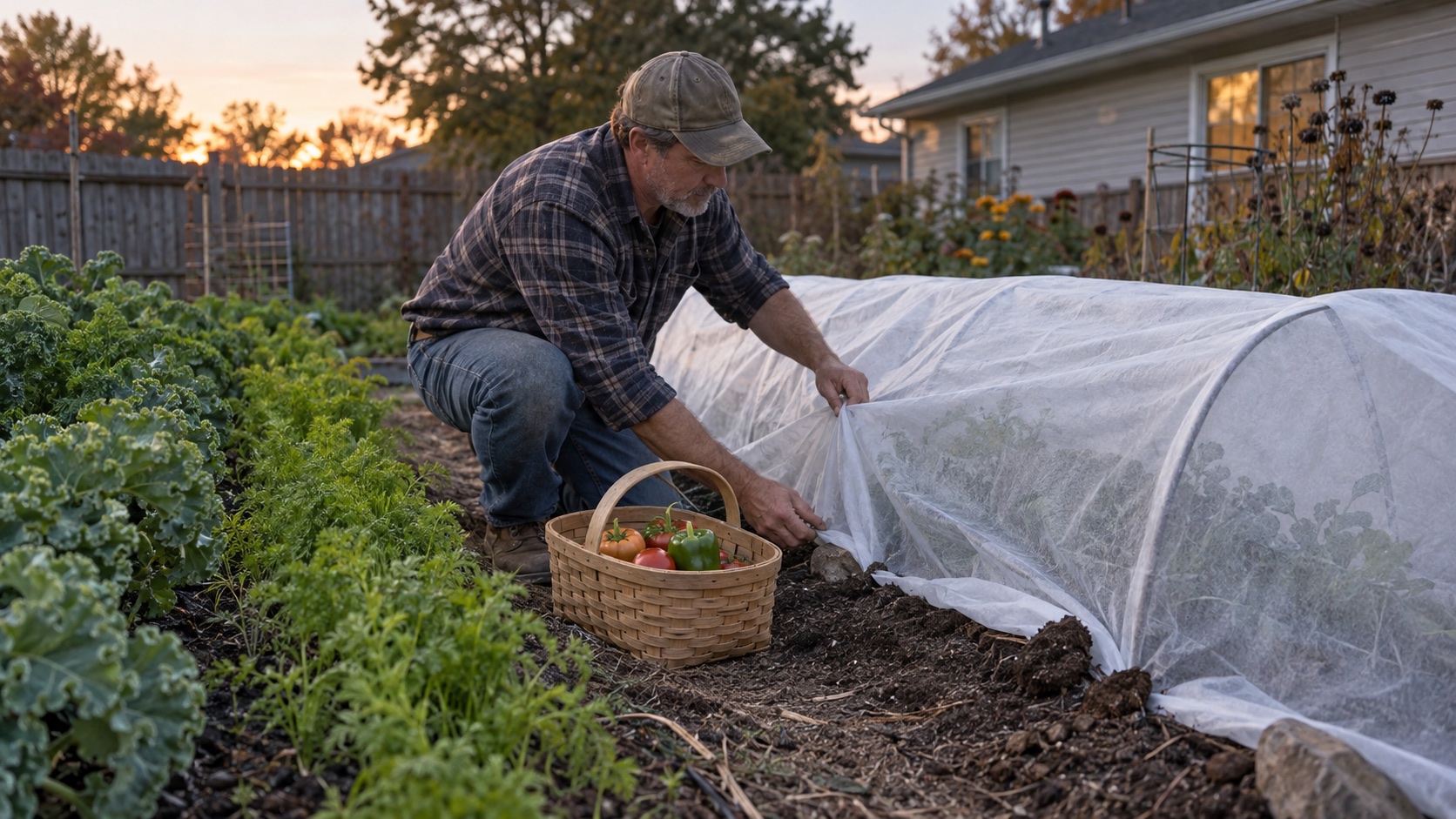
To protect a vegetable garden from frost, do not begin by covering everything. Harvest the tender produce you would hate to lose, identify the crops that can handle a light frost, and cover only the healthy plants that still have a realistic harvest ahead. Stretch the cover to the soil, secure every edge, and treat any forecast near 28 degrees F as a harvest decision rather than a promise that fabric will save the bed.
The first-frost plan that started looking like a rescue mission
When I began working through how our garden should meet its first cold night, my first instinct was to save every green thing. Tomatoes, peppers, tired vines, half-finished squash, and the greens that were finally enjoying cooler weather all felt like work we had already paid for. After the layoff, that feeling carried extra weight. Letting a plant go could feel too much like wasting progress when I was trying hard to build some.
Then I pictured the actual evening: finding enough material, fighting loose corners in the dark, bending supports over tall plants, and trying to remember which beds truly needed help. The plan had stopped being garden protection and turned into a rescue mission. That was the same old trap in a new season, treating every unfinished thing as equally urgent.
The better plan fit on three lines: harvest what the cold could ruin, cover what another week could finish, and leave the hardy crops alone. That small piece of triage gave the night a stopping point. It also gave me a rule I can use beyond gardening: protecting progress does not mean preserving every project. It means knowing which work still has a return. For a mature carrot row, the separate guide to leaving carrots in the ground over winter carries that decision through frozen soil, mulch, pests, drainage, and winter access.
Prepare the whole property without chasing everything
Use the fall checklist to separate urgent work from noise
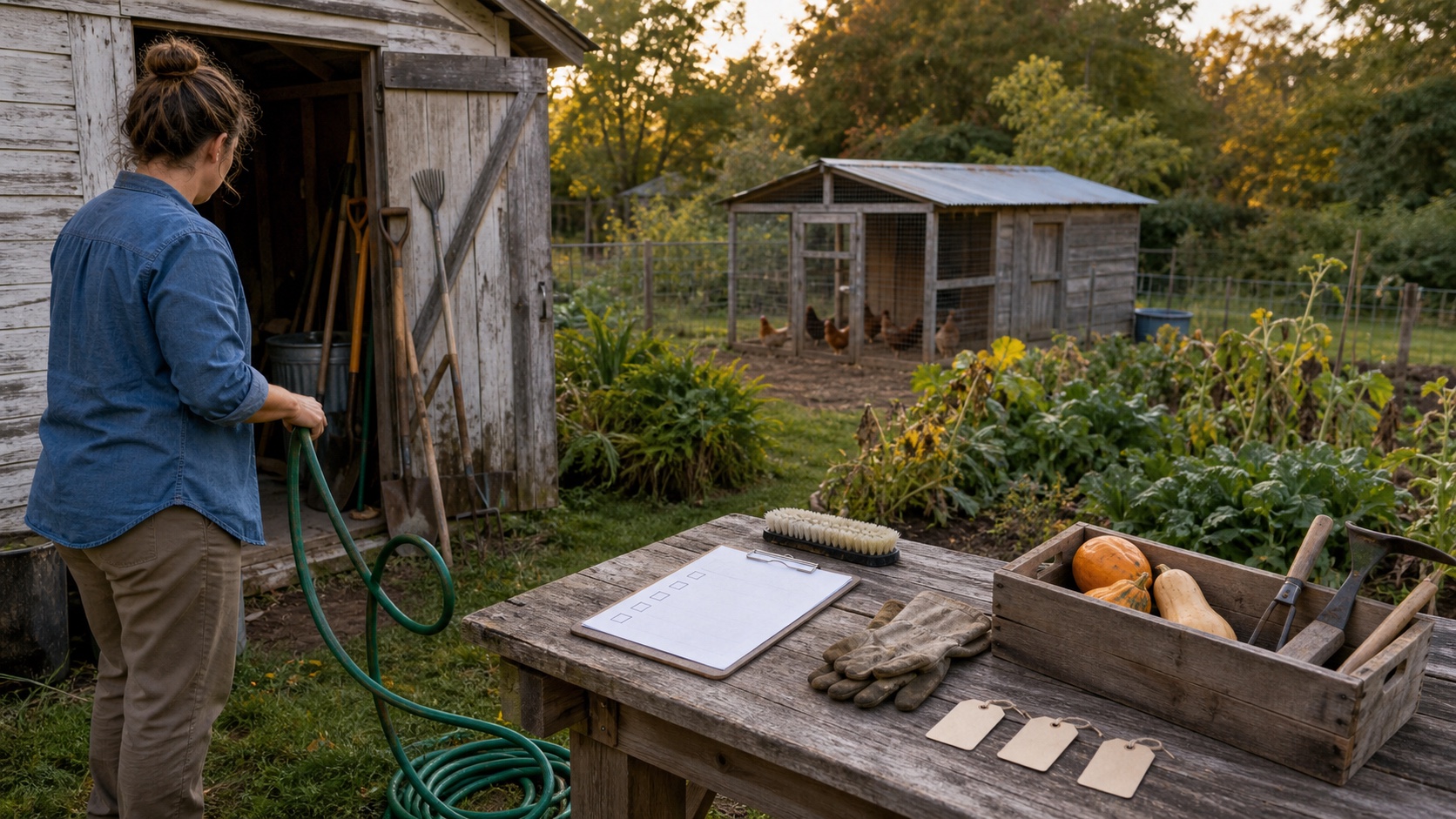
The first-frost plan handles the garden. The broader fall homestead checklist sorts water, chickens, tools, access, and household systems before cold weather settles in.
Open the fall homestead checklistRead the alert before you read the garden
A forecast low is only one part of a frost decision. The National Weather Service uses a frost advisory when frost threatens sensitive vegetation, often with forecast lows in the mid-30s under favorable conditions. A freeze warning generally means temperatures at or below 32 degrees F are expected during the growing season. A freeze watch means the conditions are possible and it is time to prepare.
Your own yard can run colder than the nearest official reading. Cold air settles in low areas, open gardens lose heat differently than beds beside a wall, and a clear still night behaves differently from a cloudy windy one. Use the hourly forecast and your local National Weather Service office, then add what you have learned about the cold pockets around your beds.
Sort every crop into harvest, cover, or leave
Crop names matter, but so do variety, maturity, plant health, and the exact cold event. Utah State Extension groups vegetables as hardy, semi-hardy, tender, and very tender, while University of Minnesota Extension lists tomatoes, peppers, eggplant, winter squash, green beans, cucumbers, and melons among crops that do not tolerate frost well. Use those groups as a decision aid, not a warranty for one plant in one yard.
Decide what an extra week is worth
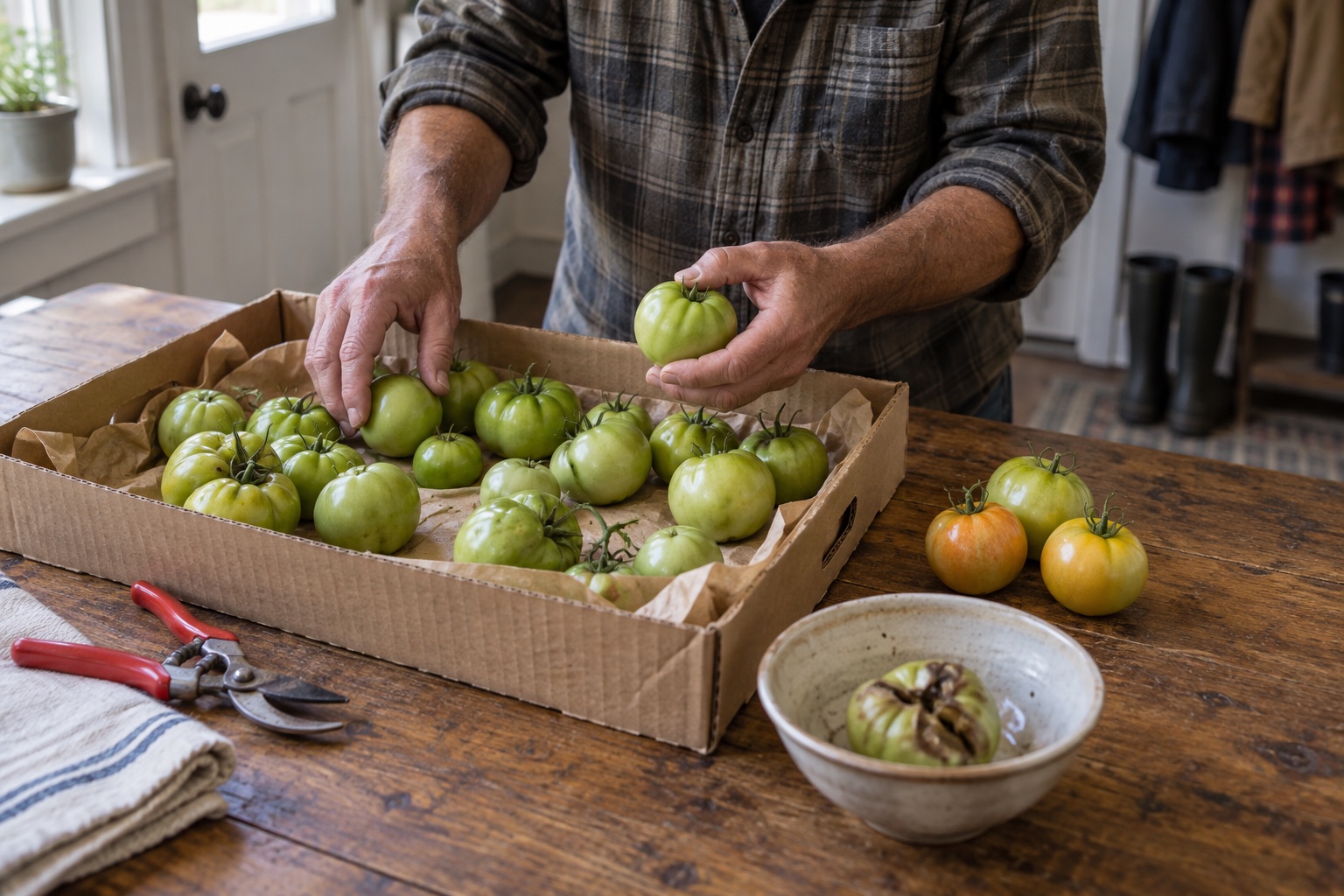
Covering makes sense when a light frost is followed by several mild days and a healthy plant has food close to harvest. A pepper plant holding full-size green fruit may earn space under the cloth. A tomato vine with disease, split fruit, and tiny blossoms probably does not. The cover is buying time, so ask what that time can realistically produce. If tomatoes are the main decision, use the separate guide to choose which green tomatoes to pick and ripen indoors.
There is no failure in harvesting a crop and clearing the bed. Sometimes that is the most productive first-frost decision because it protects the food already grown and gives you daylight for cleanup, compost decisions, notes, and the next planting. Season extension should serve the household, not turn one tired bed into a nightly obligation.
Handle the harvest before it becomes another emergency
Use the 24-hour plan for more produce than the kitchen can hold
If the frost harvest leaves baskets on the counter, sort what to eat, refrigerate, freeze, share, or preserve before quality starts slipping.
Sort an oversized harvestHow a frost cover actually helps
A cover does not generate heat. It slows heat loss and traps some warmth released by the soil around the plant. That is why a cover works better when it reaches the ground around the bed than when it is tied tightly around the top of one plant. The goal is to enclose a pocket of soil and air, not wrap leaves like a package.
Iowa State Extension recommends sheets, blankets, towels, tarps, frost fabric, or row-cover material and advises supporting coverings above foliage. It also notes that ordinary covers usually stop being reliable protection once temperatures fall below about 28 degrees F, with damage possible at warmer temperatures during a long cold period. Treat every degree claim as conditional on the weather and installation.
Measure before you buy frost cloth
A four-foot-wide bed does not need a four-foot-wide cover. The material must rise over the tallest support, travel down both sides, reach the ground, and leave enough extra at both ends to close the tunnel. A short cover creates the exact gaps that let cold air and wind undo the setup.
If clean sheets already meet those measurements, start there. If you expect repeated light frosts or want a breathable material that is easier to handle over low hoops, purpose-made fabric becomes reasonable. The affiliate option below is a 10 by 30-foot, 0.9-ounce listing that may fit one or two small beds after measuring. I have not presented it as something I have used for years, and its dimensions are not a substitute for doing the tape-measure work.
Install the cover before the garden goes dark
Put the cover on while there is still daylight and some warmth in the soil. Working early makes gaps, sharp edges, and loose weights easier to see. It also keeps the job from becoming a cold-weather improvisation with flashlights and whatever happens to be nearest the shed door.
What to do the morning after frost
Wait until the air is above freezing, then remove temporary sheets and blankets. Do not leave opaque material over the bed through a sunny day. Open or remove plastic before trapped heat rises. Purpose-made floating row cover can sometimes remain over compatible crops, but follow its directions and monitor the bed rather than assuming breathable means maintenance-free.
The note matters more than it seems. National averages can help with planning, but the corner beside your fence, the low bed near the ditch, and the sheltered row by the house have their own behavior. One line about the forecast, cover, and result begins turning a generic frost chart into useful knowledge about your place.
Build a small first-frost kit for next time
Once the cover is dry, store it as a system instead of a loose white bundle. Mark the bed it fits, fold the hoops or supports with it, and keep the approved weights or clips nearby. Patch or retire torn material before the next forecast. A cover with holes and no anchors is not a kit; it is another unfinished project waiting for a colder evening.
Keep the bed useful after frost night
Mulch the garden for soil care, not as a substitute for a cover
Mulch helps moderate soil moisture and temperature, but it does not protect exposed tomato or pepper leaves from frost. Use the beginner mulch guide for the separate soil-care decision.
Read the beginner mulch guideProtect the harvest, not the idea of summer
The first frost does not require panic and it does not require a cart full of equipment. It asks for a forecast, a crop list, a little daylight, and an honest decision about what another week can give back. Harvest the tender food first. Cover the healthy plants with a near-term future. Let the cold-tolerant crops meet the weather they were built to handle.
That is the fresh-start version of season extension I trust: not fighting the calendar, just refusing to lose useful work through poor timing. When the cover comes off in the morning, write down what happened. The next frost plan will be shorter, calmer, and more accurate because it belongs to your garden instead of a generic chart.
Frequently asked questions
At what temperature should I cover my vegetable garden?
Begin preparing when your local forecast or National Weather Service office calls for a frost advisory or temperatures in the mid-30s, especially for tomatoes, peppers, cucumbers, squash, melons, eggplant, beans, and basil. Frost can form even when the standard air-temperature forecast remains above 32 degrees F. The crop, wind, cloud cover, location, and length of the cold period all affect damage, so a forecast is a trigger to assess the garden rather than a perfect guarantee.
What vegetables should I harvest before the first frost?
Prioritize warm-season crops that do not tolerate frost, including ripe and usable tomatoes, peppers, eggplant, cucumbers, green beans, summer squash, melons, and mature winter squash. Crop tolerance varies by variety and growth stage. Leafy greens and cole crops are often more cold tolerant, so they do not automatically need to be harvested during a light-frost forecast.
Can I use bed sheets to protect vegetables from frost?
Yes. Clean sheets, lightweight blankets, towels, and purpose-made frost fabric can trap some heat rising from the soil and reduce frost formation. Support heavier material so it does not crush plants, extend it to the ground, and secure the edges. Remove temporary opaque covers after temperatures rise above freezing so plants receive light and the covered space does not overheat.
Can plastic touch plants during a frost?
Keep plastic off foliage. Where plastic contacts leaves, cold can transfer to the plant and damage can occur. Plastic also needs daytime ventilation because it can heat quickly in sun. For a beginner protecting a small bed, breathable frost fabric or a supported sheet is usually more forgiving than loose plastic.
Will frost cloth protect plants during a hard freeze?
Do not assume it will. Cover performance depends on fabric weight, trapped soil heat, wind, temperature, and how long the cold lasts. Iowa State Extension notes that ordinary coverings are typically no longer effective at preventing cold damage once temperatures fall below about 28 degrees F, and prolonged cold can cause damage at warmer readings. Harvest valuable tender produce before a hard-freeze forecast rather than trusting fabric to beat it.
When should I remove frost covers in the morning?
Remove sheets and blankets after the air warms above freezing. Purpose-made floating row cover can sometimes remain longer because it transmits light and air, but it still needs monitoring for heat and crop needs. Open or remove plastic on sunny days, and always follow the instructions for the exact material you use.
Recommendations
Useful tools and resources for this decision
These are included only where they reduce repeated friction, clarify a next step, or help you avoid buying the wrong thing first.
Check the current size and price
Valibe 10 x 30-foot 0.9-ounce row cover
A specific lightweight garden-fabric option for a beginner who has measured one or two low beds and wants a reusable cover. The current listing identifies the size and fabric weight; those details are more useful than a vague promise that any frost blanket fits any garden.
Best for: A measured small garden that needs a purpose-made fabric cover for ordinary light-frost preparation
This is a specifications-based option, not a claim of long-term personal testing. Use clean sheets you already own if they cover the bed safely, and do not buy this before measuring the full hoop width, both sides, and extra material needed at the ends.
Check current priceRead the frost guide
Iowa State Extension frost and freeze protection guide
A clear home-garden reference for coverings, support structures, daytime removal, and the limits of trying to protect plants below roughly 28 degrees F.
Best for: Checking the practical limits and correct use of temporary covers
View resourceReview frost and freeze alerts
National Weather Service cold-weather alerts
An official explanation of frost advisories, freeze watches, and freeze warnings so the wording in a local forecast leads to the right level of preparation.
Best for: Understanding what the alert on your forecast actually means
View resourceCompare vegetable tolerance
Utah State Extension vegetable cold-tolerance guide
A peer-reviewed planning reference that separates hardy, semi-hardy, tender, and very tender vegetables while explaining why variety, growth stage, and conditions still matter.
Best for: Sorting a mixed vegetable garden by likely cold tolerance
View resourceRead the season-extension guide
Colorado State Extension season-extension guide
A practical reference on floating row covers, supported covers, ventilation, and the tradeoff between added cold protection and reduced light.
Best for: Deciding whether a simple cover or a longer-term season-extension setup fits the bed
View resourceCompare row-cover weights
Agribon row-cover specifications
The manufacturer's current comparison of row-cover weights, light transmission, common sizes, and stated frost-protection ranges. Use it to understand why fabric weight matters before comparing products.
Best for: Comparing lightweight and heavier fabric specifications without assuming all white covers perform alike
View resourceRecommended next reads
Read next if it helps the decision
Move into the next guide only if it clarifies the next practical step.
Gardening
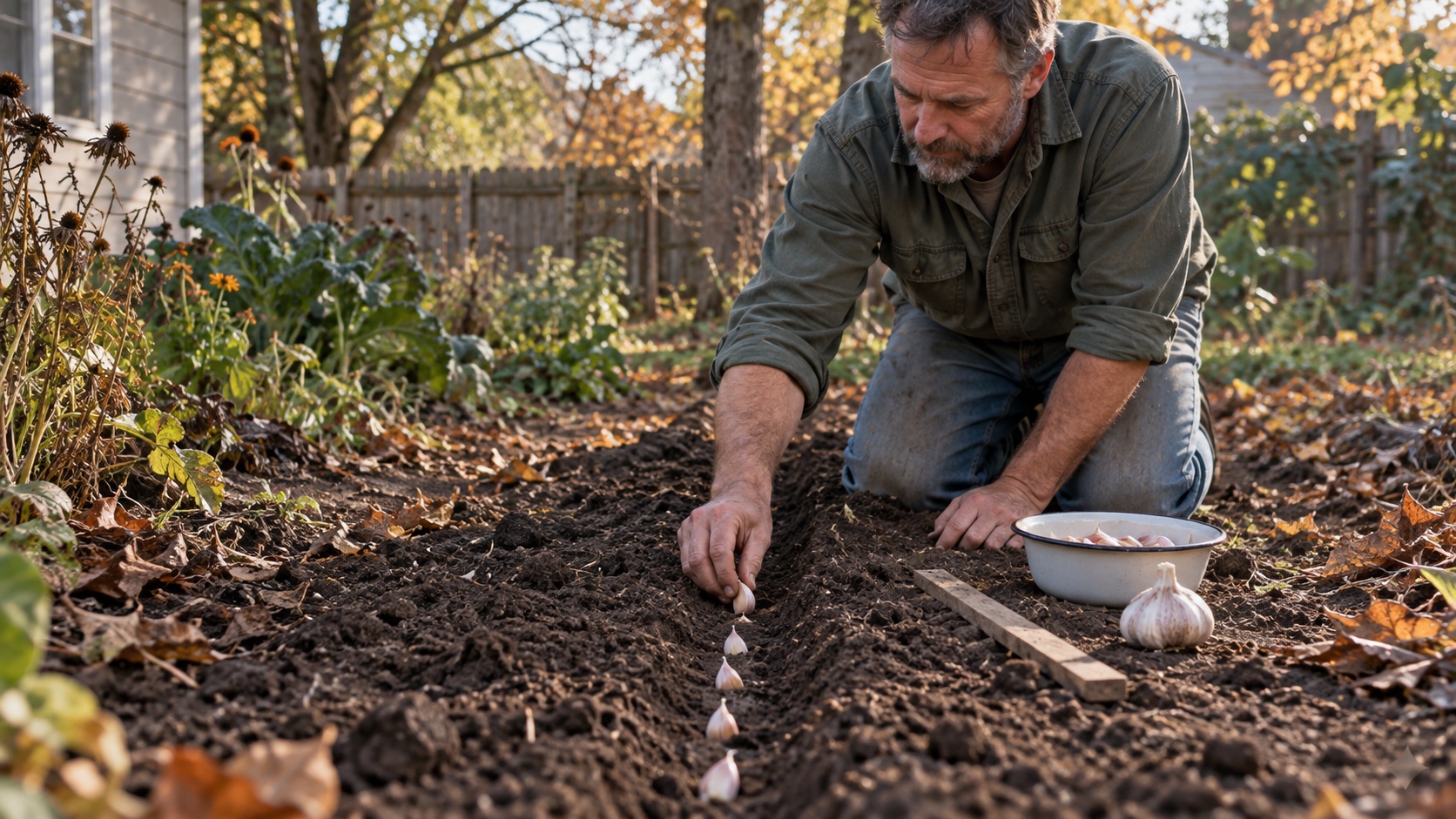
When to Plant Garlic in Fall: A Beginner Guide
Plant garlic late enough to limit top growth but early enough for roots to establish before the ground freezes. Here is how to choose the date, cloves, bed, spacing, and mulch.
Gardening
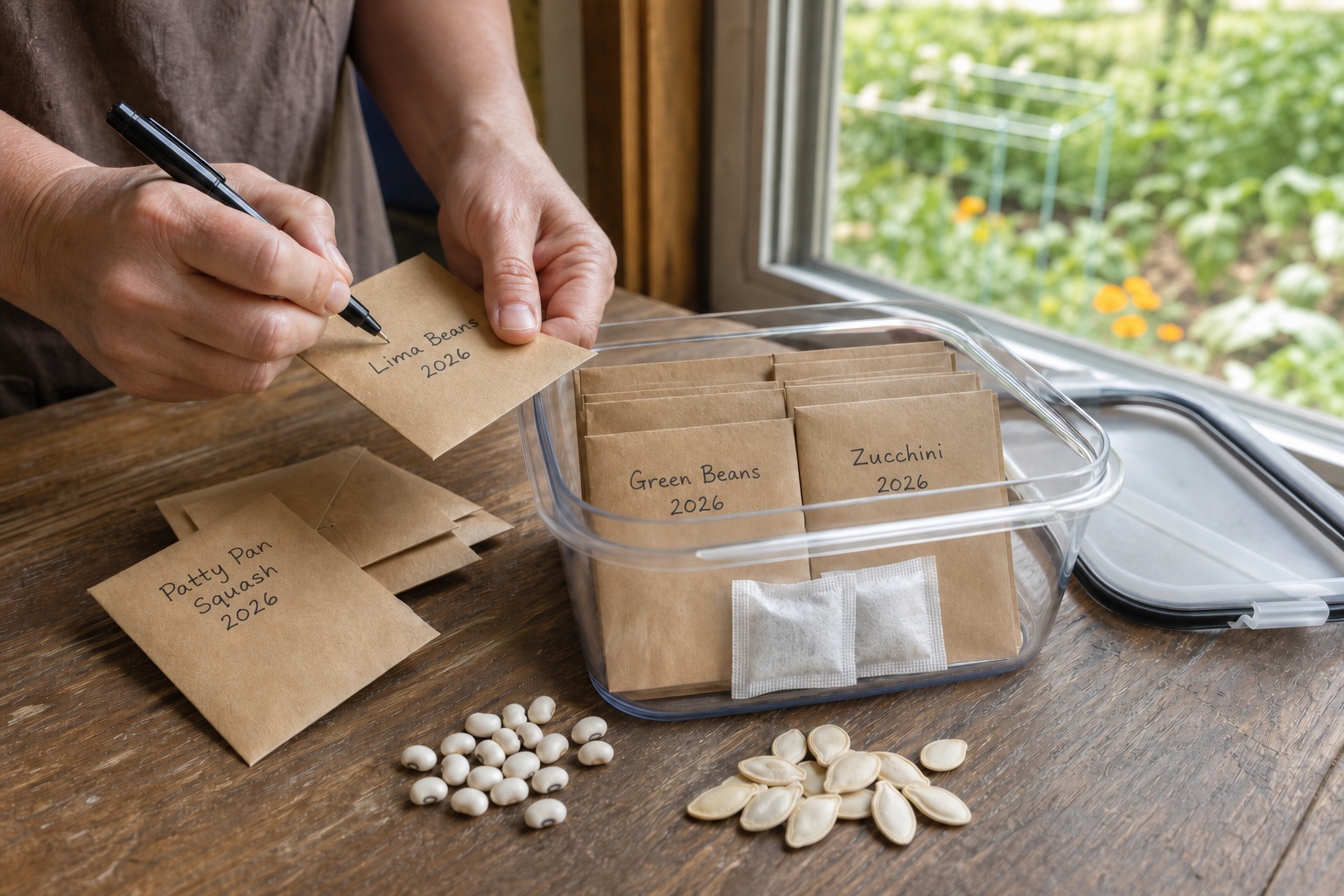
How to Store Leftover Garden Seeds Until Next Year
Leftover garden seeds can stay useful for years when they are dry, labeled, sealed, and kept cool. Here is a simple storage system and a germination test for spring.
Gardening
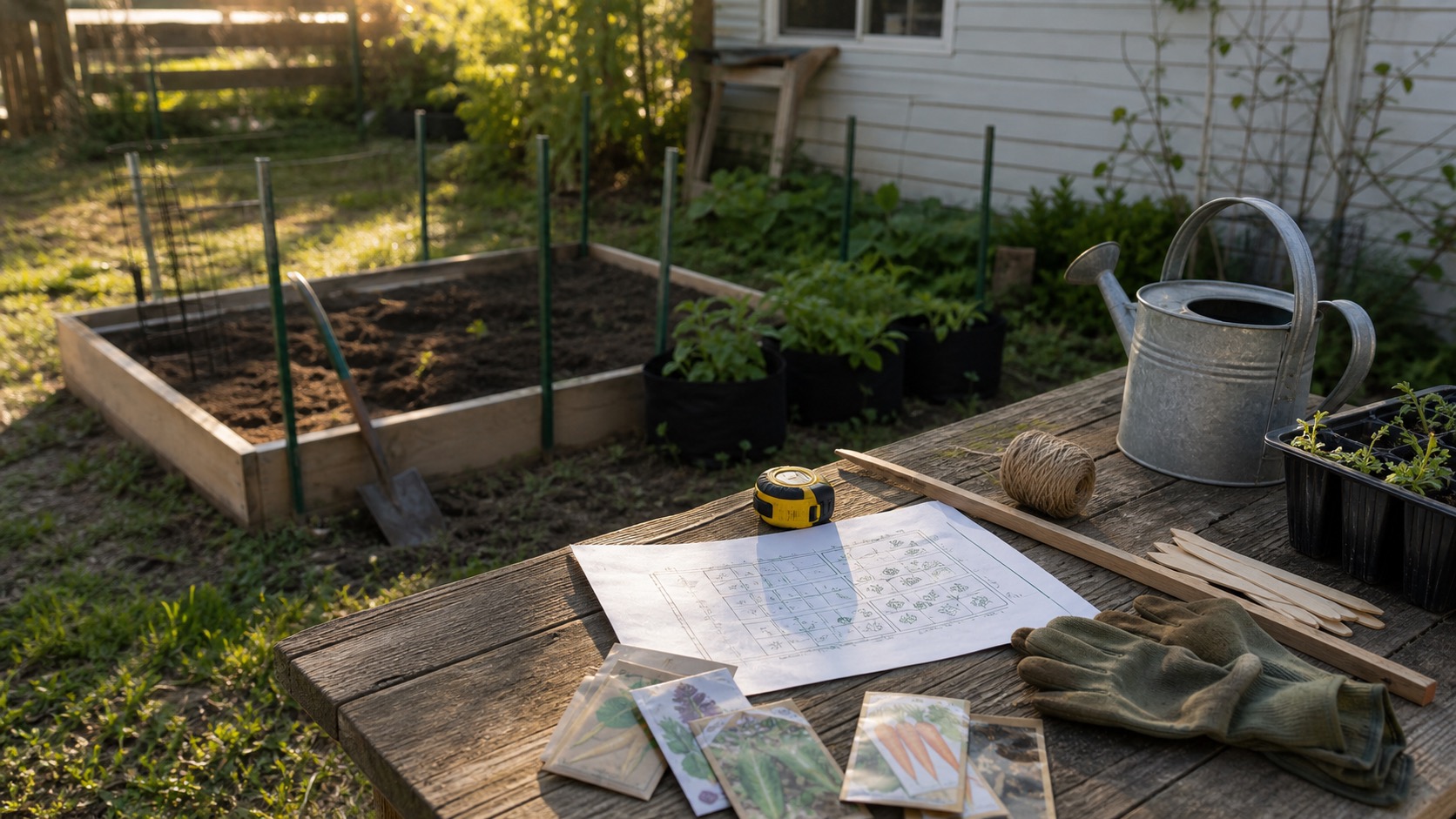
How to Plan Your First Homestead Garden Without Doing Too Much
A successful first garden is smaller, clearer, and less romantic than many beginners expect. That is a good thing.
Garden gear support
Get the buy-first guide before the first garden collects too much gear.
Use the guide to decide which early garden purchases earn money now, which ones can be borrowed, and which ones can wait until the routine proves itself.
Best for: Beginners who keep seeing useful things online and need a disciplined way to decide what actually earns a place.
- A buy now, borrow, wait, or skip framework
- Starter category shortlists
- A three-question purchase test
Garden planning notes, restrained gear decisions, and the guide first.
After signup, the download will unlock right here so you can save or print it.
About the author
William Mock
Founder, writer, and beginner homesteader
William writes from the beginner side of rebuilding after a layoff: homestead plans, family systems, budgets, tools, and the decisions that make a home feel less fragile.
Read why this site existsRelated Guides
Keep building context
Gardening
What to Do With Green Tomatoes Before the First Frost
Before frost, pick mature-green and turning tomatoes, sort out damaged fruit, and ripen the best candidates indoors in a single layer at room temperature.
Systems
Fall Homestead Checklist for Beginners: What to Finish Before Cold Weather
A practical fall homestead checklist for sorting safety, animals, garden harvests, water, tools, food storage, and unfinished projects before cold weather arrives.
Gardening
When to Start a Fall Garden for Beginners
A practical fall garden timing guide for beginners: how to work backward from first frost, choose cool-season crops, and plant a small second season without guessing.