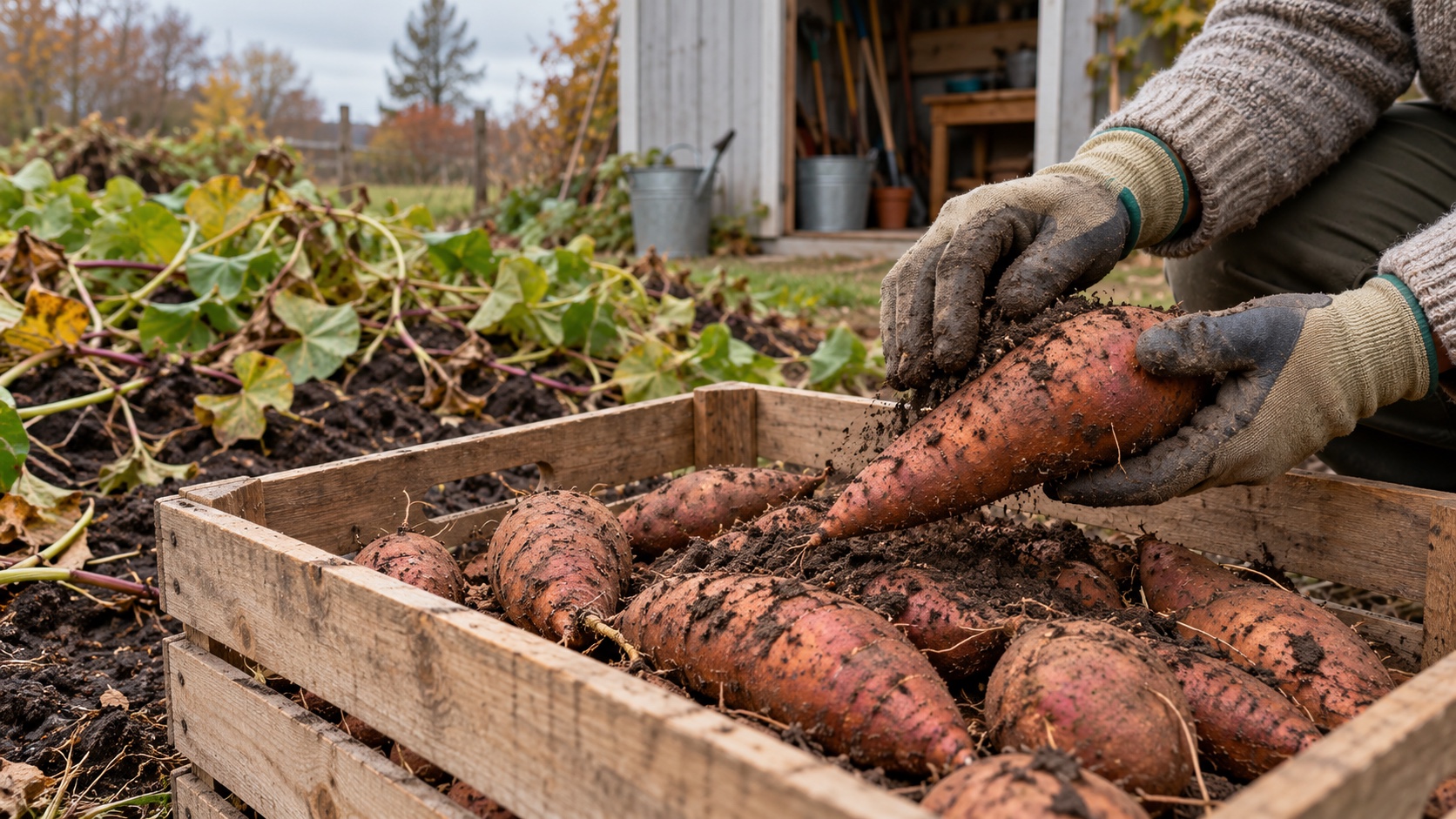
Harvest sweet potatoes before freezing weather, dig slowly so you do not cut or bruise the roots, and cure them warm before moving them to cooler storage. In much of the Midwest, gardeners aim to finish around the first fall frost, but variety maturity and local weather matter more than a date on a generic calendar. If frost has already killed the vines, cut them away and dig as soon as conditions allow; cold-injured roots do not store as well.
The harvest does not have to look finished
I used to picture food storage as a room we had to build before the skill could count. That root-cellar idea sat in my plans like a permission slip: once we had the right shelves, temperature, and dark corner, then we could get serious. Mapping the spaces we actually have showed me how easily an ideal setup can become a reason to postpone a useful, smaller step. I have not grown and cured a sweet-potato crop myself, so I will not dress research up as a personal harvest story. The honest lesson still applies: protect the crop you have, work with the safest warm space available, and do not let a perfect curing room become the price of beginning.
The practical lesson is to make the decision before the forecast becomes urgent. A small test dig, a workable path, and a place to hold the roots matter more than a perfect harvest photo. If the vines are still green and frost is not imminent, use local guidance to decide whether waiting is worth the risk. If a hard freeze is close, protect the crop by harvesting rather than trying to negotiate with the weather.
When to harvest sweet potatoes
Sweet potatoes need a long, warm growing season. Harvest timing depends on the variety, planting date, regional climate, and the size of roots you want. Illinois Extension recommends digging the main crop around the time of the first fall frost and warns that frost can quickly reduce storage quality. Purdue Extension likewise advises harvesting before frost and freezing temperatures. Treat those as regional references; gardeners in warmer or cooler climates should check their own Extension office and the seed supplier's days-to-maturity information.
The vines are not a reliable size gauge for every root. A test dig gives you a better look at actual development without committing the whole bed. For more on how frost and in-ground storage decisions vary by crop, see the guide to leaving carrots in the ground over winter; carrots and sweet potatoes have different cold tolerances, so do not transfer one crop's rule to the other.
How to dig sweet potatoes without damaging them
Sweet-potato skins are tender at harvest. Cuts, scrapes, and bruises create weak spots that can decay in storage, so patience is part of the yield. Illinois Extension recommends using a spading fork or stout shovel, digging below the ridge, and moving gradually toward each plant. Stay wide of the vine base until you understand where the roots are. A garden fork is useful when you can control its depth, but no tool makes a close blind thrust a good idea.
What curing does and why it matters
Curing is a warm, humid holding period that helps small harvest wounds heal and improves eating quality. It is not the same as leaving roots in a sunny window or putting them beside a heater. Sweet potatoes need a crop-specific process: Illinois Extension gives an ideal of about 85°F and 85% relative humidity for 10 to 14 days; Purdue's home-garden guide gives a one-week cure at 80 to 85°F. The difference illustrates why local references and conditions matter. Both sources agree on the essential point: cure them warm, then store them cooler, and avoid chilling the roots.
A realistic home curing setup
An ordinary home may not have a room that sits at 85°F with 85% humidity for two weeks. Do not treat the ideal as a reason to buy a pile of equipment or turn a closet into a science project. Use the warmest safe room you already have, keep roots in a shallow ventilated crate or on a rack, and avoid stacking them so tightly that air cannot move. A basic thermometer and humidity reading can tell you whether the space is close; they cannot make it so.
Do not wash or scrub the roots before curing. Soil can be brushed off gently when dry, but the skin is part of the storage protection. Keep the area clean and ventilated, and do not place roots in a sealed plastic bag where trapped moisture and poor air exchange can encourage decay. Avoid storing them beside apples or other produce if the conditions make routine inspection difficult; the useful principle is a stable, clean space with moderate airflow and no chilling.
After curing, store warm, not refrigerated
After curing, Extension sources recommend storage around 55°F, a warmer target than many people expect for a root vegetable. A refrigerator is too cold for long-term storage of whole sweet potatoes, and an unheated garage can drop below a safe quality range. A dark pantry or closet may be more practical, but household rooms are often warmer and drier than ideal. Store roots in a ventilated container, keep them away from direct light and cold, and inspect them at least weekly.
What to do if frost has already hit
If frost kills the vines, Illinois Extension advises cutting the vines from the roots promptly and digging as soon as possible. Do not leave exposed roots to dry outdoors in freezing weather. Carefully sort what you harvest: sound roots may still be usable, but their storage life can be shorter. Use them sooner, keep damaged roots separate, and discard any that become soft, leaking, moldy, or rotten. If an unusual freeze, flooding, or contamination affected the bed, ask your local Extension office about the specific situation rather than guessing from appearance alone.
What matters first and what can wait
Sweet potatoes are not regular potatoes with a different outfit. Their frost sensitivity, curing temperature, and warmer storage needs are different. For the other crop's process, read how to cure and store regular potatoes without a root cellar. If you are deciding what to pick first across a mixed garden, the beginner harvest-priority guide can help you triage by weather and crop condition.
A small plan for tonight
Check your local forecast and variety information. If harvest is close, test-dig one plant, gather a fork and ventilated crate, and decide where the roots can stay warm without being sealed or exposed to a heater. Dig carefully before freezing weather, leave the roots unwashed, sort them, and write down the date and the conditions you can actually provide. The perfect root cellar can wait. The crop needs a safe next step.
For more crop-specific storage help, compare the guides to curing regular potatoes, overwintering carrots, and sorting a larger garden harvest. Keep each crop's handling instructions separate; the word 'root' does not make them interchangeable.
Frequently asked questions
When should I harvest sweet potatoes?
Harvest before a hard freeze, usually around the first fall frost in regions where sweet potatoes can mature. Use your local Extension guidance, the variety's days to maturity, and a test dig to judge size. If frost has killed the vines, cut the vines away and dig the roots as soon as the soil is workable; cold exposure can reduce storage life.
How do you cure sweet potatoes at home?
Handle the roots gently, let surface moisture dry briefly in a protected place, then hold them warm and humid with some air exchange. Illinois Extension describes an ideal near 85°F and 85% relative humidity for 10 to 14 days. Many homes cannot reproduce that exactly, so use the warmest suitable room, monitor conditions, and expect a shorter storage life if curing conditions are less controlled.
Should I wash sweet potatoes before curing them?
No. Do not wash homegrown sweet potatoes before curing and storage. Brush off loose dry soil gently, keep the skins intact, and wash the roots under clean running water just before cooking. Damaged or cut roots should be separated and used sooner rather than treated as long-storing roots.
Can sweet potatoes be cured in a basement?
A basement may work only if it is warm and humid enough during the curing period. Typical basements are often cooler than the near-85°F ideal, so do not assume the space cures roots just because it is convenient. Measure conditions if possible, use the warmest appropriate location with ventilation, and plan to use roots sooner when conditions fall short.
How long do cured sweet potatoes last?
Storage life varies with variety, harvest damage, curing, temperature, humidity, and inspection. Extension guidance commonly recommends a cool storage location around 55°F after curing, but a warm household pantry or cold garage may not provide that. Check the roots regularly and cook sound ones sooner rather than promising a fixed number of months.
Can I eat sweet potatoes that were touched by frost?
Frost does not automatically make every root unsafe, but cold injury and damaged skin can shorten storage life and promote decay. Dig promptly, sort carefully, discard roots that are soft, leaking, moldy, or decaying, and use intact roots sooner. When quality is uncertain, do not taste-test questionable produce.
Recommendations
Useful tools and resources for this decision
These are included only where they reduce repeated friction, clarify a next step, or help you avoid buying the wrong thing first.
Read the Illinois Extension guide
Illinois Extension: Sweet Potato
A home-gardening reference for sweet-potato planting, harvest timing, careful digging, curing targets, frost response, and storage.
Best for: Checking regional growing and postharvest guidance
View resourceRead the Purdue guide
Purdue Extension: Home Gardeners Guide (HO-32-W)
Purdue's regional vegetable reference lists sweet-potato harvest and curing guidance alongside storage conditions for other garden crops.
Best for: Comparing a second Midwestern Extension reference
View resourceReview the tested freezing method
National Center for Home Food Preservation: Freezing Sweet Potatoes
Tested directions for preparing, packaging, and freezing cured sweet potatoes. Freezing is an optional preservation route, not a substitute for the curing step described here.
Best for: Following a tested preservation method when you want freezer portions
View resourceRecommended next reads
Read next if it helps the decision
Move into the next guide only if it clarifies the next practical step.
Gardening
How to Cure and Store Potatoes Without a Root Cellar
Cure mature potatoes unwashed, sort them carefully, and store only sound tubers in the coolest practical dark space with airflow. Here is how to do it without a root cellar.
Gardening
Can You Leave Carrots in the Ground Over Winter?
Carrots can stay in well-drained soil after light frost, but winter access, frozen ground, pests, disease, and local climate decide whether they should.
Gardening
What to Do With Too Much Garden Produce: A 24-Hour Plan
A calm four-lane plan for moving an overflowing garden harvest from the counter into meals, short-term storage, tested preservation, or someone else's kitchen before it becomes waste.
Garden gear support
Get the buy-first guide before the first garden collects too much gear.
Use the guide to decide which early garden purchases earn money now, which ones can be borrowed, and which ones can wait until the routine proves itself.
Best for: Beginners who keep seeing useful things online and need a disciplined way to decide what actually earns a place.
- A buy now, borrow, wait, or skip framework
- Starter category shortlists
- A three-question purchase test
Garden planning notes, restrained gear decisions, and the guide first.
After signup, the download will unlock right here so you can save or print it.
About the author
William Mock
Founder, writer, and beginner homesteader
William writes from the beginner side of rebuilding after a layoff: homestead plans, family systems, budgets, tools, and the decisions that make a home feel less fragile.
Read why this site existsRelated Guides
Keep building context
Gardening
Can You Leave Carrots in the Ground Over Winter?
Carrots can stay in well-drained soil after light frost, but winter access, frozen ground, pests, disease, and local climate decide whether they should.
Gardening
How to Cure and Store Potatoes Without a Root Cellar
Cure mature potatoes unwashed, sort them carefully, and store only sound tubers in the coolest practical dark space with airflow. Here is how to do it without a root cellar.
Gardening
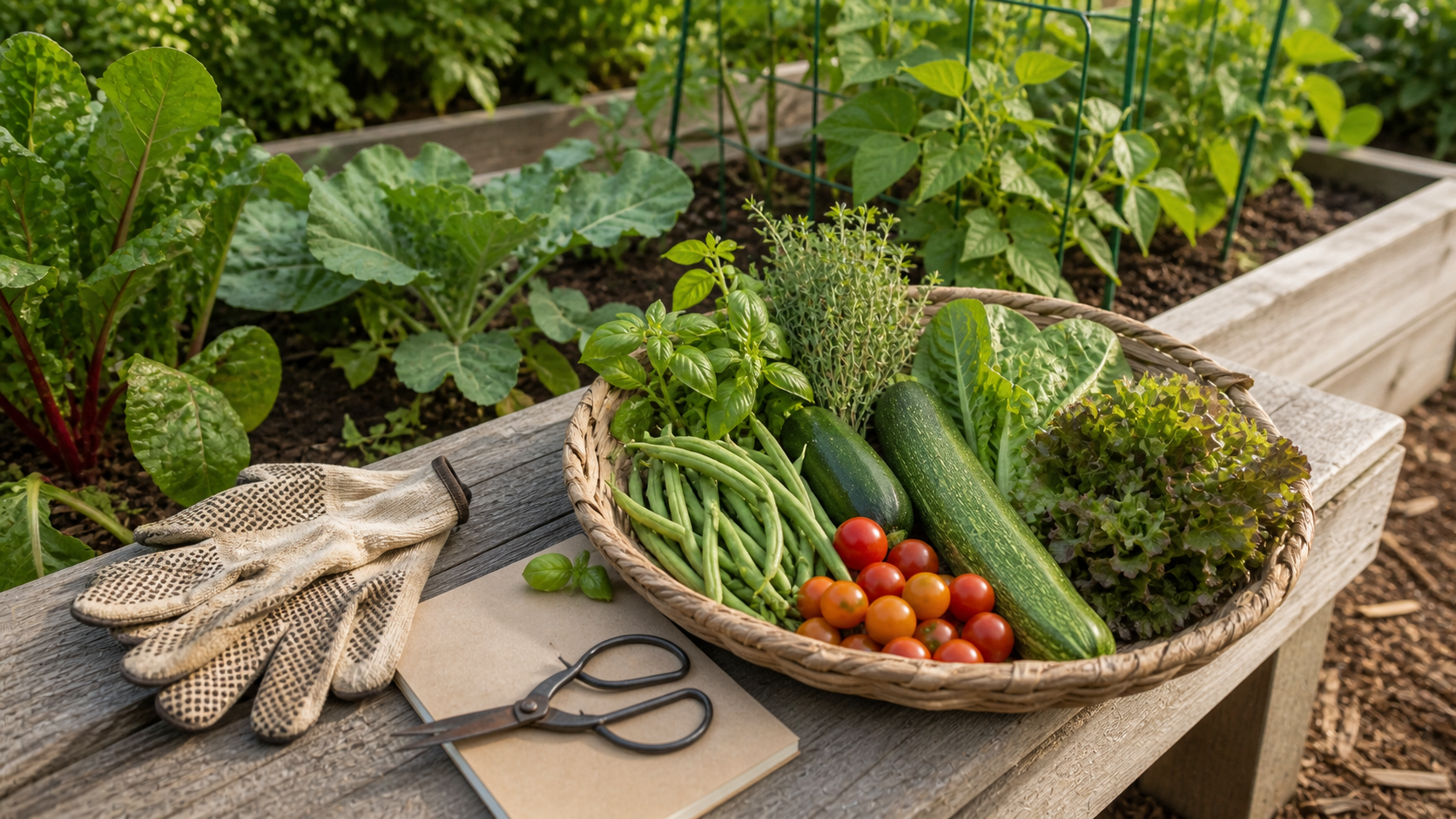
What to Harvest First in a Beginner Vegetable Garden
A practical beginner guide to the first garden harvest: what to pick early, what to leave longer, how to avoid waste, and how to build confidence without overthinking it.