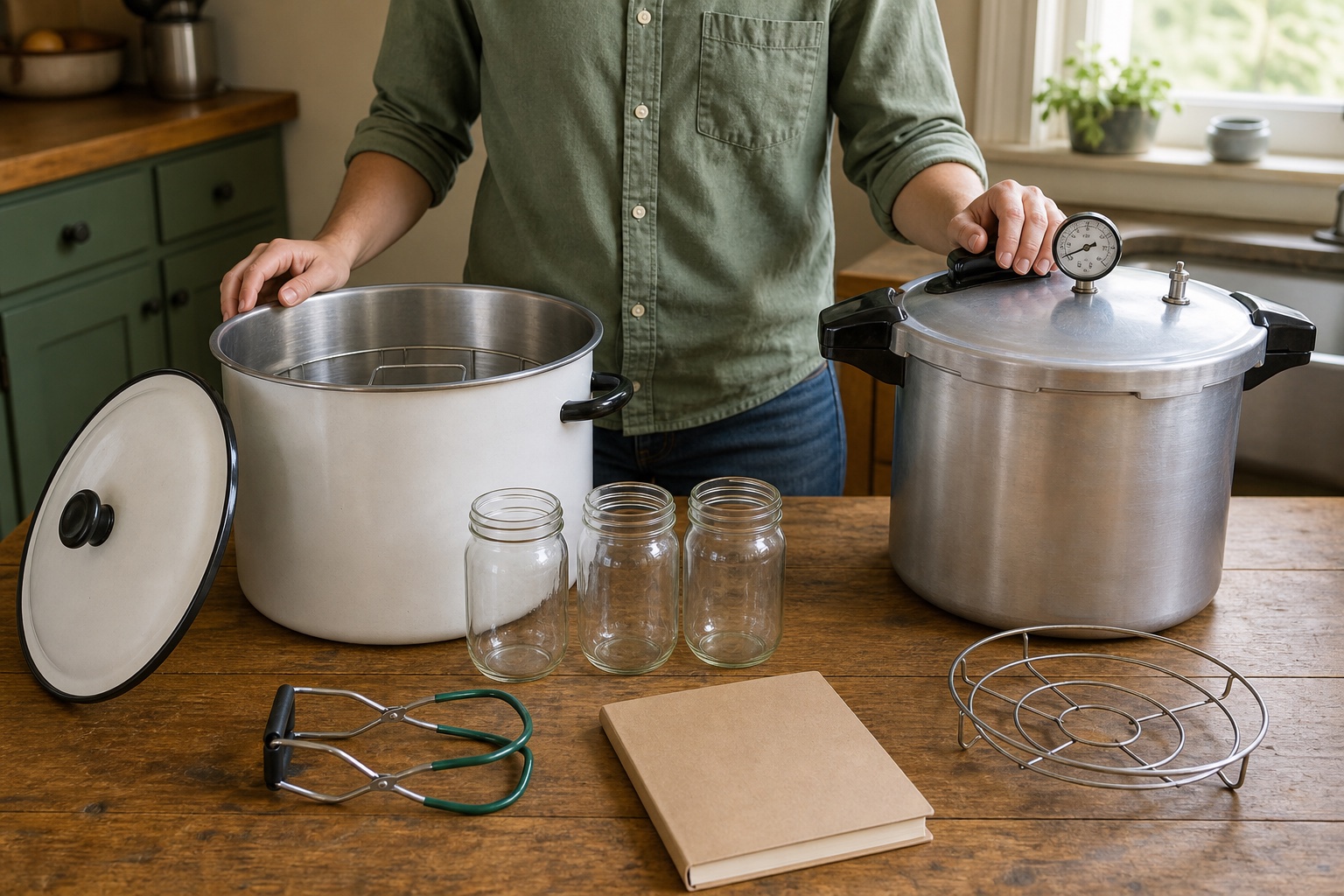
Use boiling-water canning for acid or properly acidified foods when a current research-tested recipe specifies that method. Use a true pressure canner for low-acid foods such as unpickled vegetables, meat, poultry, seafood, and many mixtures. Do not choose by which machine feels easier or more versatile. Choose the exact food and tested recipe first; they determine the canner, jar size, preparation, processing time, pressure, and altitude adjustment.
Plan the harvest before the equipment
Keep the first garden connected to the kitchen
The beginner garden plan works backward from meals, maintenance, and harvest capacity before seed count turns into a preservation emergency.
Read the first garden planThe canner-shaped answer to a zucchini-sized problem
An oversized zucchini once taught me how quickly a good harvest can become a loose end. Carrying it inside felt like proof that the garden had worked. Then it sat on the counter while I walked past it, trying to decide whether dinner should change, whether I should shred it, whether the freezer had room, and whether saving every bit was now a test of commitment.
That is exactly the kind of moment when a large piece of preservation equipment can look like the answer. After being laid off, I have had to get more honest about purchases that feel like forward motion. A canner may be a useful tool, but it cannot name the food, choose a tested recipe, clear an afternoon, make storage space, or promise that the family will eat what comes out of the jars.
The lesson from that zucchini was not that I needed to preserve more heroically. It was that every harvest needs a destination before it needs equipment. Now I would write down the first three foods and exact recipes before comparing pots. That smaller step tells me whether I need boiling water, pressure, the freezer, or simply a plan to share good produce while it is still good.
When the counter is already full
Sort the harvest before starting a preservation project
Use the 24-hour produce plan to separate what should be eaten, stored, frozen, canned with a tested method, shared, or discarded.
Use the harvest triage planThe food chooses the canner
The National Center for Home Food Preservation explains that foods with a pH of 4.6 or lower are acid foods, while foods above 4.6 are low-acid. Acid and properly acidified foods can be processed with a tested boiling-water process. Low-acid foods require the higher temperatures reached in a pressure canner to control the risk of botulism.
The categories are a map, not a recipe. Salsa contains tomatoes, but peppers and onions change the mixture. Pickled beans and plain green beans are not the same process. A pressure option printed beside a tested tomato recipe does not automatically mean acid can be omitted. Always use the exact method attached to the exact tested recipe.
Start with three recipes, not a shopping cart
This sequence often saves money. A deep stockpot you already own may handle the approved pint-jar water-bath recipe you actually want to make. It may also reveal that the family wants freezer sauce, not shelf-stable jars. Or it may prove that green beans, stock, and meat are genuine recurring goals and that a pressure canner has a clear job.
When a water bath setup is enough
Begin with boiling-water canning when every recipe on the first-season list is an acid or properly acidified food with a tested boiling-water process. NCHFP's recommended canners guide says the vessel needs a fitted lid, a rack, and enough depth to keep at least one inch of briskly boiling water over the jar tops during processing. Some longer processes require additional initial coverage so the jars remain covered. Follow the current recipe and guidance.
Do not buy an electric water bath canner merely to avoid checking the stove. It can be useful when the manufacturer instructions, tested recipe, electrical circuit, counter, drainage, and batch pattern all fit, but it remains a specialized appliance. Prove the method with a suitable basic setup first unless the electric unit solves a limitation you can name.
When a pressure canner earns its space
A pressure canner earns its space when tested low-acid recipes are part of the real food plan. NCHFP says USDA processes for low-acid foods were developed for pressure canners that hold at least four upright quart jars with the lid in place. A small pressure cooker or electric multicooker is not a general substitute. Come-up and natural cool-down are part of the total heat process, which is one reason equipment size and procedure cannot be improvised.
Every pressure canner requires inspection and exact operation. The NCHFP pressure-canner guide calls for dial gauges to be checked annually and for all pressure canners to vent a steady stream of steam for ten minutes before pressurizing. The operator must maintain the specified pressure and allow the canner to cool naturally. Read the full current procedure and exact model manual before using one; this comparison is not an operating guide.
My researched smaller pressure canner pick
For a beginner who has already confirmed a low-acid recipe plan, my researched starting point is the Presto 01755 16-quart pressure canner. Presto lists capacity for seven quart jars, ten pint jars, or thirteen half-pint jars under pressure. It includes a rack and dial gauge, works on conventional electric, smooth-top, and gas ranges within its stated limits, and has a current manual and replacement-parts path. It is not induction compatible.
The smaller body is why it leads this comparison. I would not recommend the larger 23-quart model merely because it holds more. More water, vessel weight, batch capacity, storage, and counter space are only helpful when the household will use them. The 16-quart model can also function as a boiling-water canner for half-pint and pint jars according to Presto, but it is not tall enough to water-bath quart jars.
I have not processed enough seasons with this exact model to present the recommendation as personal durability testing. It is a specification, support, and workload judgment. Confirm the exact model, current manual, range compatibility, burner output, capacity, warranty, gauge-testing access, parts, seller, and return terms. Skip it if the first recipes are water-bath only, your range is induction, or the operating routine is more than the household can support right now.
For a verified low-acid plan
Check the Presto 16-quart pressure canner
Confirm model 01755, range compatibility, the current manual, and seller before ordering. This retailer link may earn me a commission at no extra cost to you.
View the current canner listingWhat matters now and what can wait
Consider a beginner with ripe tomatoes, one tested acidified sauce recipe, pint jars, a compatible deep stockpot, and no plan for low-acid vegetables or meat. The stockpot may be enough after every requirement is verified. Buying a pressure canner would add cost and a new operating system without changing the first recipe. If the next season's real list adds tested green bean, stock, and meat recipes, the pressure canner becomes a decision supported by actual meals instead of possibility.
A simpler preservation lane
Freeze tomatoes when the harvest is ready before the schedule is
The beginner tomato-freezing guide separates saving sound fruit from committing to a shelf-stable recipe and full canning day.
Read the tomato-freezing guideThe decision in one sentence
Choose a canner only after a current tested recipe names the method: use a verified boiling-water setup for approved acid foods, a true pressure canner for tested low-acid foods, and no new equipment when freezing, sharing, or the pot you already own safely completes the work.
Frequently asked questions
What is the difference between water bath canning and pressure canning?
Boiling-water canning is for acid foods and properly acidified foods covered by a current research-tested recipe. Pressure canning is required for low-acid foods such as unpickled vegetables, meat, poultry, seafood, and many mixtures. A pressure canner reaches temperatures above boiling under controlled pressure. The tested recipe, food, jar size, pack style, canner type, and altitude determine the process; the two methods are not interchangeable.
Can I use a pressure cooker or electric multicooker for pressure canning?
Do not substitute a small pressure cooker or electric multicooker for a stovetop pressure canner when following USDA low-acid canning processes. The National Center for Home Food Preservation says USDA processes were developed for canners that hold at least four upright quart jars with the lid in place, and it does not provide general low-acid canning processes for small pressure cookers. Use equipment explicitly supported by the tested recipe, current research guidance, and manufacturer instructions.
Can a pressure canner also be used for water bath canning?
Some pressure canners can serve as boiling-water canners for jar sizes that fit with the required rack, lid, and water coverage, but model limits matter. For example, Presto says its 16-quart 01755 can pressure-can quart jars but functions as a boiling-water canner only for half-pint and pint jars. Follow the exact manufacturer instructions and the tested recipe rather than assuming every pressure canner handles every water-bath load.
Do tomatoes need water bath canning or pressure canning?
Use a current research-tested tomato recipe and follow its exact acidification and processing directions. Some tested tomato recipes offer boiling-water and pressure-canning options, but that does not automatically remove the acid requirement. Tomatoes can vary in acidity, and many tested processes require bottled lemon juice or citric acid even when a pressure option is listed.
Can I use a regular stockpot for water bath canning?
A suitable pot may work when it has a fitted lid, a rack that keeps jars off the bottom, room for jars to remain upright without touching, and enough depth to maintain the water coverage required by the tested process. It must also fit the range and heat evenly. Verify the current NCHFP guidance, recipe, pot, range manual, and jar size before using what you own.
Does altitude change home canning instructions?
Yes. Water boils at a lower temperature as elevation increases, so boiling-water process times and pressure-canning pressures must be adjusted according to the tested recipe and canner type. Know your elevation before beginning. Never reduce a published process time or pressure, and do not guess an adjustment from a different recipe.
Recommendations
Useful tools and resources for this decision
These are included only where they reduce repeated friction, clarify a next step, or help you avoid buying the wrong thing first.
Best researched smaller pressure canner
Presto 01755 16-quart pressure canner
A stovetop dial-gauge pressure canner with a canning rack, 16-quart liquid capacity, and manufacturer-listed capacity for seven quart jars, ten pint jars, or thirteen half-pint jars.
Best for: Beginners with a verified plan for tested low-acid recipes, a compatible non-induction household range, room to use and store the canner, and access to annual dial-gauge checks
Check current priceManufacturer model source
Presto 01755 product page and manual
The manufacturer's current model page, capacity details, range limitations, safety features, manual, warranty, and replacement-parts information.
Best for: Confirming the exact model, burner compatibility, jar capacity, setup, operation, maintenance, and limitations before buying
View resourcePrimary equipment source
NCHFP recommended canners guide
Research-based guidance explaining suitable boiling-water and pressure canners, jar capacity, racks, water coverage, range fit, and dial versus weighted gauges.
Best for: Choosing the equipment type before comparing brands
View resourceFood-safety source
NCHFP safe canned foods guide
The core explanation of food acidity, the 4.6 pH dividing point, botulism control, tested processes, and why low-acid foods require pressure canning.
Best for: Understanding why the food and tested recipe choose the method
View resourcePressure-canning operating source
NCHFP using pressure canners guide
Detailed pressure-canner guidance covering inspection, annual dial-gauge checks, venting, pressure control, altitude, natural cooling, and jar removal.
Best for: Learning the complete operating sequence before the first low-acid batch
View resourceTested-process library
USDA Complete Guide to Home Canning
The current USDA guide collection covering canning principles and research-tested directions for fruits, tomatoes, vegetables, meat, poultry, seafood, pickles, and fermented foods.
Best for: Finding the tested process before buying jars, ingredients, or equipment for a specific food
View resourceRecommended next reads
Read next if it helps the decision
Move into the next guide only if it clarifies the next practical step.
Gardening
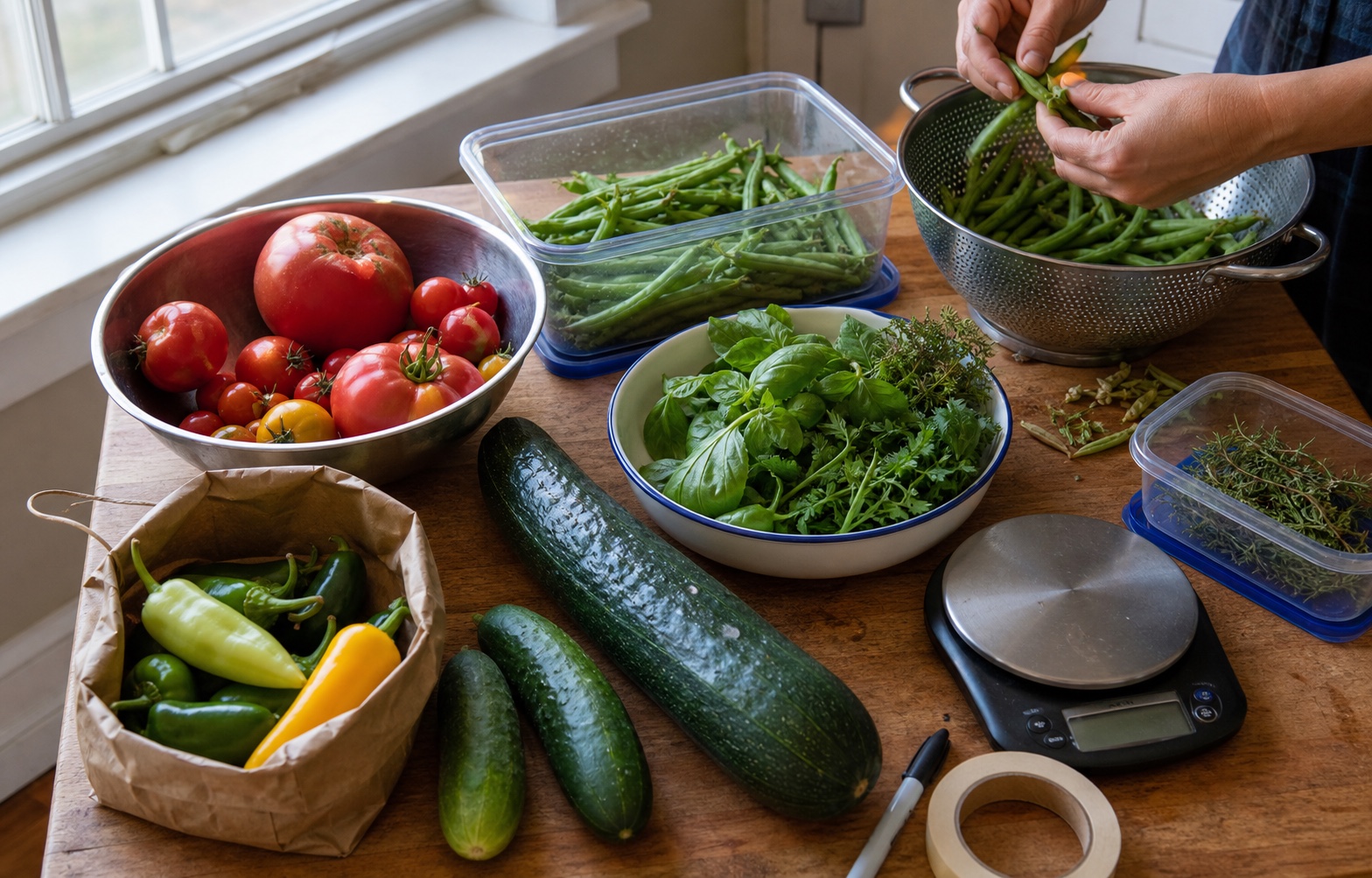
What to Do With Too Much Garden Produce: A 24-Hour Plan
A calm four-lane plan for moving an overflowing garden harvest from the counter into meals, short-term storage, tested preservation, or someone else's kitchen before it becomes waste.
Gardening
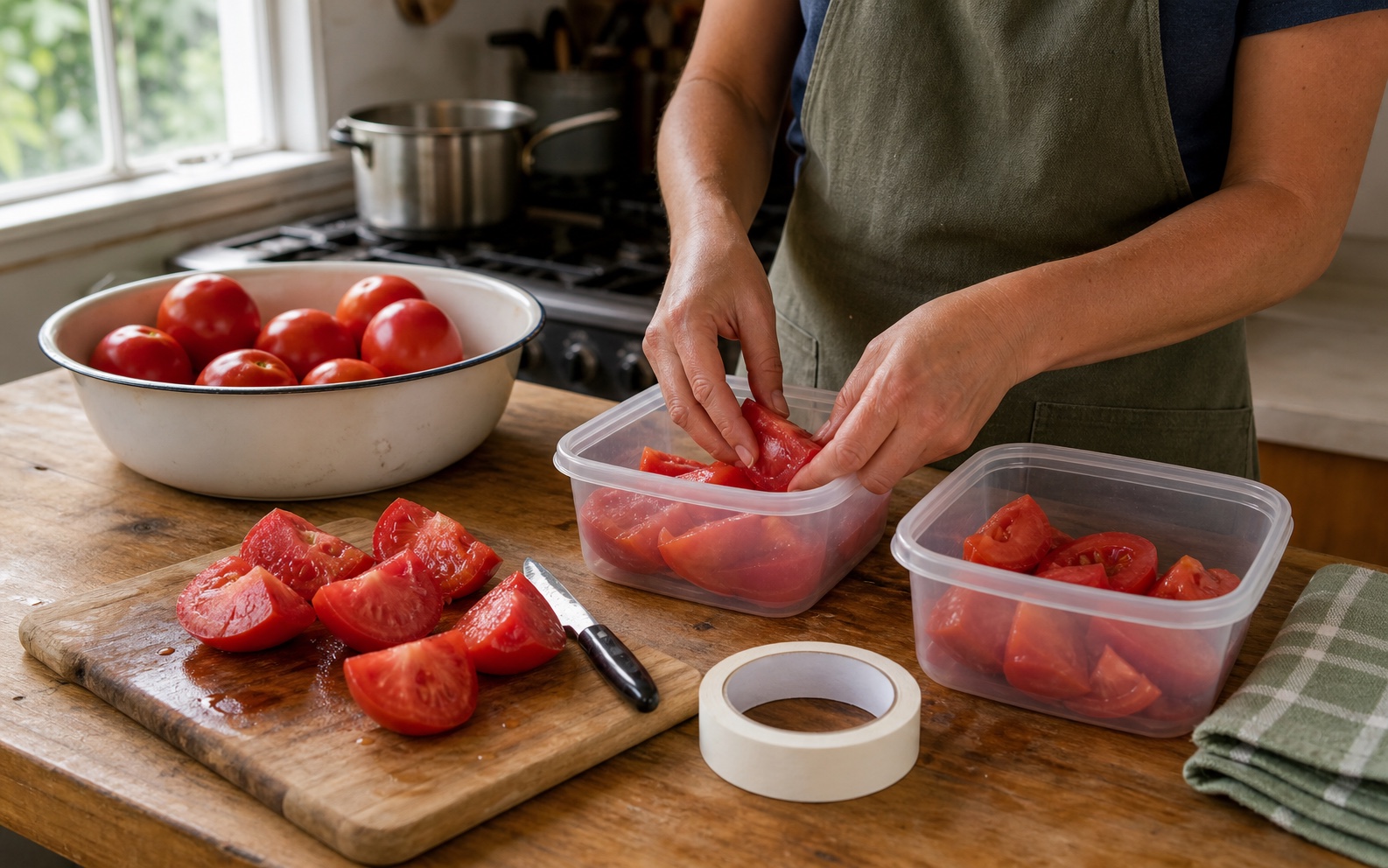
How to Freeze Tomatoes for Sauce Later: A Beginner Method
Freeze ripe tomatoes in meal-sized portions for future sauce without pretending they will thaw firm. This beginner method covers peeling, packing, headspace, labeling, thawing, and the difference between freezing and canning.
Gardening
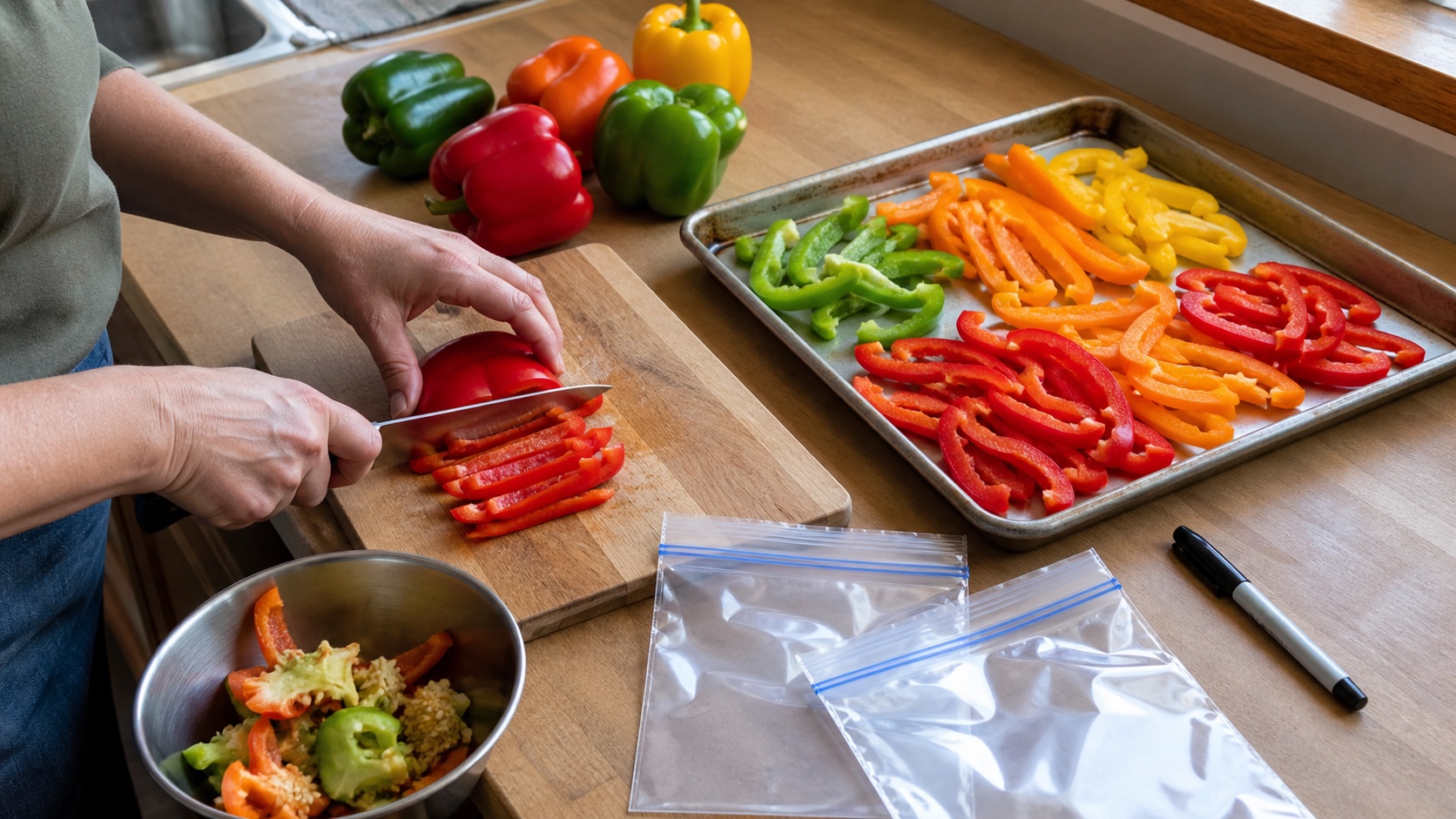
How to Freeze Bell Peppers Without Blanching
Freeze bell peppers raw in useful strips or pieces with research-based preparation, packaging, freezer-temperature, labeling, and texture guidance.
Garden gear support
Get the buy-first guide before the first garden collects too much gear.
Use the guide to decide which early garden purchases earn money now, which ones can be borrowed, and which ones can wait until the routine proves itself.
Best for: Beginners who keep seeing useful things online and need a disciplined way to decide what actually earns a place.
- A buy now, borrow, wait, or skip framework
- Starter category shortlists
- A three-question purchase test
Garden planning notes, restrained gear decisions, and the guide first.
After signup, the download will unlock right here so you can save or print it.
About the author
William Mock
Founder, writer, and beginner homesteader
William writes from the beginner side of rebuilding after a layoff: homestead plans, family systems, budgets, tools, and the decisions that make a home feel less fragile.
Read why this site existsRelated Guides
Keep building context
Gardening
What to Do With Too Much Garden Produce: A 24-Hour Plan
A calm four-lane plan for moving an overflowing garden harvest from the counter into meals, short-term storage, tested preservation, or someone else's kitchen before it becomes waste.
Gardening
How to Freeze Tomatoes for Sauce Later: A Beginner Method
Freeze ripe tomatoes in meal-sized portions for future sauce without pretending they will thaw firm. This beginner method covers peeling, packing, headspace, labeling, thawing, and the difference between freezing and canning.
Fresh Start
How to Build a Rotating Pantry Without Wasting Food
Build a small rotating pantry around meals your household already eats, then use a simple three-zone system to keep older food visible, useful, and out of the trash.