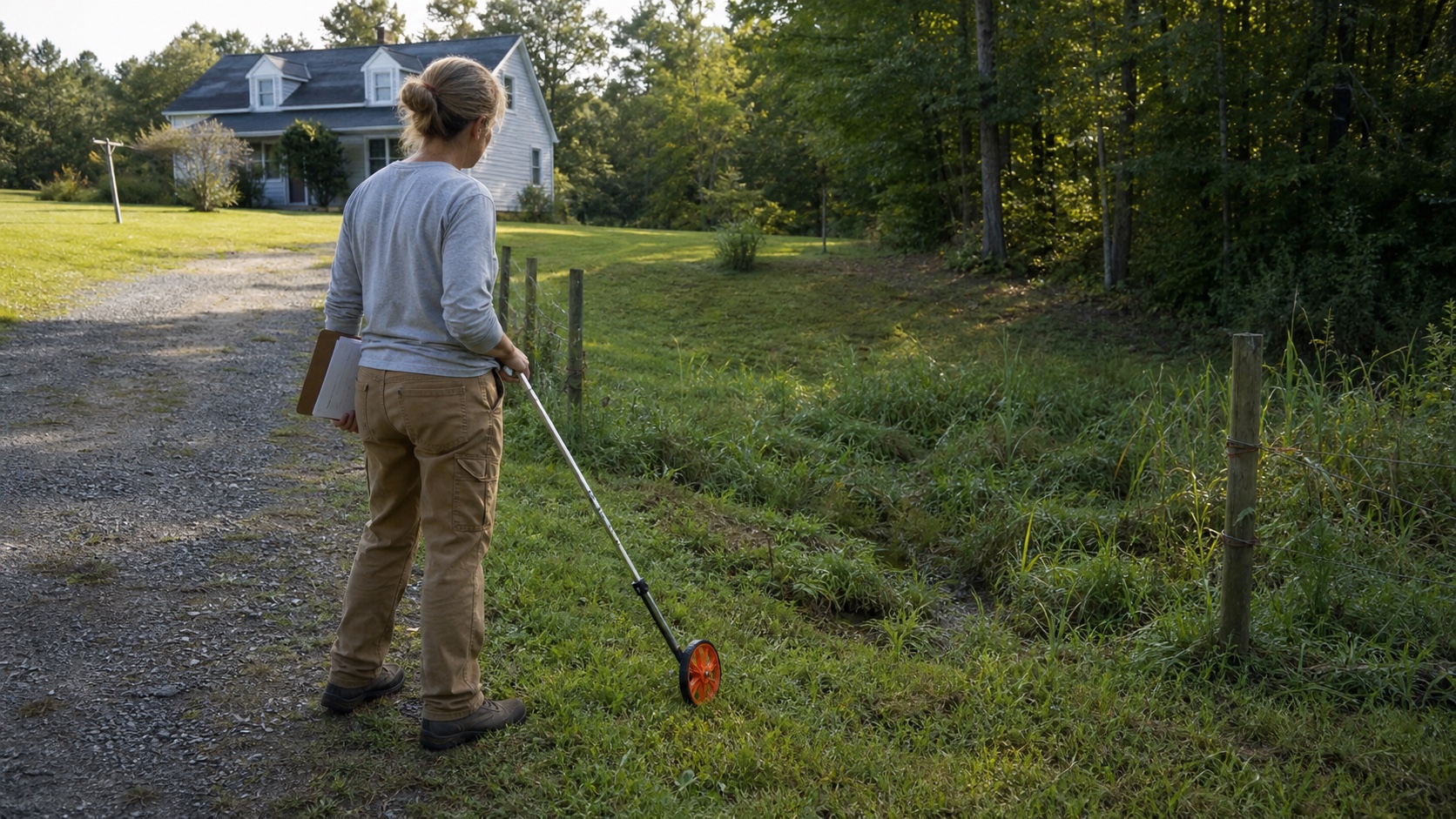
You may need no new land to begin homesteading, less than an acre for several household food systems, or many acres for grazing, hay, wood, and income-producing agriculture. There is no honest universal acreage number. Write down the projects you expect the property to support, estimate their usable-space needs, then add the house, driveway, water, septic, setbacks, storage, access, unsuitable ground, budget, and weekly labor before choosing a parcel size.
The acreage number that kept growing
After the layoff, the idea of a future property could absorb a lot of mental energy. I would picture a garden first. Then chickens belonged beside it. An orchard sounded patient and worthwhile. A shop would keep tools from taking over the house. More privacy felt good. A little woodlot seemed practical. Every new idea made the acreage number climb, even though none of those ideas had been assigned a year, a budget, or a place in an ordinary Tuesday.
The useful change came when I stopped drawing the finished version and separated the first two years from someday. The first plan needed safe housing, workable water, a modest food system, storage, family margin, and enough room to learn without opening six projects. The lifetime list could stay on the page without becoming a closing requirement.
That did not tell me a magic acreage. It did something better: it showed me that land size was the output of the plan, not the beginning of it. A smaller property that safely supports the first honest systems can move a family forward. A larger property bought to hold every imagined future can consume the time and money those systems needed.
Start with the work, not the acreage
Use acreage as a planning unit, not an identity. NC State Extension recommends listing the purposes the land will serve and making a rough space estimate for each one. Its North Carolina-oriented guide offers broad examples: roughly one-quarter to one acre for a family fruit and vegetable garden, minimal acreage for household chickens, and much more land for grazing animals or a woodlot. Those figures are conversation starters, not promises. Climate, forage quality, winter feeding, rotation, manure management, regulations, and the actual parcel can change them dramatically.
Do not add the ranges as if every acre can do two jobs at once. A garden acre is not automatically pasture. Pasture is not automatically a legal building site. Woods are not simply future field. A drainage area is not spare ground because it is empty in August. Each use needs its own conditions, access, maintenance, and legal confirmation.
Build the beginner plan first
Start with the full beginner homesteading path
Choose one practical first system, stabilize the household basics, and let the early work teach you what more space would actually solve.
Use the beginner homesteading guideTotal acres are not usable acres
A listing can say five acres while the homestead plan sees a house, driveway, septic field, replacement drainfield area, well setbacks, utility easement, steep bank, wet corner, shaded woods, and one sunny open section. None of those areas is necessarily wasted. They simply cannot all be counted as the same kind of working land.
The word usable also needs a sentence after it. Usable for what? A shaded slope may be useful as woodland and poor for a vegetable garden. Flat open ground may grow well and sit too close to a well, property line, or road for the structure you imagined. A back field may have good soil but no affordable route for water. The right map uses several layers instead of coloring every open patch green.
Water, soil, and wastewater can outrank size
USDA NRCS Web Soil Survey is a useful first screen for U.S. properties because it provides official soil survey information and land-use interpretations. It does not replace a site visit, soil testing, septic evaluation, engineering, or other project-specific professional work. NC State Extension also cautions that generalized soil-map accuracy becomes limited at the scale of a one- or two-acre parcel. Use the map to improve questions, not to approve the property from a screen.
Water has to be available where the work occurs and in the season when demand is highest. Verify the source, records, quality, quantity, condition, legal use, delivery route, pumping or line needs, and cost with the appropriate local authorities and qualified professionals. A creek visible in spring or a well mentioned in a listing does not answer those questions.
EPA explains that septic drainfields use soil to treat wastewater and that state or local governments commonly require separation between septic systems and drinking-water wells. Soil, slope, house occupancy, local rules, buildings, driveways, property lines, surface water, and reserve-area requirements can all affect the system and its footprint. Obtain permits and records, use a qualified inspection, and confirm parcel-specific requirements with the local health or permitting authority before treating open ground as available.
Local rules can shrink the plan without shrinking the parcel
An agricultural label in a real-estate listing is not permission for every animal, structure, fence, roadside stand, home business, pond, short-term rental, or food enterprise. Penn State Extension advises checking the municipal or county office responsible for zoning because ordinances may regulate animals, fencing, crops, and other uses. Also verify subdivision covenants, deed restrictions, easements, conservation obligations, permits, and any rules that apply outside zoning.
More land is not free margin
Extra acreage can preserve privacy, protect a future project, provide ecological value, or prevent the house from feeling boxed in. It can also mean more fencing, mowing, brush control, invasive plants, storm damage, boundary questions, taxes, insurance, access work, and equipment temptation. Land that is not producing food or income still produces stewardship.
Price more than the closing
Build a realistic first-year homestead budget
Separate housing, infrastructure, tools, animals, gardens, repairs, and learning costs before additional acreage quietly claims the reserve.
Use the first-year budget guideWhat matters first and what can wait
I am leaving affiliate products out of this guide on purpose. A measuring wheel, planner, map case, or new pair of boots will not answer the expensive questions. Use the records, maps, local offices, inspections, qualified professionals, and plain notebook you already have before buying land-planning gear. The money belongs with verification.
The acreage answer I would trust
I would trust an acreage number that survives a boring map. The house fits. Water and wastewater are verified. The first garden has sun and a realistic route for water. Animals are legal and have room for housing, feed, manure, access, and daily care. The driveway works in bad weather. The family can afford the property without asking the land to rescue the budget. There is still space and money left for ordinary life.
That number may be smaller than the dream or larger than the internet rule. Either can be right. The goal is not to own the acreage that makes the plan look serious. It is to choose land whose real conditions let a grounded first system work, then learn what the next layer deserves.
Download
Separate the first season from someday
Use the free first-season checklist to choose one food system, set a spending boundary, and keep the lifetime wish list from deciding today's acreage.
Get the first-season checklistFrequently asked questions
Is one acre enough for a homestead?
One usable acre can support meaningful homesteading systems such as a family garden, composting, food storage, a small orchard plan, and backyard poultry where local rules, setbacks, housing, and household capacity allow. It is not automatically enough for every combination of house, driveway, septic, well, outbuildings, large livestock, pasture, and privacy. The useful question is what remains after fixed uses and unsuitable areas are mapped.
Is five acres enough for a homestead?
Five suitable acres can offer room for several household-scale systems, but the number alone proves very little. Slope, drainage, soil, water, shade, access, zoning, setbacks, septic, buildings, pasture quality, winter feed, and the family's time can make five acres either highly useful or surprisingly constrained. Start with the intended projects and verify the parcel against each one.
How much land do you need for chickens?
A household flock usually requires far less acreage than grazing livestock, but it still needs legal permission, predator-resistant housing, a suitable run or managed outdoor area, feed and bedding storage, manure handling, drainage, shade, water, and access for daily care. Bird-count space guidance belongs inside the larger property plan; total lot size does not replace a properly designed coop and run.
Should beginners buy more land than they think they need?
Do not buy extra acreage solely as insurance against an undefined future. Additional land increases purchase cost and may add taxes, fencing, mowing, invasive plants, storm cleanup, liability, access work, and maintenance. A modest buffer can be useful when it protects a verified future use, but first compare that benefit with the cost of owning and caring for it.
What is the difference between total acreage and usable acreage?
Total acreage is the parcel area. Usable acreage is the portion that can legally, safely, affordably, and practically support a specific use. The house, driveway, septic field, reserve field, well setbacks, easements, steep slopes, flood-prone ground, wetlands, woods, utility corridors, poor access, and unsuitable soil may reduce the land available for gardens, animals, buildings, or equipment. Usable is always use-specific.
Recommendations
Useful tools and resources for this decision
These are included only where they reduce repeated friction, clarify a next step, or help you avoid buying the wrong thing first.
Extension source
NC State Extension land-evaluation guide
A practical overview of acreage by intended use plus soil, topography, water, utilities, access, boundaries, contamination, structures, and nearby services.
Best for: Building a first property-screening checklist before falling in love with a parcel
View resourceOfficial soil resource
USDA NRCS Web Soil Survey
The official U.S. source for soil survey maps, properties, and interpretations used in broad land-use planning.
Best for: A desktop soil screen before site-specific testing and professional review
View resourceOfficial water source
EPA septic systems and drinking water guidance
Current federal guidance explaining how septic systems, drainfields, wells, groundwater flow, maintenance, and locally required setbacks interact.
Best for: Understanding why a rural lot needs verified water and wastewater space
View resourceZoning source
Penn State Extension farmland zoning guidance
A concise reminder to verify parcel-specific municipal or county rules for animals, fencing, crops, and other intended uses.
Best for: Turning a listing claim into questions for the correct local authority
View resourceFree checklist
First-Season Homestead Checklist
A free worksheet for choosing one first food system, setting a spending boundary, and naming what can wait.
Best for: Separating first-season needs from the lifetime homestead wish list
Read the guideRecommended next reads
Read next if it helps the decision
Move into the next guide only if it clarifies the next practical step.
Homesteading
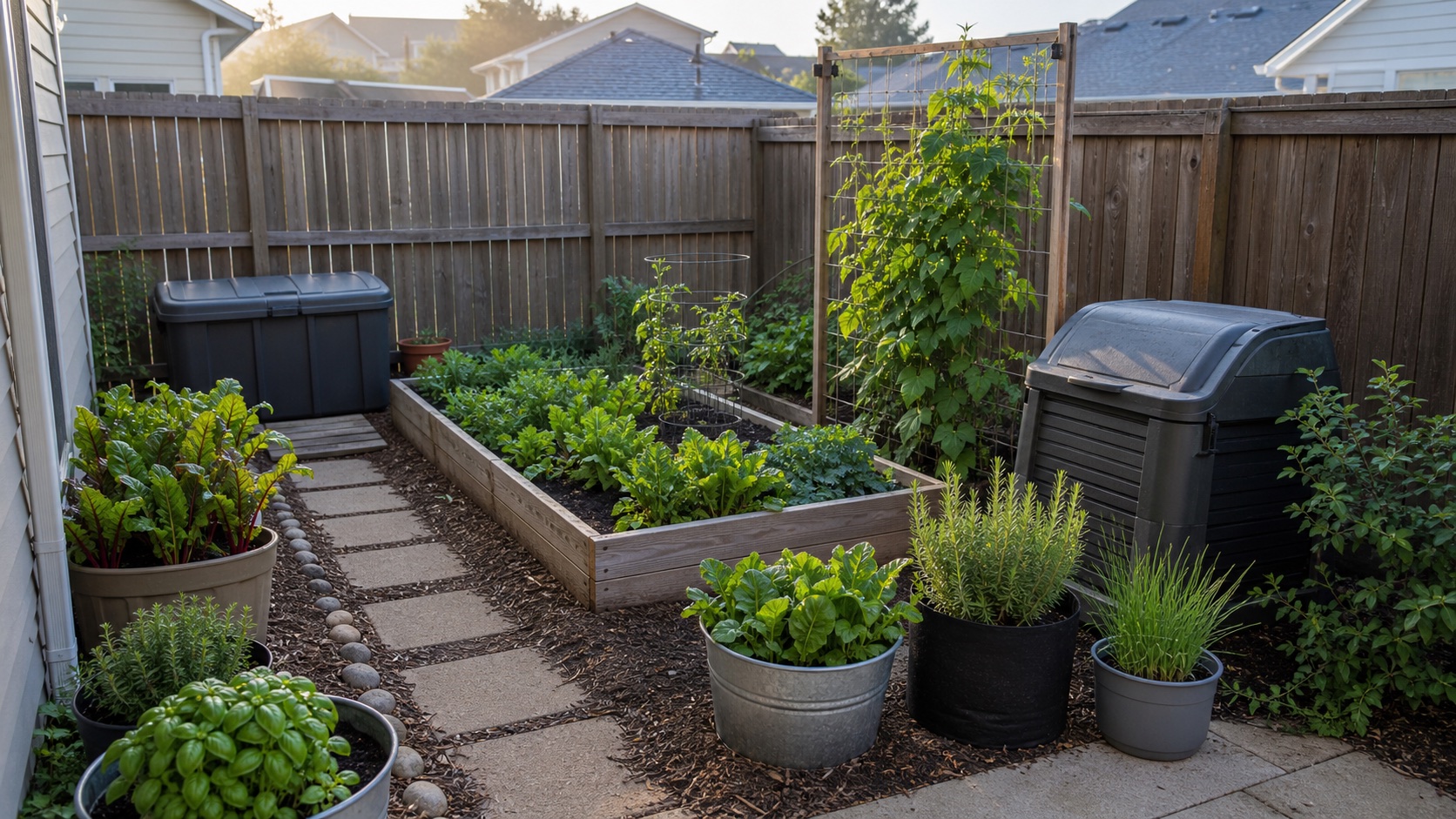
How to Start Homesteading in a Small Backyard
A practical small-backyard homesteading plan built around one food system, one waste system, clear storage, and enough open space to keep the yard livable.

Homesteading
8 Homesteading Skills to Learn Before You Own Land
Eight portable homesteading skills you can practice in an apartment or ordinary home before land, livestock, major equipment, or a move enter the plan.
Fresh Start
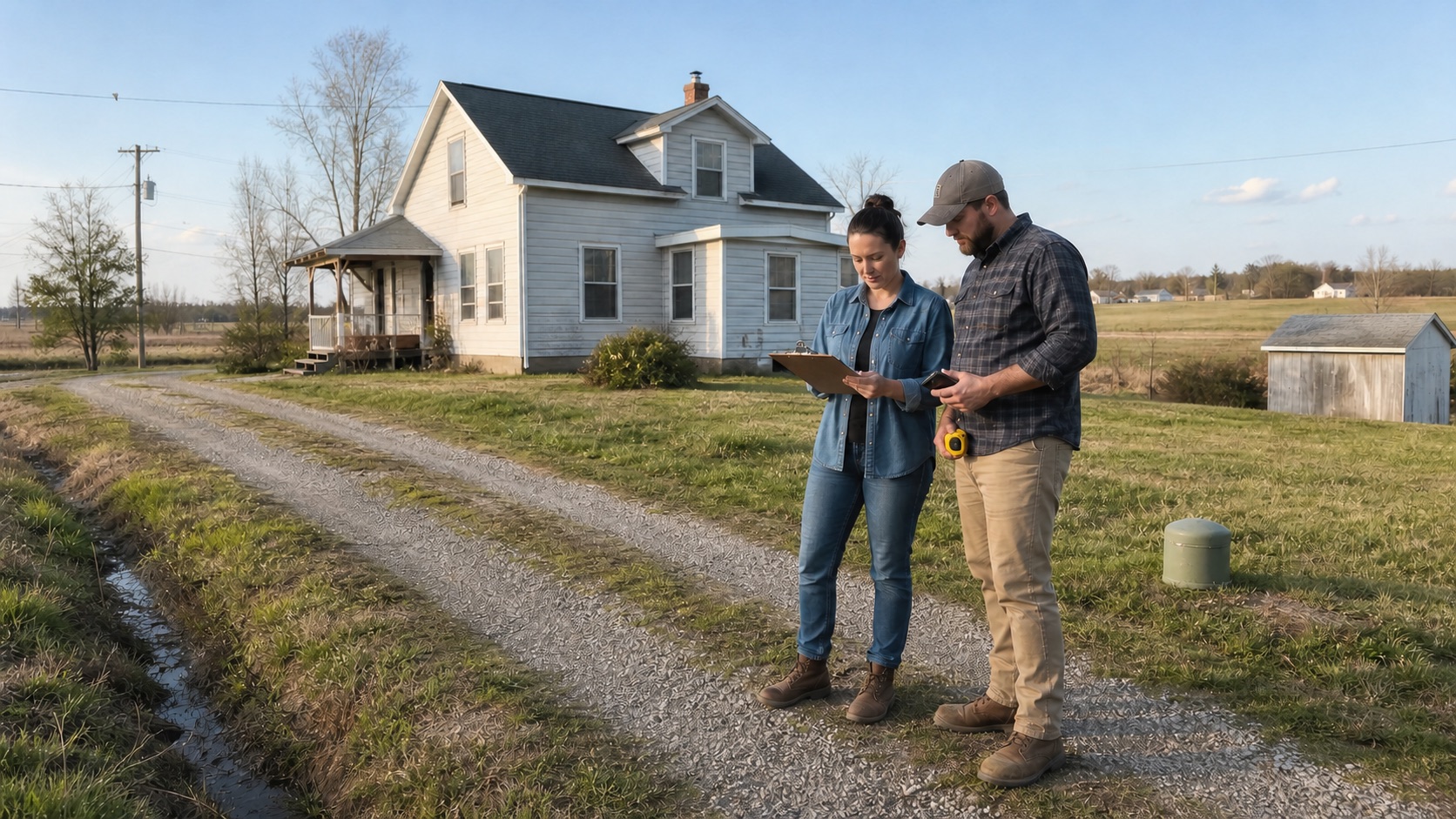
Should You Move to the Country After a Layoff? A Stability-First Guide
A grounded decision guide for separating a real rural move from an escape plan, then checking income, family rhythm, water, septic, access, broadband, zoning, and financial runway before committing.
First-Step Support
Get the first-step checklist before the bigger idea turns into too many projects.
A practical worksheet for choosing one system, setting a first-stage budget, and narrowing the next move while the picture is still forming.
Best for: Beginners who need a first-season plan with limits, not more tabs or more gear.
- A first-season decision checklist
- A one-system starter plan
- A buy-now versus wait-later filter
Beginner-friendly notes, useful guides, and the checklist first.
After signup, the download will unlock right here so you can save or print it.
About the author
William Mock
Founder, writer, and beginner homesteader
William writes from the beginner side of rebuilding after a layoff: homestead plans, family systems, budgets, tools, and the decisions that make a home feel less fragile.
Read why this site existsRelated Guides
Keep building context
Homesteading
How to Start Homesteading in a Small Backyard
A practical small-backyard homesteading plan built around one food system, one waste system, clear storage, and enough open space to keep the yard livable.
Homesteading
8 Homesteading Skills to Learn Before You Own Land
Eight portable homesteading skills you can practice in an apartment or ordinary home before land, livestock, major equipment, or a move enter the plan.
Fresh Start
Should You Move to the Country After a Layoff? A Stability-First Guide
A grounded decision guide for separating a real rural move from an escape plan, then checking income, family rhythm, water, septic, access, broadband, zoning, and financial runway before committing.