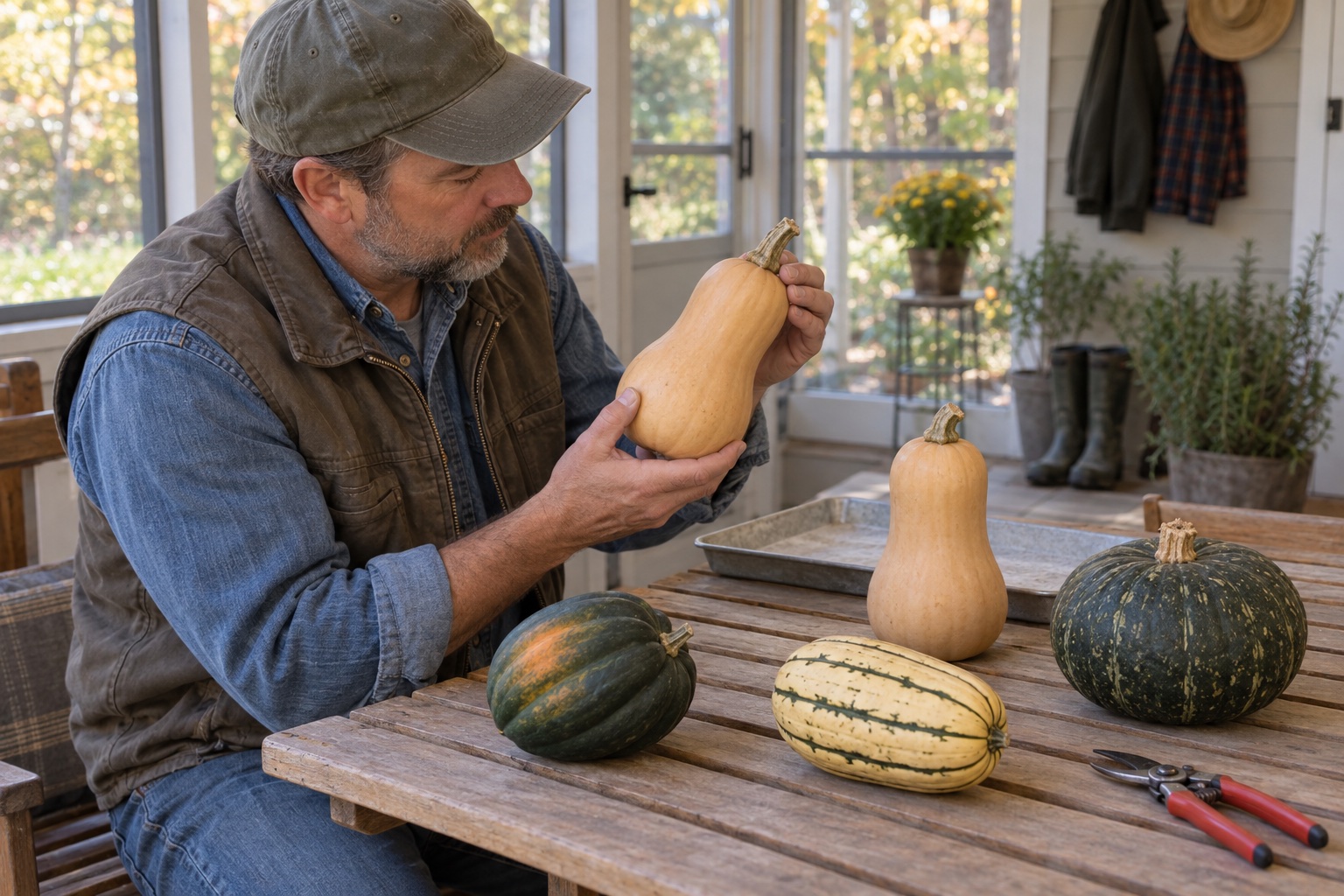
To cure and store winter squash, harvest only mature fruit with hard rinds before a hard frost or prolonged cold, wet weather. Cut rather than pull, keep the stem intact for most varieties, and separate anything bruised, split, soft, frost-damaged, or stemless. Cure sound varieties in a warm, dry, ventilated place when their guidance calls for it, then store them in a single layer around 50 to 55 degrees F with moderate humidity and airflow. Check every fruit weekly and use the shortest-storing varieties first.
The shelf-stable picture I had to correct
After the layoff, winter squash fit the picture of resilience I wanted to build. It was food we could grow, carry inside, set on a shelf, and use when the garden was quiet. Compared with canning equipment, freezer space, or a future root cellar, a row of hard-skinned squash looked almost effortless.
The part I had mentally skipped was that a squash is still living produce after the vine is cut. One broken stem can shorten its useful life. One bruise can become a soft spot. Acorn squash does not keep on the same schedule as Hubbard, and a garage that feels cool in September can become cold enough to cause damage in November. The shelf was not the system.
That correction made the skill more useful, not less. The practical version is to sort the harvest into three groups: use now, cure if appropriate, and store. Then match meals to the order in which those groups need attention. Resilience is not proving that every squash lasts until February. It is noticing the one that will not and eating it before it becomes waste.
Harvest before cold changes the decision
Know which crops need action before the first frost
The first-frost garden guide separates tender crops from cold-tolerant ones and helps you decide what to harvest, cover, or leave when the forecast turns.
Prepare the garden for frostStart with a squash that is actually mature
Winter squash reaches its best storage potential on the vine. Look for the mature color described for the variety, a rind that has lost its tender gloss and resists a gentle fingernail scratch, and a stem or nearby vine beginning to dry. Color alone is not enough because butternut, acorn, delicata, kabocha, spaghetti, Hubbard, buttercup, and pumpkins finish differently.
Do not force an immature squash into the storage group only because frost is coming. A nearly mature fruit may improve with appropriate curing, but a pale, soft-rinded squash will not gain the same keeping quality as one that matured normally. If weather ends the season early, move those fruit into the use-first group and plan meals around them.
Harvest before cold and wet weather win
University of Minnesota recommends harvesting winter squash as soon as fruit are mature, and Oregon State advises bringing them in before weather becomes too cold or wet. A hard frost can damage rind and flesh in ways that may not look dramatic on harvest day but shorten storage later. Persistent rain also raises the risk of surface damage and decay.
Sort before curing, not after
Use-first does not mean unsafe fruit should be eaten. Discard squash with active rot, mold, leaking tissue, strong off odors, or extensive softening. A sound squash with a superficial harvest scrape or missing stem may still be cooked promptly, but cut it open carefully and discard it if internal condition is questionable. When in doubt, losing one squash is better than gambling with the meal or the rest of the stored crop.
Curing is variety-specific
Curing holds squash in warm conditions with airflow so the rind hardens and minor surface injuries can form a protective corky layer. University of Minnesota describes roughly 80 to 90 degrees F for 7 to 10 days, while Oregon State recommends about 80 to 85 degrees F for several days. Those are targets, not a reason to create an unsafe heated closet with improvised equipment.
Extension recommendations are not identical because varieties, climates, and production systems differ. Use the seed packet or supplier description, then check that advice against your local Extension service. If you cannot identify the variety, do not guess that extra heat is beneficial. Keep it dry, observe it closely, and use it earlier.
Build a safe curing area
A screened porch, warm shed, high tunnel, or ventilated indoor room may work when weather and household conditions cooperate. Outdoor curing is only reasonable during a warm, dry forecast and with protection from animals and temperature swings. Bring fruit under cover before rain or a cold night rather than trying to earn one more day of heat.
Should you wash winter squash before storage?
Extension instructions differ. Some production guides describe washing or sanitizing fruit before storage; other home-use guidance says whole winter squash does not need to be washed until use. The consistent requirement is a dry surface and clean handling. For a beginner household, brush or wipe away loose dry soil, avoid soaking the fruit, and do not invent a bleach treatment from an old formula without current local guidance.
Before cooking, rinse the squash under clean running water and scrub the rind with a clean produce brush. That matters even when you will not eat the peel because the knife can carry surface soil into the flesh. Dry the fruit, use a stable cutting board and sharp knife, and refrigerate cut squash promptly.
Choose a cool, dry storage space
University of Minnesota recommends about 50 to 55 degrees F and 50 percent relative humidity. Oregon State gives the same temperature range with moderate humidity and good air circulation. That is warmer and drier than ideal potato storage, which is why putting every storage crop in one basement corner can work against at least one of them.
Keep squash away from apples, pears, and other ripening fruit. Oregon State and Utah State both warn that ethylene from ripening fruit can shorten squash storage life. Also keep the crop away from paint, fuel, pesticides, cleaners, and any surface that is not appropriate for food storage.
Measure the space before trusting it
A room that feels cool during one September morning may warm in the afternoon or freeze beside an exterior wall in November. Put a temperature-humidity monitor at shelf height for several days, including a warm afternoon and a cold night. The readings around the squash matter more than the thermostat in another room.
The TempPro TP50 is one simple local-display option that records current and high-low temperature and humidity. The manufacturer lists a broad measurement range, a local screen, one AAA battery, and no remote alert. It can reveal a bad storage assumption, but it cannot cool, dry, ventilate, or protect the room.
Arrange the shelf for inspection
Do not pile a beautiful harvest where the bottom layer disappears. Illinois Extension says no more than two fruit deep for prolonged storage and prefers a single layer when space allows. A shelf that holds fewer squash but lets you see every one is more useful than a full bin that hides the first leak.
Use the shortest-storage varieties first
Storage life begins with variety selection and field maturity, not the day you put squash on a shelf. If winter storage is the goal next year, choose at least one variety bred to keep, record when it matures in your garden, and compare the seed supplier's estimate with what you actually observe.
Inspect every week
Remove a failing squash immediately and inspect every fruit that was near it. Clean and dry the shelf before replacing sound fruit. Do not cut mold away from a deeply softened stored squash and assume the unseen interior is fine. Compost or discard questionable produce according to local practice, then move the remaining crop forward in the meal plan.
What matters first and what can wait
The useful beginner goal is not a winter's worth of untouched squash. It is a clean harvest, one honest storage area, and a meal order that keeps the shortest-lived fruit moving. If the house stays too warm, store less and eat it sooner. If the garage may freeze, bring the crop in before the forecast proves it. Work with the conditions you have instead of calling an unsuitable corner a root cellar.
Make stored food part of normal meals
Build a pantry rotation that prevents forgotten food
The rotating-pantry guide shows how to organize ordinary shelf-stable food around meals, dates, and a simple use-first rhythm instead of collecting supplies that disappear at the back.
Build a rotating pantrySources and storage guidance
This guide uses University of Minnesota Extension for maturity, harvest, curing, temperature, humidity, and variety storage comparisons; Oregon State Extension for home storage, ethylene, handling, and storage-life ranges; Illinois Extension for curing exceptions, rind and stem selection, and single-layer storage; and Utah State Extension for washing before use and cool, dry household storage. Variety and local climate can change the right sequence, so check your seed supplier and county Extension office when their guidance differs.
Recommendations
Useful tools and research
Check the current price
TempPro TP50 indoor thermometer-hygrometer
A compact local display for checking whether a pantry corner, basement shelf, mudroom, or garage actually stays near the temperature and humidity range used for winter-squash storage.
Best for: A household storing several squash for more than a few weeks in a space with unknown temperature swings
This is a specifications-based recommendation, not a claim of long-term personal testing. It measures conditions but does not control them, is not waterproof, and provides no remote alert. Skip it if you already own a reliable monitor or will use the squash promptly.
Check current priceRead the Minnesota guide
University of Minnesota squash harvest and storage guide
Current guidance on maturity, stem handling, curing conditions, storage temperature, humidity, airflow, and variety differences.
Best for: Reviewing the whole harvest-to-storage sequence
View resourceReview the Oregon State guide
Oregon State Extension winter squash storage guide
A home-focused guide covering harvest before cold or wet weather, careful handling, warm curing, storage conditions, ethylene, and expected storage ranges.
Best for: Comparing storage life and household location tradeoffs
View resourceCompare winter squash types
Illinois Extension winter squash guide
Variety-aware guidance that distinguishes common curing exceptions and emphasizes mature, unblemished fruit, intact stems, and single-layer storage.
Best for: Checking whether a specific squash should be cured or used earlier
View resourceRead the specifications
TempPro TP50 product specifications
The current manufacturer page lists the unit's temperature and humidity ranges, high-low records, local display, power source, and operating limits.
Best for: Confirming what the monitor can and cannot do before buying
View resourceRecommended next reads
Keep the harvest moving into useful meals
Build a calmer pantry rotation, finish the larger fall checklist, or decide which food system deserves your attention first.

Fresh Start
How to Build a Rotating Pantry Without Wasting Food
Build a small rotating pantry around meals your household already eats, then use a simple three-zone system to keep older food visible, useful, and out of the trash.
Systems
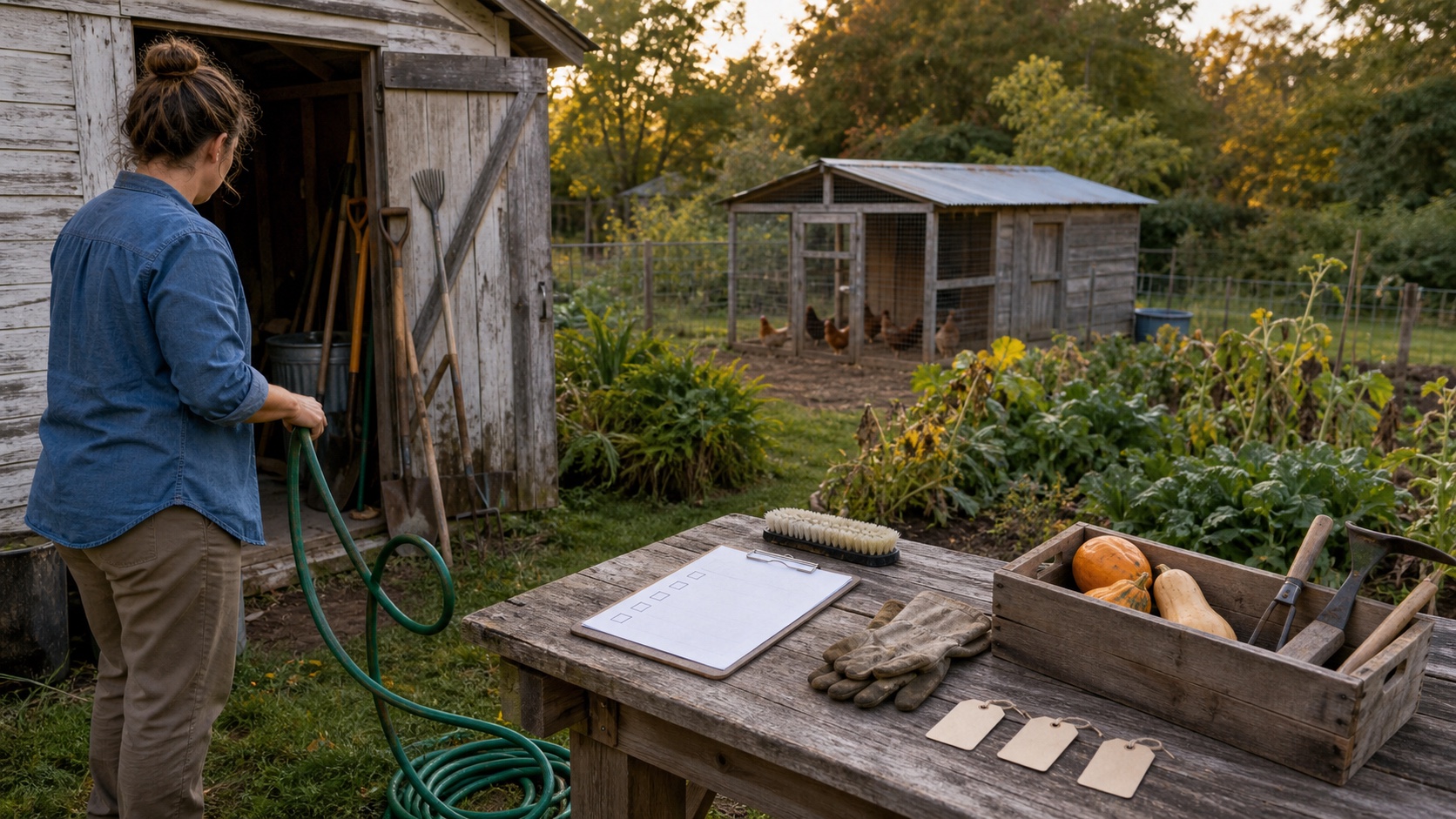
Fall Homestead Checklist for Beginners: What to Finish Before Cold Weather
A practical fall homestead checklist for sorting safety, animals, garden harvests, water, tools, food storage, and unfinished projects before cold weather arrives.

Homesteading
The Best First Food System for Beginners: Garden, Chickens, or Pantry?
A practical comparison of three strong first food systems for beginners: pantry depth, a modest garden, or a small flock.
Frequently asked questions
Does every winter squash need to be cured?
No single curing rule fits every type. Butternut, Hubbard, buttercup, kabocha, and many pumpkins may benefit from a warm curing period when mature and sound. Illinois Extension specifically lists acorn, sweet dumpling, and delicata as exceptions to its general curing recommendation. Check the variety description and local Extension guidance, then use short-storage types first instead of assuming extra heat will improve them.
How do I know winter squash is ready to harvest?
Look for the mature color expected for the variety, a rind that resists a gentle fingernail scratch, and a drying vine or stem. Harvest before a hard frost and before an extended stretch of cold, wet weather. Maturity signs differ by variety, so compare the fruit with its seed description rather than relying on color alone.
What temperature is best for storing winter squash?
University of Minnesota and Oregon State Extension recommend roughly 50 to 55 degrees F with moderate humidity and good air circulation. Conditions much colder can cause chilling injury, while warm household temperatures generally shorten storage life. Keep the surface dry and measure the actual storage space rather than judging it by feel.
Can winter squash be stored in a basement or garage?
Possibly, if the specific area stays near 50 to 55 degrees F, remains dry enough to prevent surface moisture, has airflow, does not freeze, and is protected from pests and chemicals. Test the location over several days and through colder nights. Many basements are warm or damp, and garages can swing below safe temperatures.
Should winter squash touch while it is stored?
A single layer with space between fruit is the safer beginner arrangement because air can move and every surface remains easier to inspect. Illinois Extension recommends a single layer where space permits and warns against piling squash more than two fruit deep. Keep fruit off cold concrete and remove failing squash promptly.
How long does winter squash last in storage?
It depends on variety, maturity, damage, curing, and storage conditions. Oregon State gives broad examples of about one to two months for acorn types, two to three months for butternut and many pumpkins, and as long as three to six months for some Hubbard, banana, buttercup, and Sweet Meat types under favorable conditions. Use those as planning ranges, not guarantees, and inspect weekly.
Recommendations
Useful tools and resources for this decision
These are included only where they reduce repeated friction, clarify a next step, or help you avoid buying the wrong thing first.
Check the current price
TempPro TP50 indoor thermometer-hygrometer
A compact local display for checking whether a pantry corner, basement shelf, mudroom, or garage actually stays near the temperature and humidity range used for winter-squash storage.
Best for: A household storing several squash for more than a few weeks in a space with unknown temperature swings
This is a specifications-based recommendation, not a claim of long-term personal testing. It measures conditions but does not control them, is not waterproof, and provides no remote alert. Skip it if you already own a reliable monitor or will use the squash promptly.
Check current priceRead the Minnesota guide
University of Minnesota squash harvest and storage guide
Current guidance on maturity, stem handling, curing conditions, storage temperature, humidity, airflow, and variety differences.
Best for: Reviewing the whole harvest-to-storage sequence
View resourceReview the Oregon State guide
Oregon State Extension winter squash storage guide
A home-focused guide covering harvest before cold or wet weather, careful handling, warm curing, storage conditions, ethylene, and expected storage ranges.
Best for: Comparing storage life and household location tradeoffs
View resourceCompare winter squash types
Illinois Extension winter squash guide
Variety-aware guidance that distinguishes common curing exceptions and emphasizes mature, unblemished fruit, intact stems, and single-layer storage.
Best for: Checking whether a specific squash should be cured or used earlier
View resourceRead the specifications
TempPro TP50 product specifications
The current manufacturer page lists the unit's temperature and humidity ranges, high-low records, local display, power source, and operating limits.
Best for: Confirming what the monitor can and cannot do before buying
View resourceRecommended next reads
Read next if it helps the decision
Move into the next guide only if it clarifies the next practical step.
Fresh Start
How to Build a Rotating Pantry Without Wasting Food
Build a small rotating pantry around meals your household already eats, then use a simple three-zone system to keep older food visible, useful, and out of the trash.
Systems
Fall Homestead Checklist for Beginners: What to Finish Before Cold Weather
A practical fall homestead checklist for sorting safety, animals, garden harvests, water, tools, food storage, and unfinished projects before cold weather arrives.
Homesteading
The Best First Food System for Beginners: Garden, Chickens, or Pantry?
A practical comparison of three strong first food systems for beginners: pantry depth, a modest garden, or a small flock.
Garden gear support
Get the buy-first guide before the first garden collects too much gear.
Use the guide to decide which early garden purchases earn money now, which ones can be borrowed, and which ones can wait until the routine proves itself.
Best for: Beginners who keep seeing useful things online and need a disciplined way to decide what actually earns a place.
- A buy now, borrow, wait, or skip framework
- Starter category shortlists
- A three-question purchase test
Garden planning notes, restrained gear decisions, and the guide first.
After signup, the download will unlock right here so you can save or print it.
About the author
William Mock
Founder, writer, and beginner homesteader
William writes from the beginner side of rebuilding after a layoff: homestead plans, family systems, budgets, tools, and the decisions that make a home feel less fragile.
Read why this site existsRelated Guides
Keep building context
Gardening
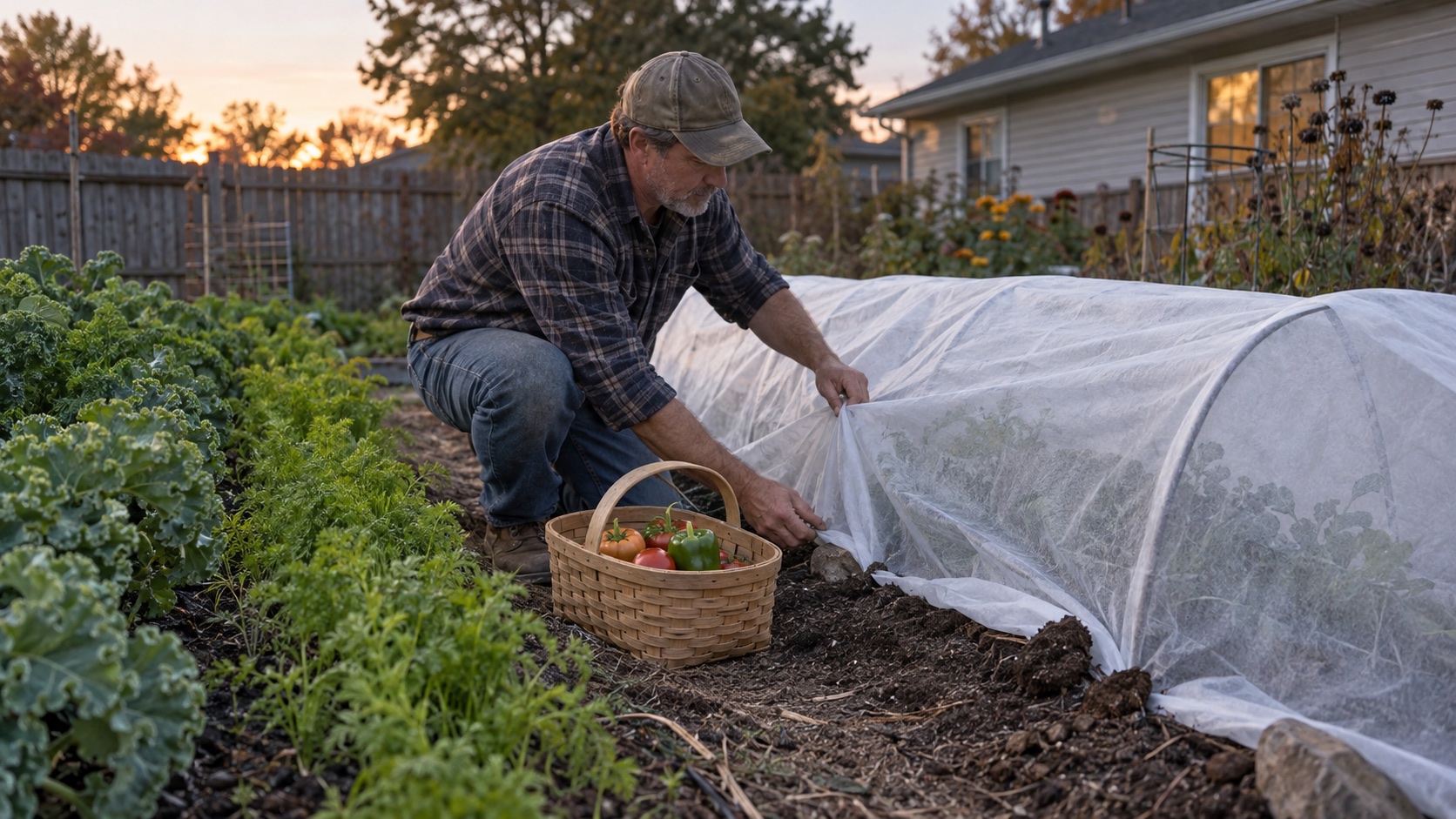
How to Protect a Vegetable Garden From the First Frost
Protect a vegetable garden from frost by harvesting tender crops first, covering only what is worth extending, and leaving cold-tolerant crops alone when conditions allow.
Gardening
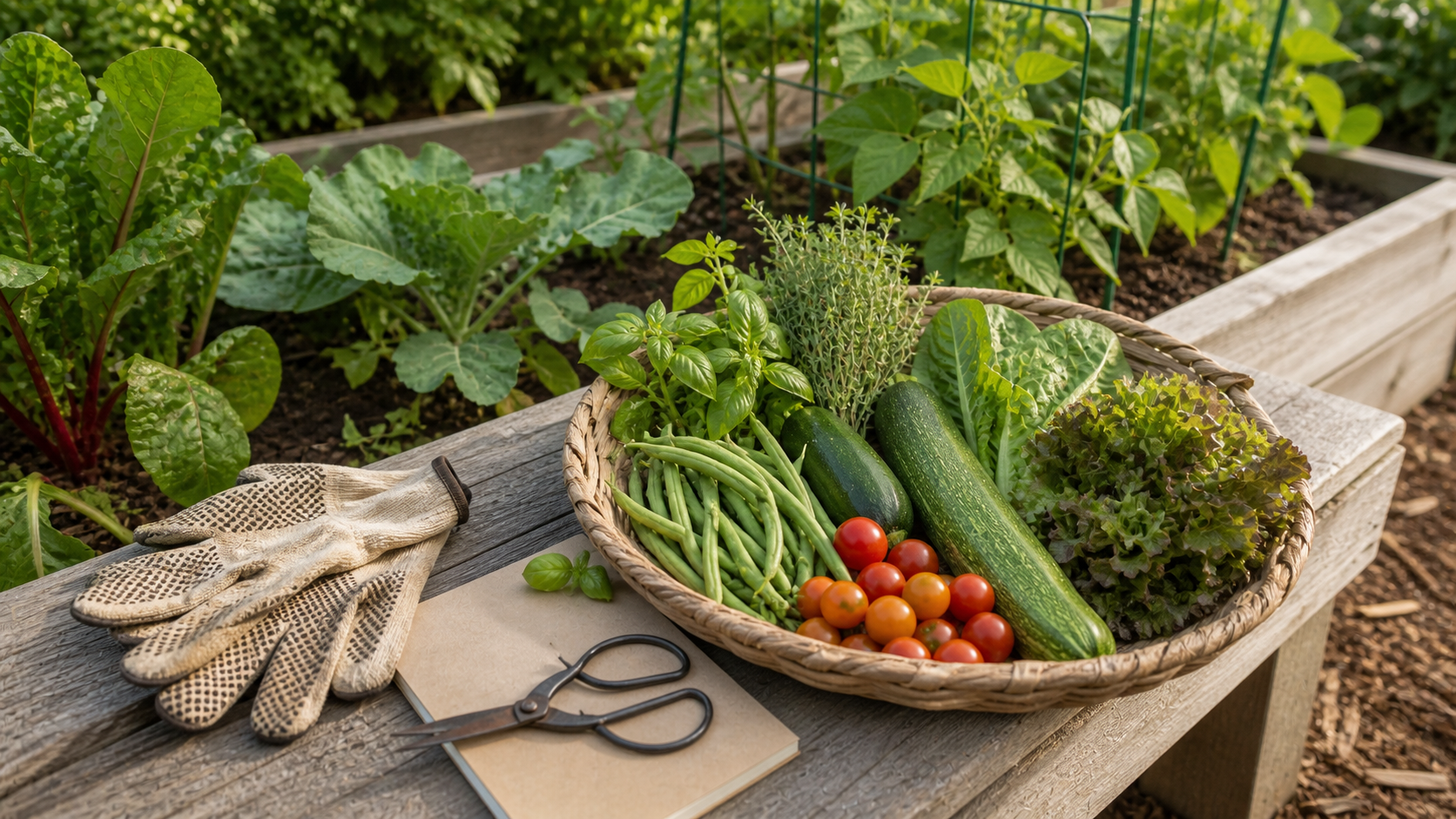
What to Harvest First in a Beginner Vegetable Garden
A practical beginner guide to the first garden harvest: what to pick early, what to leave longer, how to avoid waste, and how to build confidence without overthinking it.
Gardening
What to Do With Too Much Garden Produce: A 24-Hour Plan
A calm four-lane plan for moving an overflowing garden harvest from the counter into meals, short-term storage, tested preservation, or someone else's kitchen before it becomes waste.