The best winter homestead projects for beginners are the jobs that lower pressure before spring: review the past season, inventory stored food, repair and clean tools, plan one manageable garden, try one small seed experiment, practice one useful household skill, research animals before buying them, and test the backup routines your home already depends on. Choose two or three projects first. Winter is a season, not a deadline for becoming a completely different person.
The dirty trowel that made my winter list smaller
I once put a trowel away with wet soil packed around the socket and told myself I would deal with it tomorrow. Tomorrow waited until the next time I needed the tool. By then the soil had dried hard, a little orange rust had started showing, and the wooden handle felt rough where dampness had lingered. The trowel survived. My efficient shortcut had simply scheduled a longer job for a less convenient day.
That small mistake changed the way I look at winter project lists. My first instinct is still capable of producing a page that includes bread, seeds, carpentry, chickens, pantry storage, repairs, and possibly a new personality by February. The trowel is a better teacher. Finish the open loop already sitting in the shed before opening six new ones in the kitchen.
A good winter project leaves spring with less friction: a repaired trellis, a pantry you can see, a garden that fits the watering time, or a livestock decision made before an animal depends on it. That is not glamorous work. It is also much harder to regret than a cart full of supplies for a hobby that has not survived a normal week.
Choose projects by the problem they solve
Use the broader beginner homesteading path if every category still feels urgent. This winter list assumes the immediate safety, water, heat, animal-care, and property problems are already handled. A leaking pipe outranks learning sourdough, no matter how photogenic the loaf might become.
1. Review the last season before planning the next one
Start with evidence. Look through garden photos, receipts, feed records, pantry notes, repair lists, and the tools that came back inside damaged. Write down three things that worked, three things that created repeated friction, and one job that cost more time or money than expected. If this is your first season, review ordinary household patterns instead: meals skipped, food wasted, yard areas that stayed wet, storage that failed, and chores that nobody clearly owned.
Keep the review descriptive before making it prescriptive. 'Tomatoes failed' is too broad. 'Six plants crowded one bed, needed support before I installed it, and produced more than we used fresh' gives next season something to work with. The point is not to grade yourself. It is to stop spring from beginning with the same unanswered question.
2. Turn the pantry and freezer into an honest inventory
Winter is a good time to find out whether food storage is serving meals or quietly becoming a collection. Utah State University Extension recommends taking stock before restocking. Work one shelf or freezer section at a time. Discard unsafe or spoiled food by current guidance, note damaged packaging, group duplicates, and move sound older items into an 'eat next' area. Do not buy replacement containers until the actual storage problem is visible.
Then build three ordinary meals around food already on hand. That turns inventory into household evidence. If nobody wants the item, storing more of it is not preparedness; it is giving clutter a longer lease. The full rotating-pantry system covers zones, dates, meal use, and restocking without turning the pantry into a warehouse.
3. Practice three meals from basic ingredients
Choose three meals your household already likes and make each one enough times that it no longer requires a burst of motivation. Use ingredients that store well and appear in your real budget. A soup, bean dish, simple bread, roast, skillet meal, or rice-and-vegetable combination can teach more about practical food resilience than buying twenty unfamiliar staples at once.
Record the ingredients, hands-on time, leftovers, and what the family actually ate. This is not a performance of cooking from scratch. It is a repeatability test. If the meal only works when the afternoon is empty and every bowl in the house is clean, it may be a pleasant weekend project rather than a dependable household system.
4. Close the tool-care loops already waiting
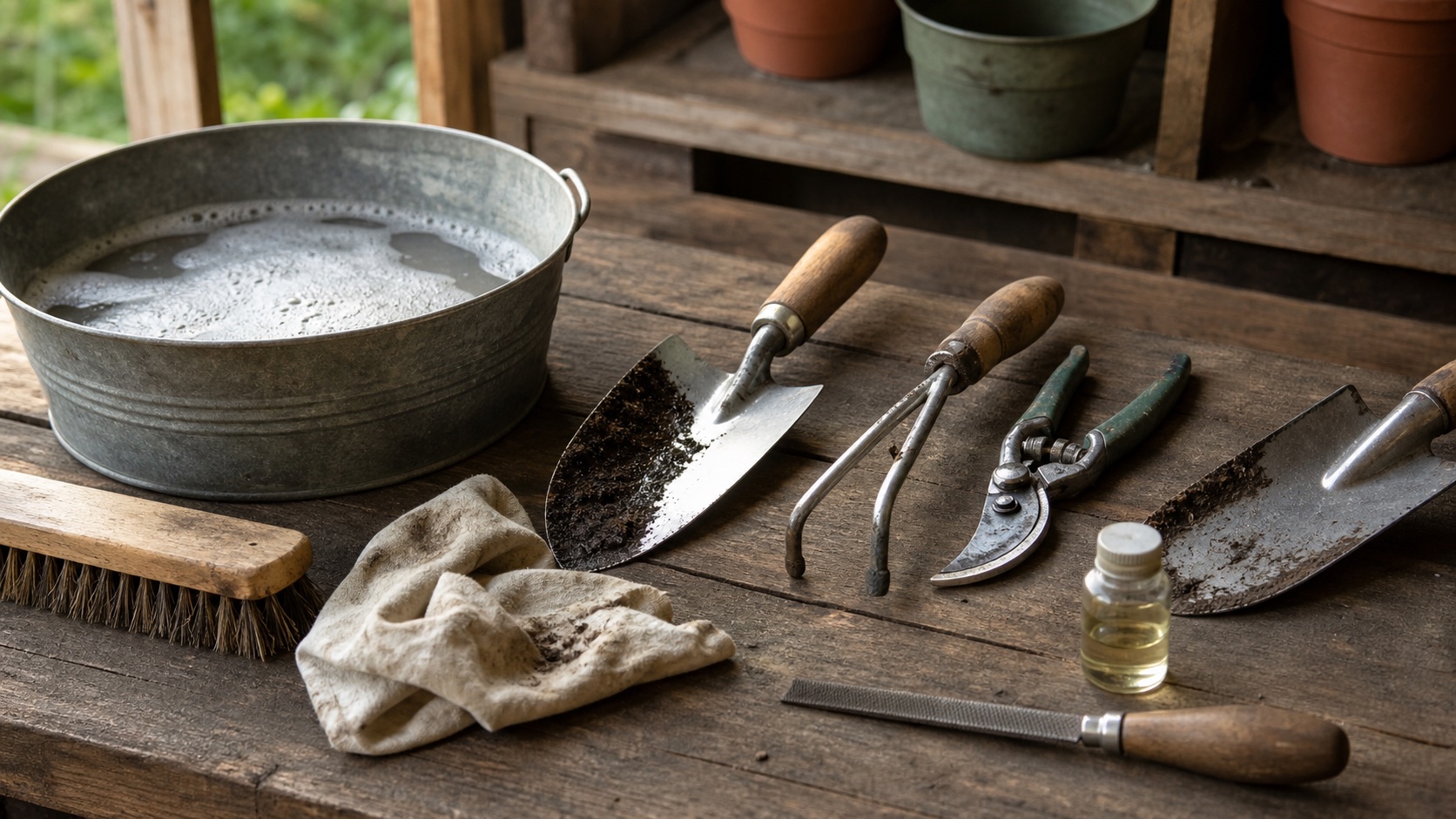
Gather the hand tools that saw real use. Remove soil and plant material, wash when needed, dry completely, inspect handles and connections, address light rust, sharpen only the edges that are actually dull, and store everything away from damp floors. University of Minnesota Extension specifically recommends cleaning and disinfecting garden tools before winter storage, while also separating routine cleaning from disease-control disinfection.
Follow the tool manufacturer's instructions and the product label for any cleaner, disinfectant, lubricant, or replacement part. Never mix cleaning chemicals. The beginner garden-tool maintenance guide gives the full sequence and explains why an old brush, a rag, a handled file, and a small amount of suitable oil usually beat a giant maintenance kit.
5. Repair one support, gate, shelf, or storage problem
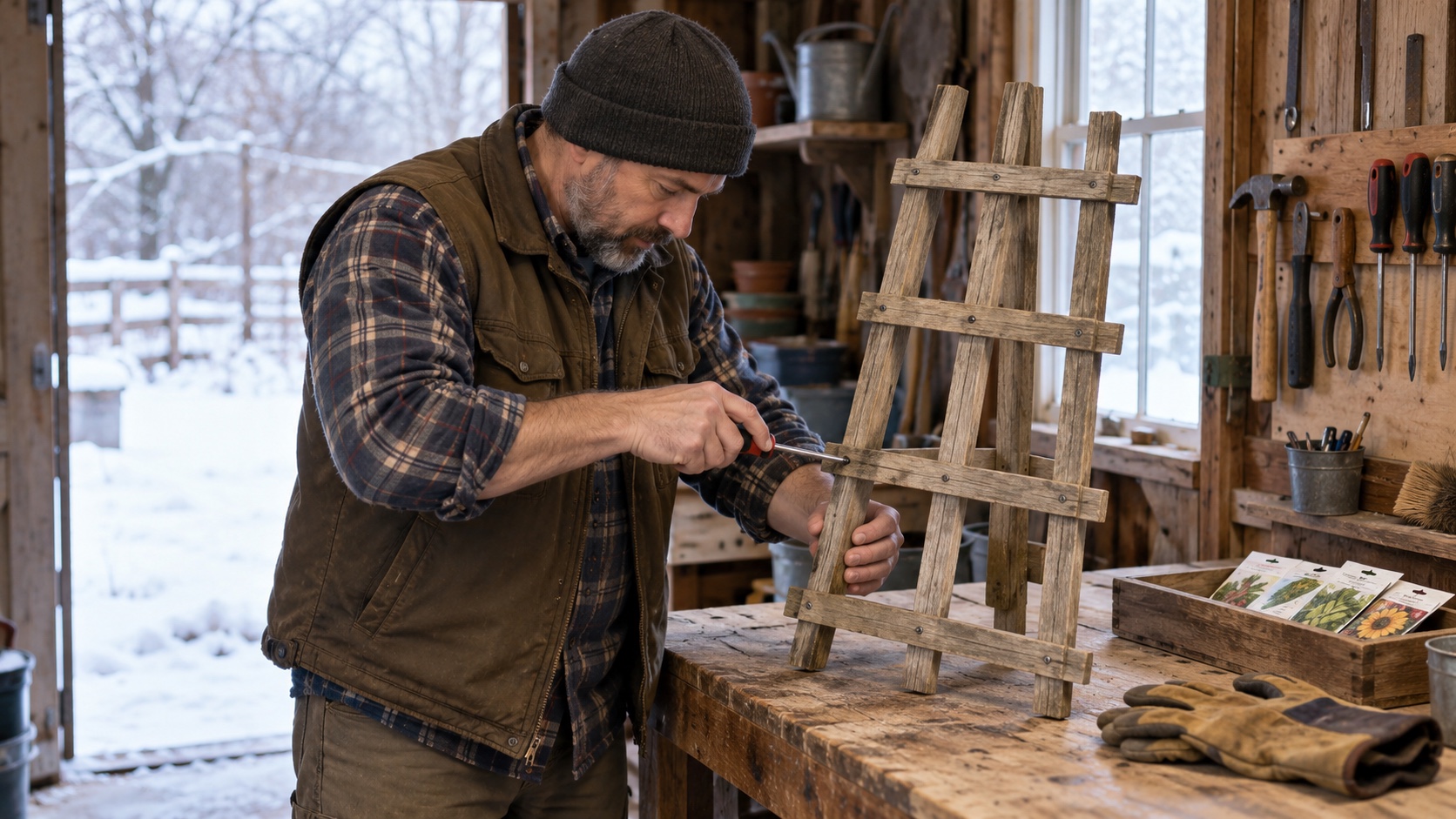
Choose one small physical problem that you already understand: a loose trellis screw, rough tool handle, sticking shed latch, sagging shelf, broken plant support, or poorly placed storage hook. Confirm the structure is safe to work on, use the correct fastener or replacement part, and stop when the repair exceeds your tools or training. Electrical work, structural failures, fuel equipment, and unfamiliar machinery are not beginner practice projects.
The best repair is not necessarily the most impressive. It is the one that removes repeated friction from a job you will do again. A secure hook that gets the shovel off a damp floor may be worth more than a decorative workbench. Winter is already offering enough indoor ambition; it does not need a shed renovation subplot.
6. Plan one garden small enough to maintain
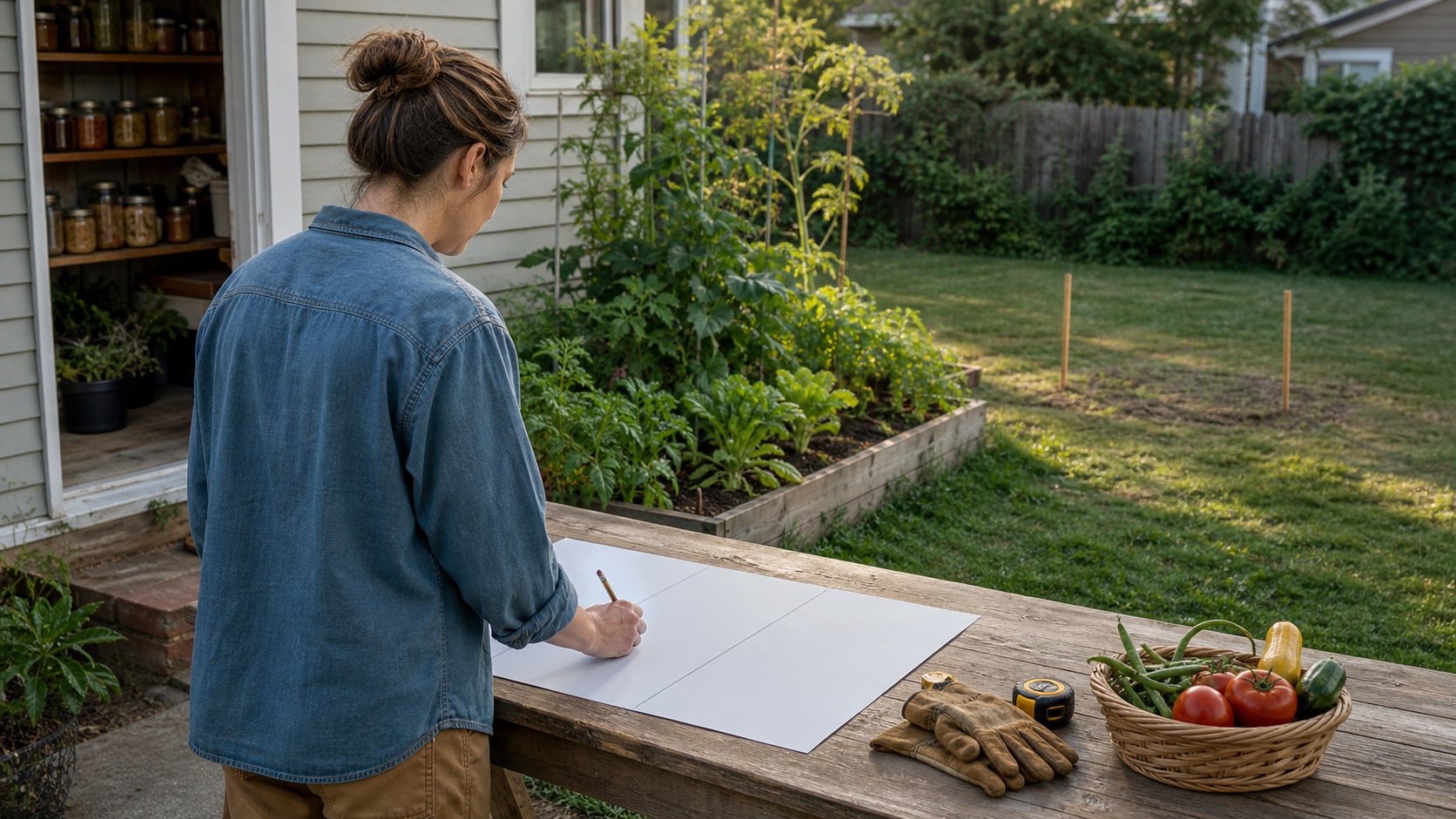
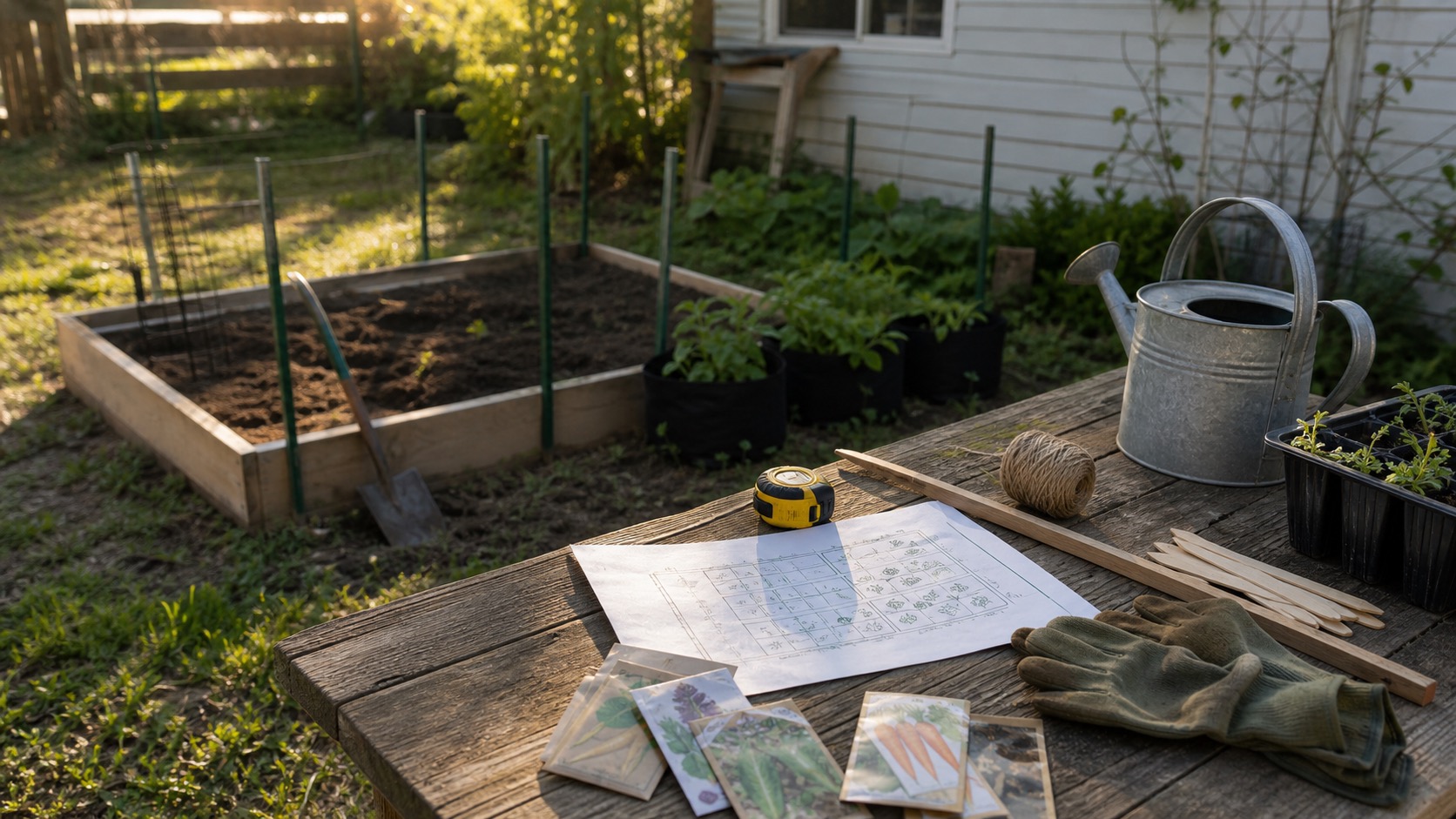
Choose the actual growing space before choosing the seed collection. Record its dimensions, useful sunlight, water route, drainage, access, and the amount of weekly care available in spring and summer. Then select a short crop list based on what the household eats and what regional guidance says can grow in that site. Purdue Extension's winter calendar and seed-starting guidance both put planning and timing ahead of planting.
The first homestead garden guide helps narrow bed size, crops, watering, supports, and maintenance. Do not order seeds merely because a cold evening made the catalog feel like a legally binding vision board. Decide where the plant will grow, when it must start, and how much harvest the kitchen can use.
7. Try one small winter-sowing experiment
Winter sowing places suitable seeds in a ventilated, draining container outdoors so cold and moisture can support the dormancy-breaking process some species need. Penn State Extension notes that this can work well where indoor seed-starting space is limited. Use a clean container, add drainage and ventilation, use a suitable soilless medium, label inside and outside, and place it where the method can receive normal winter weather without becoming a hazard or blowing away.
Keep the trial small and follow regional guidance for the plant. Winter sowing is not the same as putting every tomato and pepper seed outside in January. One or two suitable varieties can teach moisture, labeling, siting, and spring monitoring without wagering the whole garden on a method you have never used.
8. Practice one skill four times before adding another
Choose a skill with a current household job: baking one reliable loaf, mending a work shirt, cooking dried beans, maintaining a tool, freezing food with a tested method, or tracking pantry use. Practice the same narrow version four times. After each attempt, record what worked, what took too long, what failed, and whether the result was useful enough to repeat.
Food preservation needs an extra boundary. Use current tested guidance from the National Center for Home Food Preservation or a trusted Extension source, especially for canning. Winter is a fine season for learning, but it does not turn an untested canning recipe into a safe one. If choosing among too many ideas is the problem, use the four-question first-skill filter.
9. Write one spring plan and test one backup routine
Finish with two short pages. The spring page names the first three actions, the earliest reasonable dates, the materials already owned, the spending limit, and the condition that must be true before the project expands. The backup page explains how another adult would handle essential water, animals, food, access, and contacts if the usual person were sick, delayed, or unavailable.
Test one part during an ordinary week. Ask another person to locate the shutoff, animal feed, spare key, flashlight, emergency contact, or written chore order without coaching. The homestead backup-plan guide covers stop rules, power outages, animal handoffs, and the details that should route a helper toward safety instead of improvisation.
A four-week winter project plan
A beginner with no land might choose a pantry shelf, three meals, and a container-garden plan. A household with a small garden might choose tool care, one repaired trellis, and a crop map. A family considering chickens might review the budget, read local rules, and practice the proposed morning-and-evening chore schedule before ordering birds. The framework stays the same because the work must fit the life that exists now.
What can wait until the plan earns it
Let winter make spring lighter
Winter does not have to carry the entire homestead dream. It can carry one repaired object, one clearer food system, one practiced skill, and one spring decision that no longer needs to be made in a hurry. Those are modest results, but modest results have an advantage over ambitious lists: they are available when the weather changes and the work gets real.
Start with the open loop you can already see. Clean the trowel. Count the freezer shelf. Repair the trellis. Make the meal again. Then use what happened to choose the next project. That is how winter becomes part of the homestead instead of the season spent shopping for it.
Best Next Step
Turn the winter list into a realistic first season.
Use the 90-day beginner plan to choose one household system, one food project, and one maintenance rhythm without trying to build the entire homestead at once.
Build your first 90-day planRecommended next reads
Continue with the project you chose
These guides turn the winter review into a smaller food, garden, or first-season decision.
Homesteading
A 90-Day Homestead Plan for Beginners: What to Do First
A realistic first 90-day homestead plan that helps beginners observe, set limits, choose one food system, and build a repeatable rhythm before expanding.

Fresh Start
How to Build a Rotating Pantry Without Wasting Food
Build a small rotating pantry around meals your household already eats, then use a simple three-zone system to keep older food visible, useful, and out of the trash.
Gardening
How to Plan Your First Homestead Garden Without Doing Too Much
A successful first garden is smaller, clearer, and less romantic than many beginners expect. That is a good thing.
Frequently asked questions
What should a beginner homesteader do in winter?
Use winter for work that makes the next growing season easier: review what worked, inventory stored food, repair and clean tools, plan one manageable garden, practice one indoor skill, research animals before buying them, and test household backup routines. Choose two or three projects that solve current problems instead of trying to complete an impressive seasonal list.
Can I start homesteading in winter if I do not own land?
Yes. Pantry rotation, scratch cooking, food-waste tracking, basic tool care, a small container-garden plan, local-rule research, budgeting, and one carefully chosen skill can all begin without acreage. Winter is especially useful for learning what your household actually eats, uses, and has time to maintain before spending money on land-dependent projects.
Is winter sowing a good beginner project?
It can be a useful small experiment for seeds suited to outdoor winter sowing and your local climate. Use clean containers with drainage and ventilation, suitable seed-starting medium, durable labels, and current regional guidance. Do not assume every vegetable or flower belongs outside in a winter container, and do not let one experiment replace the planting calendar for the rest of the garden.
Which winter homestead projects should wait?
Delay projects that require unplanned debt, unfamiliar electrical or structural work, livestock you cannot yet house and care for daily, unsafe food-preservation improvisation, or land changes you have not observed through wet and cold weather. Planning, maintenance, and small trials usually create better beginner evidence than a rushed major build.
How many winter projects should I choose?
Most beginners should choose one project that reduces a current household pressure, one project that maintains something already owned, and one project that prepares a clearly defined spring step. If those three fit ordinary weeks, add another. The goal is useful completion, not keeping every possible homestead idea active at once.
Recommendations
Useful tools and resources for this decision
These are included only where they reduce repeated friction, clarify a next step, or help you avoid buying the wrong thing first.
Read the Purdue calendar
Purdue Extension winter garden calendar
Indiana-focused winter reminders for garden planning, stored produce checks, seed ordering, soil-testing decisions, and other seasonal work.
Best for: Matching winter garden work to an Indiana season
View resourceRead the winter-sowing guide
Penn State Extension winter sowing guide
Current instructions for outdoor winter sowing in containers, including drainage, growing medium, labeling, placement, and seed behavior.
Best for: Trying one controlled winter-sowing experiment
View resourceRead the tool-care guide
University of Minnesota Extension tool-cleaning guide
Research-based guidance for removing soil and plant material, disinfecting when disease risk calls for it, drying, oiling, and storing garden tools.
Best for: Closing out the garden season without spreading plant problems
View resourceRead the inventory guide
Utah State University Extension food-storage inventory guide
A practical process for taking stock of pantry, freezer, and longer-term food before restocking or preserving more.
Best for: Turning stored food into meals instead of forgotten inventory
View resourceUse tested preservation guidance
National Center for Home Food Preservation
Tested home-preservation methods and current USDA publications for canning, freezing, drying, and related food-safety decisions.
Best for: Choosing a safe winter preservation skill
View resourceRecommended next reads
Read next if it helps the decision
Move into the next guide only if it clarifies the next practical step.
Homesteading
A 90-Day Homestead Plan for Beginners: What to Do First
A realistic first 90-day homestead plan that helps beginners observe, set limits, choose one food system, and build a repeatable rhythm before expanding.
Fresh Start
How to Build a Rotating Pantry Without Wasting Food
Build a small rotating pantry around meals your household already eats, then use a simple three-zone system to keep older food visible, useful, and out of the trash.
Gardening
How to Plan Your First Homestead Garden Without Doing Too Much
A successful first garden is smaller, clearer, and less romantic than many beginners expect. That is a good thing.
First-Step Support
Get the first-step checklist before the bigger idea turns into too many projects.
A practical worksheet for choosing one system, setting a first-stage budget, and narrowing the next move while the picture is still forming.
Best for: Beginners who need a first-season plan with limits, not more tabs or more gear.
- A first-season decision checklist
- A one-system starter plan
- A buy-now versus wait-later filter
Beginner-friendly notes, useful guides, and the checklist first.
After signup, the download will unlock right here so you can save or print it.
About the author
William Mock
Founder, writer, and beginner homesteader
William writes from the beginner side of rebuilding after a layoff: homestead plans, family systems, budgets, tools, and the decisions that make a home feel less fragile.
Read why this site existsRelated Guides
Keep building context
Homesteading
A 90-Day Homestead Plan for Beginners: What to Do First
A realistic first 90-day homestead plan that helps beginners observe, set limits, choose one food system, and build a repeatable rhythm before expanding.

Homesteading
8 Homesteading Skills to Learn Before You Own Land
Eight portable homesteading skills you can practice in an apartment or ordinary home before land, livestock, major equipment, or a move enter the plan.
Tools
How to Clean and Maintain Garden Tools for Beginners
A simple garden tool maintenance routine for beginners: what to clean after use, when to disinfect, how to sharpen safely, and which supplies are actually worth keeping.