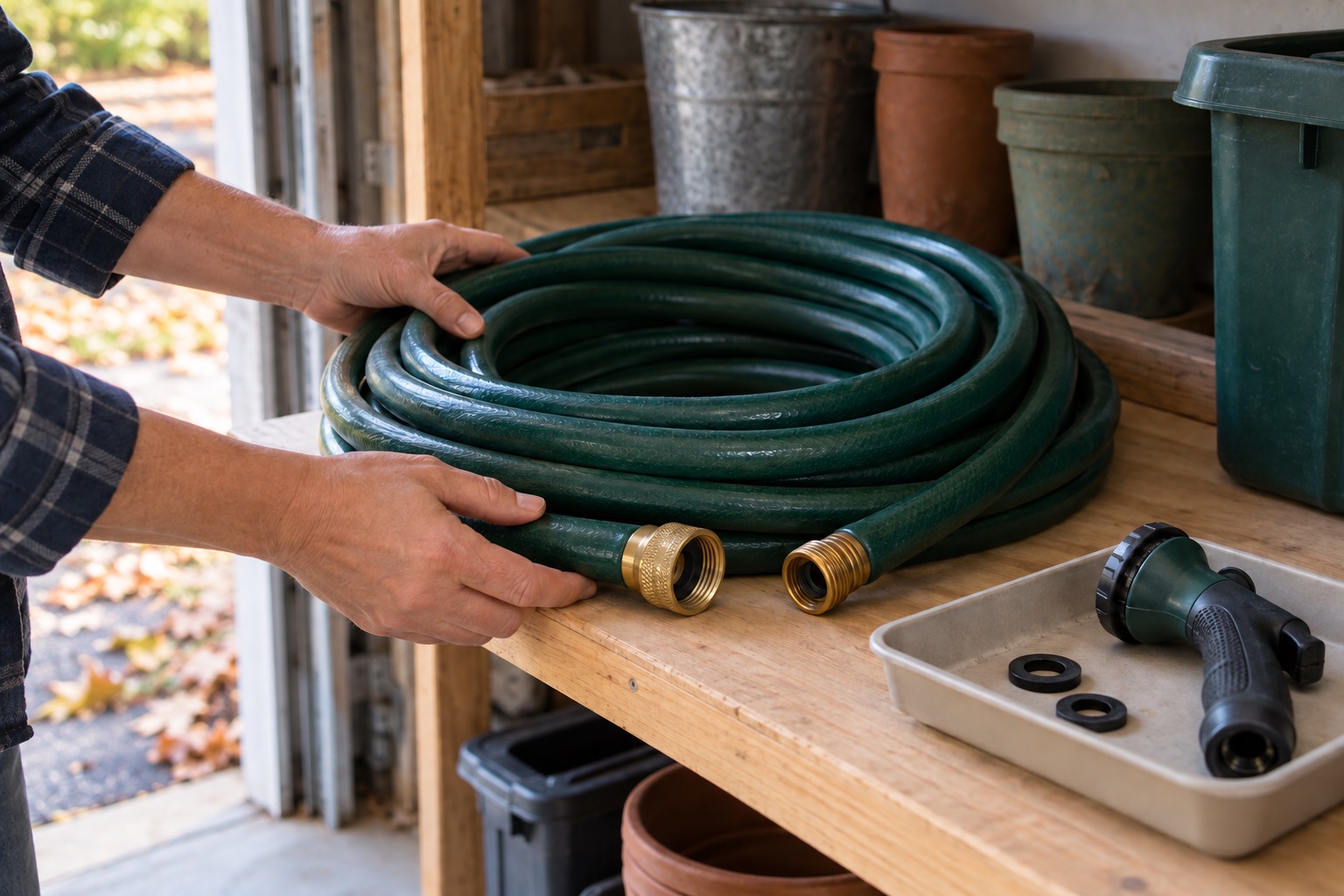
To store a garden hose for winter, turn off the water, release pressure, disconnect both ends and attachments, drain the full length, and coil it loosely in a protected place. Do this before freezing weather. Check the outdoor faucet separately: putting the hose away does not tell you whether the plumbing feeding it is ready for winter.
This is a small maintenance job within the homestead tools guide. The approach is the same one behind the tools I actually use: understand the repeated job, then keep useful equipment working.
The route did not end at the garden
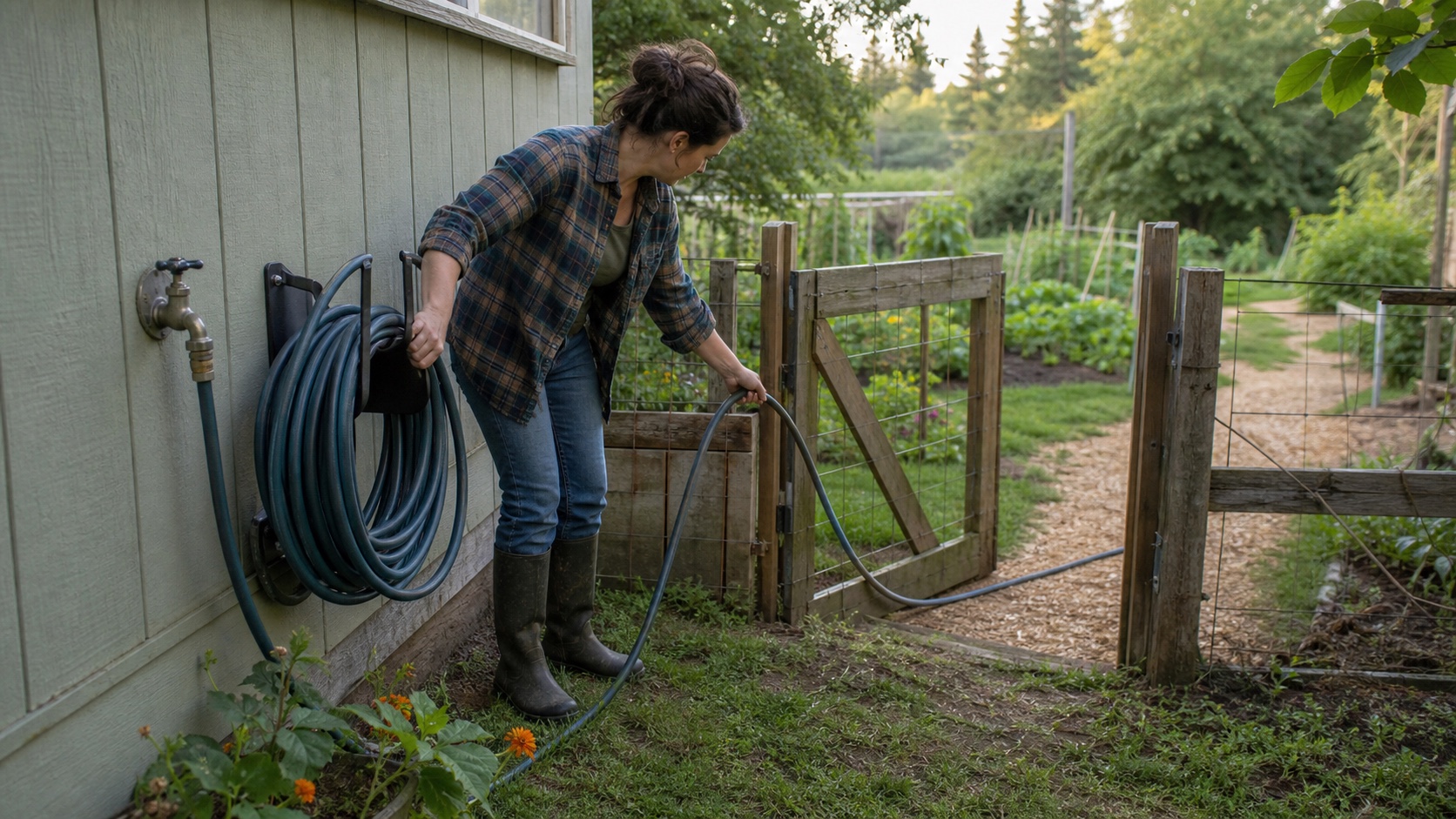
When I first looked at the sunny strip in our yard as growing space, I thought the hose decision was mostly distance. The spigot was in one place and the future bed was in another. Then I walked the route. The gate still needed to open, the family still needed the path, and every extra foot of hose would need somewhere to go afterward.
I wrote about that walk in the hose buying guide because it changed what I counted as a good fit. Reaching the bed was only part of the job. Getting the hose back out of the way mattered too. That is a useful lesson to carry into fall: the return trip includes draining, checking the ends, and having a place ready before the weather changes.
After a layoff, spending carefully takes on a different weight. I want the things we buy to have a job they can keep doing. With a hose, I would rather begin by making room for the one already here. A storage shelf and a few minutes of attention deserve a place in the plan alongside whatever looks appealing at the store.
Choose a weather trigger before the last watering
Use your local forecast and the equipment instructions to set the deadline. There is no single September or October date that fits every homestead. If you are finished watering for the season, close the job now. If you still have active beds, decide who will disconnect and drain the equipment after each use when cold weather approaches.
Check attachments before assuming the hose sets the limit. For example, RAINPOINT's TTV203 care instructions call for removing that timer below 37°F (3°C), keeping it indoors, and removing batteries for extended storage. That is a model-specific threshold. Look up the device in your own hand.
Choose a mild part of the day when the hose is flexible and the path is safe to walk. Set aside a tray for fittings, a cloth for the outside, and enough shelf or floor space for a loose coil. Take a photo of any attachment arrangement that would be annoying to reconstruct in spring.
Drain a detached garden hose in six steps
Work at ground level. You do not need to climb a ladder, sling a heavy hose overhead, or drag it across a sharp fence edge to gain height. A long hose is easier to manage in sections. Keep the open outlet away from shoes, stored items, and the house foundation while you work.
Gravity draining depends on giving trapped water a way out. For a hose still attached to a reel, stop and read that reel's procedure instead of assuming the loose-hose steps reach its swivel and internal passages. ELEY's winterization guide specifically addresses those hidden waterways and the slope needed for its gravity method.
Check the faucet separately
A standard frost-free faucet is designed to shut water off farther inside the building and drain its exposed barrel. An attached hose or another restriction can keep that drainage from happening. Woodford's explanation of a standard frost-proof faucet shows how trapped water can freeze and damage the tube.
Identify your faucet model. Some specialized faucets have different drainage or pressure-relief designs. Conventional outdoor taps may have an indoor shutoff and a separate drain procedure. Use the setup-specific guide to winterizing an outdoor faucet before a freeze, or have a plumber identify what you have; a universal instruction to leave every outdoor tap open or closed would be unreliable.
Do not remove a permanent backflow device, vacuum breaker, or plumbing component simply because it looks like a hose attachment. If a connection is seized, avoid wrenching against the pipe in the wall. A stuck fitting, unexplained leak, or missing winterization instructions is a reason to get qualified help before freezing weather.
Give every attachment a destination
Put dry, removable watering parts together and label the container with the place they serve. A simple note such as 'back garden, timer manual saved on phone, washer needed' makes the next season easier. Keep batteries and small fittings where children cannot access them. Leave a note with the hose if one component is being stored somewhere warmer.
An expandable hose, self-coiling hose, and enclosed retractable reel may require different handling. Follow their storage limits and draining instructions. Do not open a spring-loaded reel housing to chase residual water. Fixed irrigation blowouts also belong to a separate procedure with specified pressure and equipment; this guide is for putting removable watering equipment away.
Choose a protected storage space
A broad shelf can hold a loose coil flat. A properly sized support can work when it supports the hose without pinching or making a sharp bend. Give the fittings room so they are not bearing the weight of the whole coil. Avoid stacking heavy bins on top or storing the hose beside solvents, oils, or a heat source.
Purdue's hose selection and inspection publication supports protected storage, preserving the hose's shape, and inspecting during the off-season. Its scope includes agricultural equipment hoses; for your household hose, use the garden-hose manufacturer's own material and storage limits.
A shed or attached garage can still fall below freezing. Treat it as shelter from weather unless you know otherwise, and drain the equipment before placing it there. Store freeze-sensitive timers in an appropriate indoor location. Writing 'in garage' on the checklist is less useful than writing what was drained and where the vulnerable parts went.
Decide whether to repair, replace, or keep it
Inspect the hose in good light as you coil it. Mark the actual defect instead of writing 'buy hose' immediately. A drip at the coupling, a crushed threaded end, and cracks along several feet point to different decisions. Do not pressure-test equipment that has obvious severe damage.
If inspection calls for replacement, the Flexzilla 5/8-inch by 50-foot HFZG550YW is one researched option for a route that size. The manufacturer's size chart confirms that model and its dimensions. It is an ordinary garden hose, not a heated winter-water system. I am not claiming personal testing of it.
Keep your current hose if it is serviceable, and skip a replacement that is longer than the route needs. The garden hose buying guide explains the length, weight, material, and connection tradeoffs if your inspection leaves a real buying decision.
One small-yard example
Imagine a household with one 50-foot garden hose, a short leader hose on a reel, a nozzle, and a battery timer. This is an example, not a report of a job at our house. The tempting shortcut is to wheel everything into the garage and call the season closed.
A more complete pass gives each item a destination: the long hose gets drained and inspected, the reel and leader follow their manual, the nozzle goes in the dry parts tray, and the timer goes indoors after its storage steps. The faucet gets its own check. If the hose only needs a washer, that becomes the entire shopping list.
Write three things on the storage note: the location it serves, anything that needs attention, and what to check before spring use. One person should be able to put the system back together without relying on someone else's memory. That is the useful finish line for this small job.
If you still need water in winter
Seasonal storage and repeated winter watering need different plans. If you use a removable hose on a suitable winter day, account for disconnecting, draining, and returning it to storage each time. Confirm the faucet and water supply are appropriate for that use. A daily need that makes this impractical deserves a properly designed winter water arrangement.
If the hose is already frozen, stop using it and avoid forcing fittings or bending it sharply. Never use a flame. Treat suspected frozen building plumbing as a separate problem for a plumber. After thawing and following the equipment instructions, inspect before reuse; a hose that looks intact may still have damaged fittings.
Finish the job with a short check
A premium reel, matching containers, and a complete shed makeover can wait. For the next small job, use the garden tool cleaning and maintenance guide. Put one working thing away properly, leave a clear note, and give yourself a spring task that starts with finding equipment ready to use.
Before cold weather
Fit the hose job into the rest of fall
Use the fall homestead checklist to put water, tools, harvests, and household preparation in an order your week can hold.
Open the fall homestead checklistFrequently asked questions
When should I put my garden hose away for winter?
Drain and store it before freezing weather reaches your property, or sooner if the watering season is finished. Follow the earliest cold-weather limit among the hose, timer, and attachments. Some timers need to come inside before temperatures reach freezing.
Can I leave a garden hose outside all winter?
A hose left outside must be fully drained, disconnected, and stored within its manufacturer's limits. Protected storage is preferable. Outdoor exposure and temperature swings can shorten its useful life, and water trapped in fittings or a reel can still cause damage.
Does a frost-free faucet mean I can leave the hose attached?
Do not assume that. Many standard frost-free faucets depend on water draining from the barrel after shutoff; an attached hose or restriction can prevent that. Some specialized models work differently. Identify your faucet and follow its own instructions.
Do I need compressed air to drain a loose garden hose?
A detached ordinary garden hose can usually be drained with gravity by straightening it and progressively lifting sections toward an open lower end. Reels and fixed irrigation systems may require different procedures. Do not improvise a compressed-air setup through unknown valves or timers.
Can a hose reel stay in an unheated garage?
Only after the hose and internal reel waterways have been drained according to the reel instructions and its storage limits are met. An unheated garage can freeze. Moving a water-filled reel under a roof does not establish freeze protection.
Recommendations
Useful tools and resources for this decision
These are included only where they reduce repeated friction, clarify a next step, or help you avoid buying the wrong thing first.
Check replacement hose
Flexzilla 5/8-inch x 50-foot garden hose
A researched replacement option, model HFZG550YW, for an ordinary watering route that fits within 50 feet. Confirm the selected model and length at checkout.
Best for: Replacing a damaged hose when this length and diameter fit the actual route
Check current priceCheck manufacturer specifications
Flexzilla manufacturer size chart
Check the 50-foot HFZG550YW model, 5/8-inch inside diameter, and garden-hose-thread connections against the listing you select.
Best for: Verifying a replacement before purchase
View resourceRecommended next reads
Read next if it helps the decision
Move into the next guide only if it clarifies the next practical step.
Tools
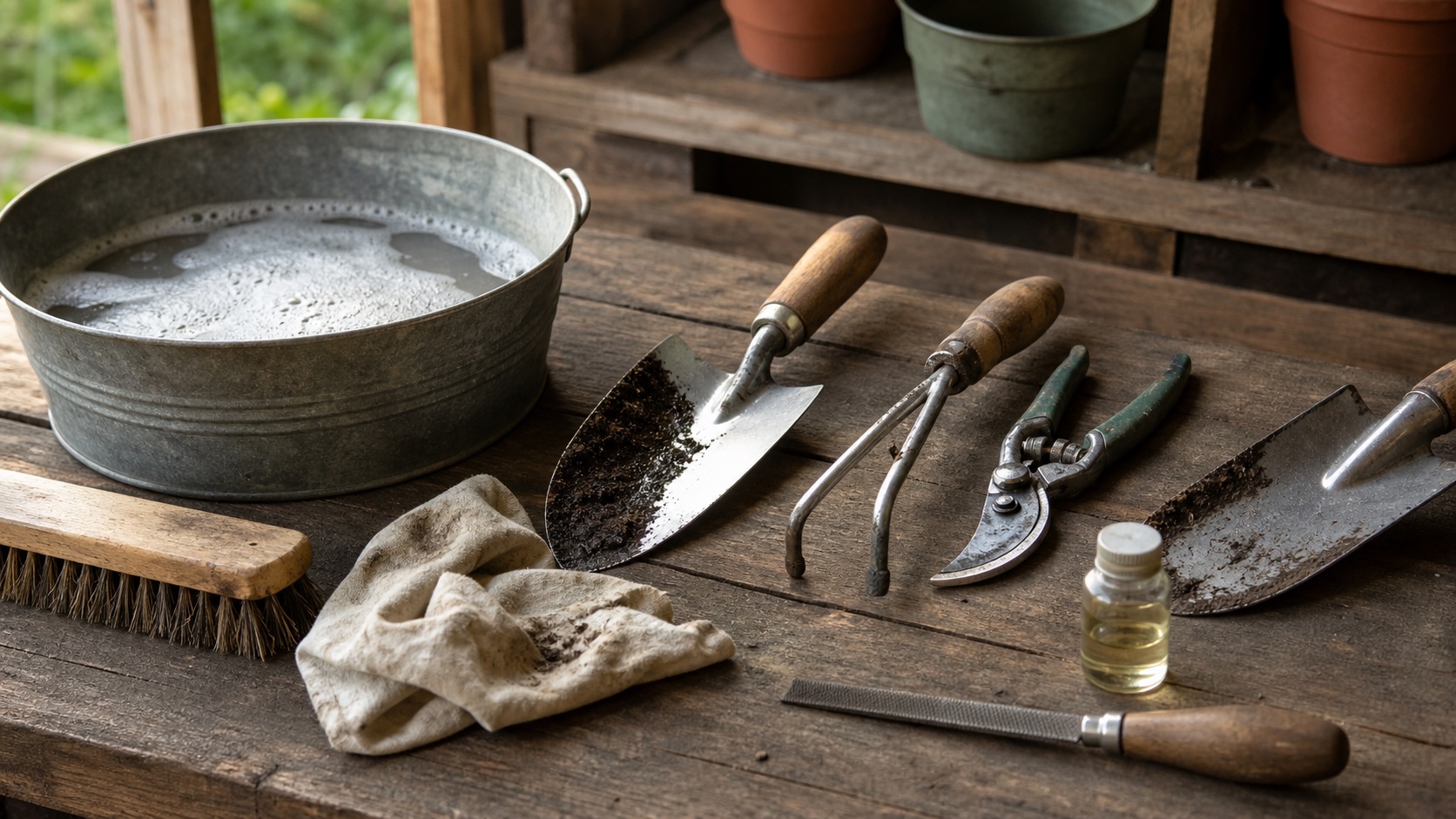
How to Clean and Maintain Garden Tools for Beginners
A simple garden tool maintenance routine for beginners: what to clean after use, when to disinfect, how to sharpen safely, and which supplies are actually worth keeping.
Tools
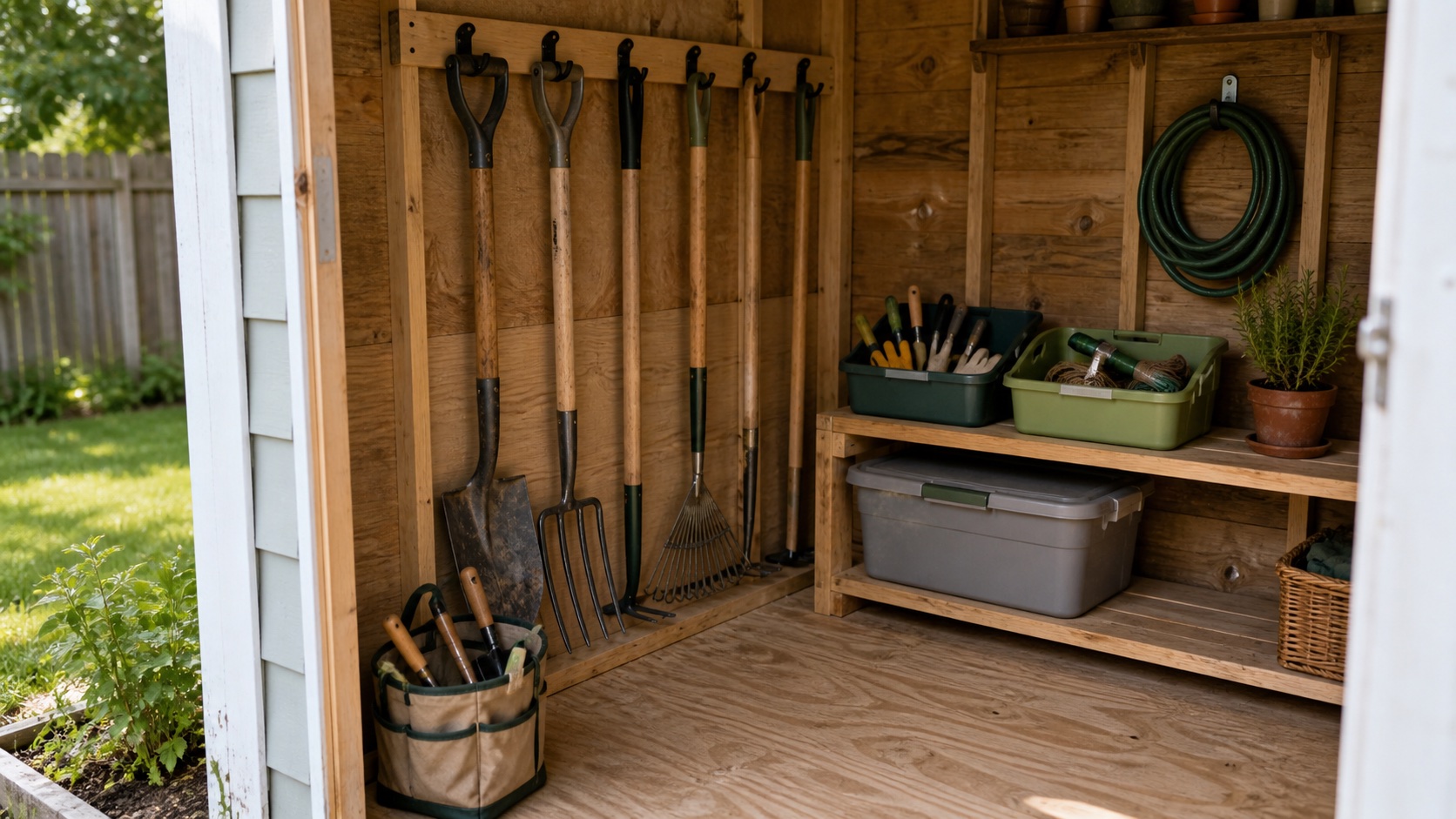
How to Organize Garden Tools in a Small Shed
A practical small-shed garden tool storage system built around clear floor space, wall-mounted long tools, simple task bins, safe storage, and a reset you can actually maintain.
Systems
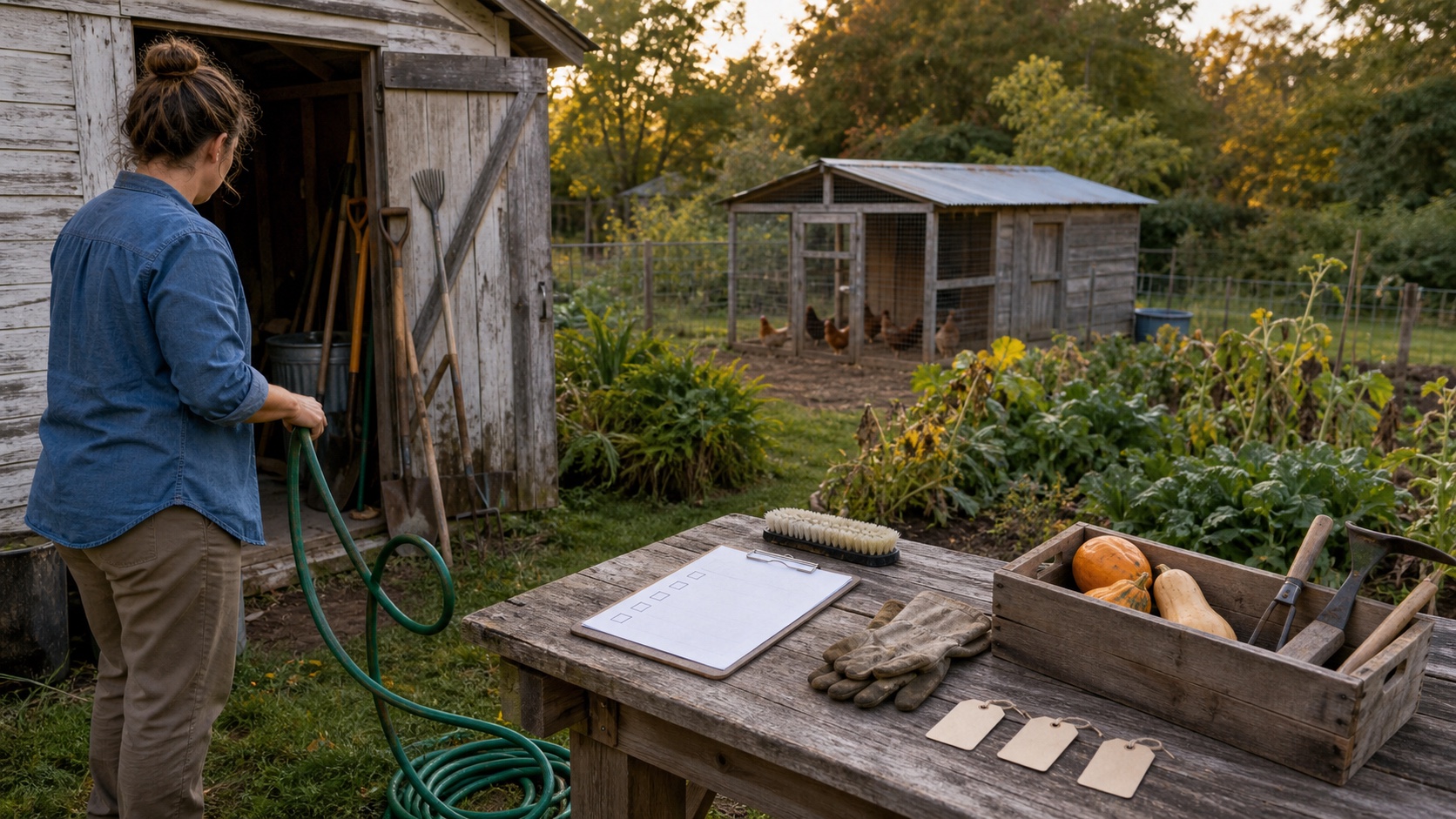
Fall Homestead Checklist for Beginners: What to Finish Before Cold Weather
A practical fall homestead checklist for sorting safety, animals, garden harvests, water, tools, food storage, and unfinished projects before cold weather arrives.
Buy-first support
Get the buy-first guide before you add another tool.
Use the buy-first guide to decide what earns money now, what can be borrowed, and what belongs on the wait list.
Best for: Beginners who keep seeing useful things online and need a disciplined way to decide what actually earns a place.
- A buy now, borrow, wait, or skip framework
- Starter category shortlists
- A three-question purchase test
Practical tool notes, restrained gear decisions, and one disciplined guide first.
After signup, the download will unlock right here so you can save or print it.
About the author
William Mock
Founder, writer, and beginner homesteader
William writes from the beginner side of rebuilding after a layoff: homestead plans, family systems, budgets, tools, and the decisions that make a home feel less fragile.
Read why this site existsRelated Guides
Keep building context
Tools
Best Garden Hose for Homestead Chores: What Actually Matters
Choose a garden hose by the route, length, diameter, material, fittings, storage, water use, and chores your homestead actually repeats.
Tools
Tools I Actually Use on Our Homestead
A small list of genuinely useful tools beats a big fantasy shopping cart. These are the kinds of things that keep earning their place.
Tools
How to Organize Garden Tools in a Small Shed
A practical small-shed garden tool storage system built around clear floor space, wall-mounted long tools, simple task bins, safe storage, and a reset you can actually maintain.